
As the Maruti Dzire now dethrones the Tata Punch, here’s a detailed comparison and essential info on both the cars.
Visit the Official Tata and Maruti website.
Tata Punch vs Maruti Dzire:
| Category | Tata Punch | Maruti Dzire |
|---|---|---|
| Segment | Micro-SUV / Crossover | Compact Sedan |
| Starting Price (ex-showroom) | Around ₹5.6 lakh | Around ₹6.2–6.8 lakh |
| Top Price (approx) | Up to ₹9–10.5 lakh | Up to ₹9–10 lakh |
| Body Style | Tall-boy SUV stance | Traditional sedan design |
| Engine | 1.2-litre petrol | 1.2-litre petrol |
| Power | ~86 PS | ~90 PS |
| Torque | 113 Nm | 113 Nm |
| Cylinders | 3-cylinder | 4-cylinder (in some versions) |
| Gearbox Options | 5-MT / AMT | 5-MT / AMT |
| Fuel Options | Petrol, CNG | Petrol, CNG |
| Mileage (Petrol) | ~18–20 kmpl | ~22–25 kmpl |
| Mileage (CNG) | ~26–27 km/kg | ~33 km/kg |
| Boot Space | ~366 litres | ~382 litres |
| Ground Clearance | High (SUV-like) | Lower (sedan-like) |
| Cabin Feel | Rugged, upright | Premium, spacious |
| Safety Rating | Strong crash safety reputation | New model gets up to 5-star safety |
| Ride Quality | Better on rough roads | Better on highways |
| City Driving | Easy, compact | Smooth and efficient |
| Highway Comfort | Decent | More stable and comfortable |
| Target Buyers | First-time buyers, city users | Families, daily commuters |
| Maintenance | Slightly higher | Generally low and affordable |
Also read about the top selling SUVs in Jan 2026.
Which one is a better option?
Choosing between the Tata Punch and the Maruti Dzire is like choosing between two very different personalities. Both are practical, affordable and popular, but they appeal to completely different kinds of buyers. One feels like a tough little urban explorer, while the other behaves like a calm and sensible family companion.
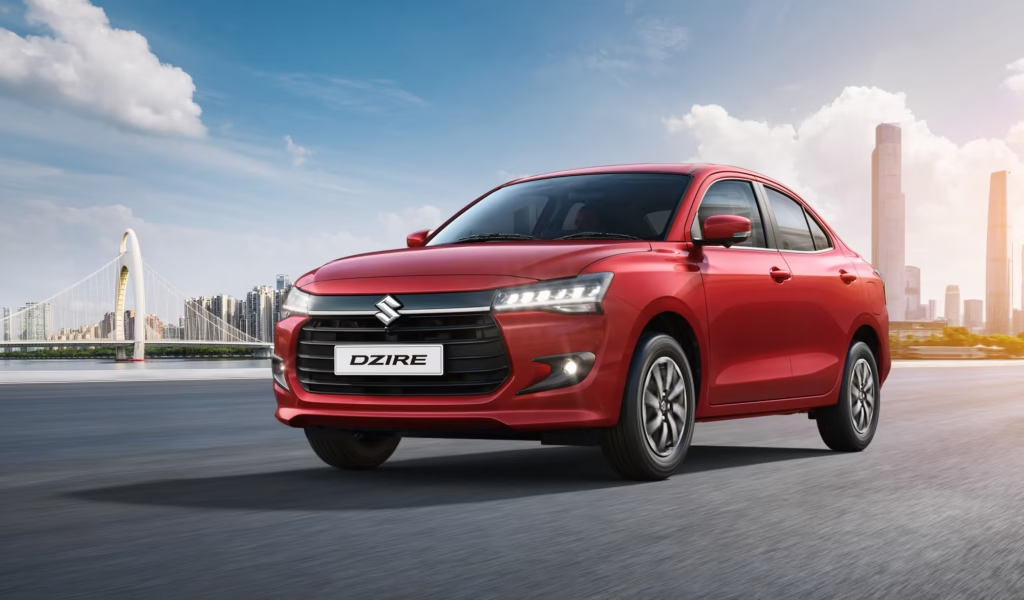
The biggest difference starts with body style. The Tata Punch looks like a mini SUV with a tall stance and strong road presence. It sits higher from the ground, which makes it perfect for Indian roads filled with speed breakers, potholes and rough patches. The Maruti Dzire, on the other hand, is a traditional sedan with a longer body and a more premium appearance. It feels elegant and mature, especially for families who want a proper boot and comfortable rear seats. So visually alone, the Punch feels adventurous while the Dzire feels refined.
Under the hood, both cars come with similar-sized 1.2-litre petrol engines, but they behave differently. The Punch produces slightly less power but feels punchy in the city and easy to drive in traffic. The Dzire produces a bit more power and feels smoother on highways and long drives. Both offer manual and automatic options, and both also come with CNG choices for buyers who want better running costs. However, the Dzire clearly wins in mileage. It is known for delivering over 22–25 kmpl in petrol form and even higher in CNG, making it one of the most fuel-efficient cars in its segment. The Punch gives decent mileage but focuses more on durability and city use rather than outright efficiency.
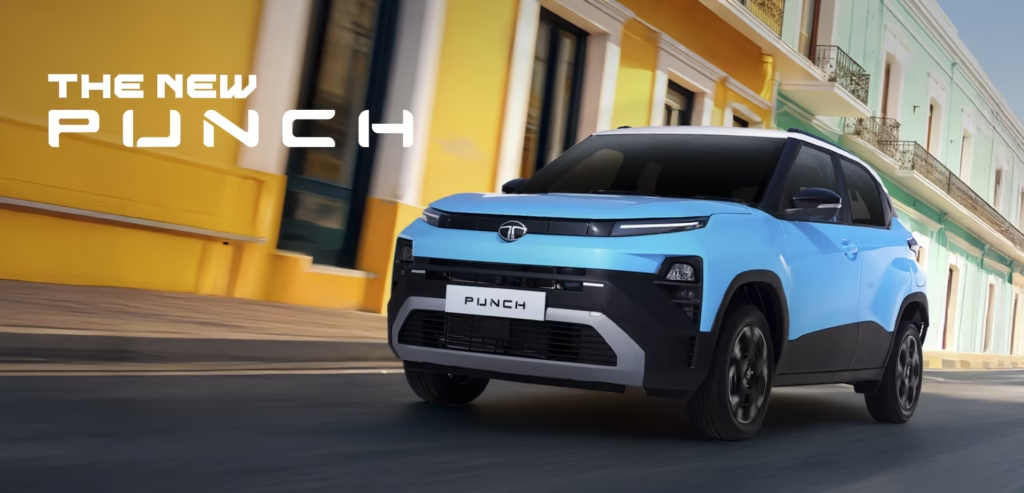
Space and comfort also show a clear difference. The Dzire, being a sedan, offers better rear-seat comfort and a larger boot. It is ideal for families who travel often or need luggage space. The Punch has good headroom thanks to its tall design, but its cabin is narrower compared to the Dzire. Boot space is slightly smaller too. Still, the Punch makes up for this with better ground clearance and a commanding driving position, which many drivers love in daily city use.
When it comes to safety, both cars perform well for their segments. Tata cars are widely known for strong build quality, and the Punch has built a reputation as a solid and safe small car. Meanwhile, the latest Dzire has also stepped up its safety game with improved ratings and more standard safety features, showing that safety is no longer limited to just one brand in this price range.
Driving experience is another area where they feel different. The Punch feels sturdy and confident over bad roads. Its suspension handles bumps well, making it great for city conditions and rough patches. The Dzire feels smoother and more comfortable on highways. It glides at higher speeds and feels more stable for long journeys. In short, the Punch is for rough roads and urban adventures, while the Dzire is for comfort and long drives.
Ownership experience also matters. The Dzire is known for low maintenance costs and a wide service network, making it a safe choice for first-time buyers and families. The Punch offers strong build and a unique SUV-like feel at a lower price point, which attracts younger buyers and city users. Both cars are affordable, but they serve different needs.
In the end, the choice comes down to lifestyle. If you want a tough, compact and stylish car for city driving with a high seating position, the Tata Punch makes a lot of sense. If you want a comfortable, fuel-efficient and spacious family sedan that feels smooth on highways, the Maruti Dzire stands out. Neither is better overall — they simply cater to different priorities. The Punch is about attitude and practicality, while the Dzire is about comfort and efficiency.


![REDTIGER F17 Elite [2026 Edition] 4K 3 Channel Dash Cam, Triple STARVIS 2 Sensor(IMX678/675/662), 4K+2.5K+1080P, Full Night Color, 5.8GHz WiFi 6, GPS, HDR, Touch & Voice Control, 128GB Card Included](https://m.media-amazon.com/images/I/51y6Lv6+o6L.jpg)
Stay tuned and follow up for more.
