
Here is all the essential info on the top scoring cars at the NCAP Safety test.
Also read about the top exporting cars from India.
Bharat NCAP safest cars in India 2026 Mahindra XEV 9e Tata Harrier EV Kia Seltos:
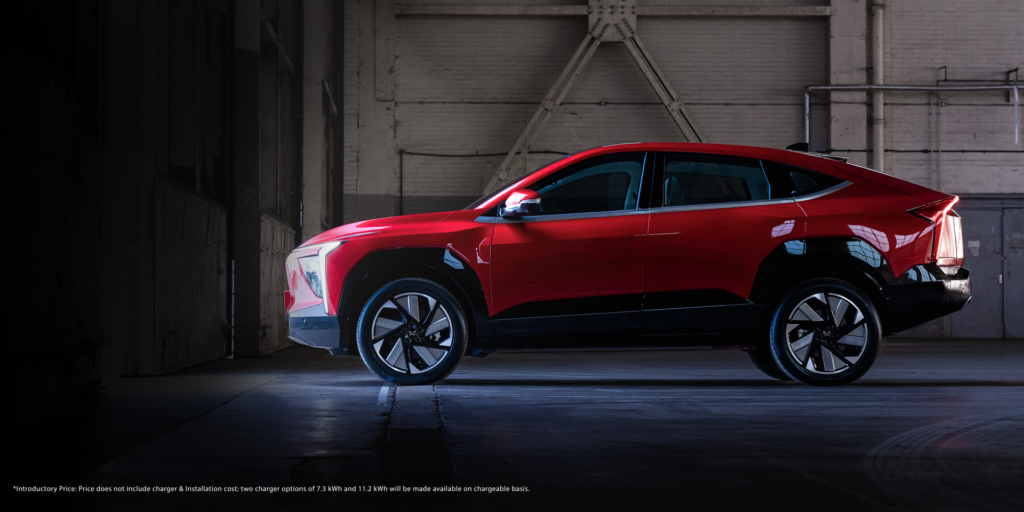
The safety narrative in the Indian automotive space has undergone a remarkable transformation over the past few years, and the introduction of Bharat NCAP has played a decisive role in accelerating this shift. What was once a secondary checklist item for buyers has now evolved into a primary decision-making factor, driven by growing awareness and transparent crash-test data. Today, it is no longer surprising to see multiple vehicles breaching the 30 out of 32 mark in Adult Occupant Protection (AOP), a benchmark that would have seemed aspirational not long ago. This evolution reflects not only regulatory push but also a fundamental change in consumer expectations, where safety is now viewed as essential rather than optional.
At the very top of this safety revolution stand models like the Mahindra XEV 9e and the Tata Harrier EV, both achieving a flawless 32.00 AOP score while also excelling in Child Occupant Protection (COP), thereby setting a new benchmark for the industry. Closely following is the Mahindra BE 6, which narrowly misses perfection but still ranks among the safest vehicles tested. Interestingly, internal combustion models have also stepped up impressively, with the Kia Seltos emerging as the highest-scoring ICE SUV, combining strong structural integrity with high child safety ratings. Meanwhile, Maruti Suzuki has demonstrated significant progress through models like the Maruti Suzuki Victoris and the Maruti Suzuki e Vitara, showcasing how legacy manufacturers are rapidly evolving to meet modern safety expectations.
Visit the official Maruti India website.
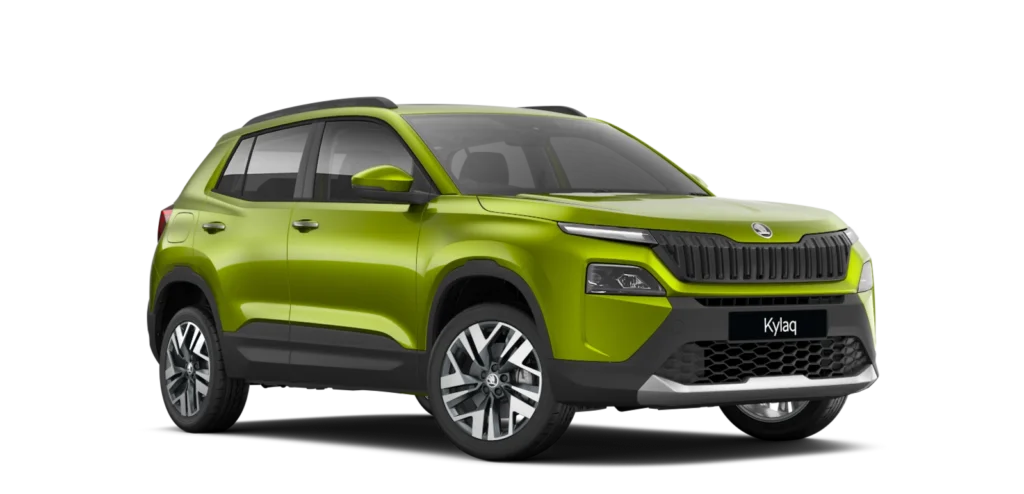
Further down the list, the consistency in high scores highlights a broader industry-wide commitment rather than isolated excellence. Models such as the Tata Punch EV, Hyundai Venue, and Tata Sierra comfortably sit in the 31-point bracket, while vehicles like the Mahindra Thar Roxx and Skoda Kylaq maintain scores above 30, reinforcing the idea that safety excellence is becoming the norm across segments. Even further along, offerings such as the Hyundai Tucson, Tata Curvv EV, and Toyota Innova Hycross continue to deliver commendable performance, proving that body style or propulsion type no longer dictates safety capability. Notably, the resurgence of Korean automakers like Hyundai and Kia has added fresh competitive pressure, narrowing the gap with leaders such as Tata Motors and Mahindra & Mahindra. As competition intensifies, particularly in the under ₹20 lakh SUV segment, the push for stronger platforms, advanced safety technologies, and higher crash-test scores is set to define the next phase of growth in the Indian automotive industry.
Top scoring cars:
- Mahindra XEV 9e – AOP: 32.00 | COP: 45.00 | Total: 77.00
- Tata Harrier EV – AOP: 32.00 | COP: 45.00 | Total: 77.00
- Mahindra BE 6 – AOP: 31.97 | COP: 45.00 | Total: 76.97
- Kia Seltos – AOP: 31.70 | COP: 45.00 | Total: 76.70
- Maruti Suzuki Victoris – AOP: 31.66 | COP: 43.00 | Total: 74.66
- Maruti Suzuki e Vitara – AOP: 31.49 | COP: 43.00 | Total: 74.49
- Tata Punch EV – AOP: 31.46 | COP: 45.00 | Total: 76.46
- Hyundai Venue – AOP: 31.15 | COP: 44.46 | Total: 75.61
- Tata Sierra – AOP: 31.14 | COP: 44.73 | Total: 75.87
- Mahindra Thar Roxx – AOP: 31.09 | COP: 45.00 | Total: 76.09
- Skoda Kylaq – AOP: 30.88 | COP: 45.00 | Total: 75.88
- Hyundai Tucson – AOP: 30.84 | COP: 41.00 | Total: 71.84
- Tata Curvv EV – AOP: 30.81 | COP: 44.83 | Total: 75.64
- Tata Punch – AOP: 30.58 | COP: 45.00 | Total: 75.58
- Toyota Innova Hycross – AOP: 30.47 | COP: 45.00 | Total: 75.47
- Maruti Suzuki Invicto – AOP: 30.43 | COP: 45.00 | Total: 75.43
- Mahindra XUV400 – AOP: 30.38 | COP: 43.00 | Total: 73.38
- Kia Syros – AOP: 30.21 | COP: 44.42 | Total: 74.63
- Tata Harrier – AOP: 30.08 | COP: 44.54 | Total: 74.62
- Tata Safari – AOP: 30.08 | COP: 44.54 | Total: 74.62
This comprehensive list not only highlights individual excellence but also underlines a larger trend: safety is no longer confined to premium segments or specific powertrains. From compact SUVs to MPVs and electric vehicles, the industry is witnessing a uniform rise in crashworthiness standards. As manufacturers continue to refine their platforms and integrate advanced safety technologies, Indian consumers stand to benefit the most gaining access to vehicles that are not just feature-rich, but fundamentally safer than ever before.
Stay tuned and follow up for more.
