
BYD PHEV India launch 2026
998 km. That’s the headline number BYD is putting on its first plug-in hybrid for India. If you’ve been on the fence about making the switch to electric, worried about charging stops on highways, infrastructure gaps outside metros, or just not ready to go full EV, the BYD PHEV India launch 2026 might be the announcement you’ve been quietly waiting for.
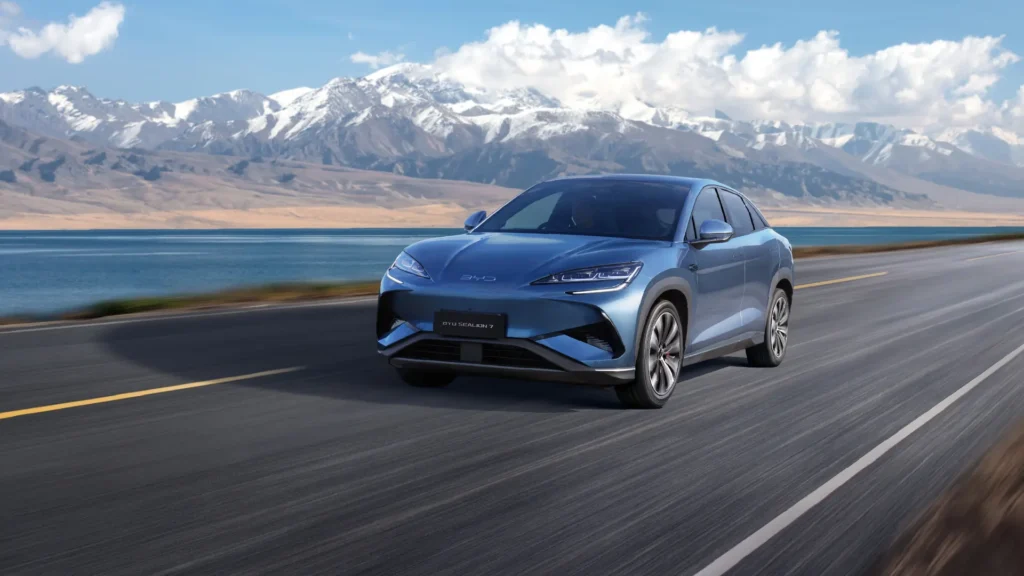
Also read about the BYD Sealion 7 vs all the EV Rivals!
What Is BYD Actually Bringing to India?
The Atto 2 DM-i is the front-runner for BYD’s PHEV debut in India, with the Sealion 6 also reportedly in contention. The DM-i system pairs a 1.5-litre naturally aspirated petrol engine with either a 7.8 kWh or 18 kWh battery pack, resulting in a combined driving range of up to 998 km. That number is key. It means you run on electric for your daily city driving, and the petrol engine extends your range on long highway runs without ever needing a charging station. This is not a mild hybrid. In a PHEV, the battery can be plugged in and charged externally like an EV, and the electric-only range is meaningful, especially with the larger 18 kWh pack. BYD has confirmed the PHEV launch via a teaser, and with the Atto 2 DM-i’s specs, it is shaping up as one of the more interesting arrivals of June 2026.
The Honest Case for PHEV in India
India’s EV adoption story has one persistent problem: infrastructure confidence. Fast chargers outside metros are still inconsistent, and highway anxiety is a real concern for anyone who has driven a Nexon EV or Creta Electric between smaller cities. PHEVs solve this problem structurally. You get EV-like running costs for your daily 30 to 50 km city commute, charged at home overnight, and you never once worry about charger availability on a weekend run from Mumbai to Pune or Ahmedabad to Surat. The 7.8 kWh battery likely delivers 50–60 km of pure electric range, enough to cover most urban daily commutes without the petrol engine ever kicking in. The 18 kWh pack extends that further. For a buyer doing 40 km daily in Hyderabad traffic with two or three highway trips a month, the BYD hybrid car India 2026 ownership math is genuinely compelling.
The Counterargument: Where PHEV Falls Short
PHEVs carry two powertrains, one electric and one petrol, which means higher upfront cost, more mechanical complexity, and potentially higher servicing costs over time compared to a pure EV. The fuel savings need to recover that premium. If BYD prices the Atto 2 DM-i between ₹18 lakh and ₹22 lakh, the case holds comfortably. If it arrives above ₹25 lakh, you are in direct competition with long-range EVs like the Creta Electric, Nexon EV Long Range, and Harrier EV. At that price point, a home charger plus a full EV makes more financial sense for most buyers. Price is not a detail here. It is the entire argument.
BYD in India: Can the Brand Be Trusted Yet?
BYD is not a new name in India. The Atto 3 EV has been available for a while and has earned reasonable marks for its interior quality and feature packaging. The genuine concerns, including after-sales network depth outside Tier 1 cities and resale value uncertainty, are real and fair. BYD hasn’t been in India long enough to establish the resale confidence that Hyundai or Tata buyers take for granted. If you’re in Mumbai, Delhi, Bangalore, Hyderabad, or Pune, BYD service access is solid enough. In Tier 2 cities, it is a variable worth checking before signing anything. The best PHEV car India 2026 is only as good as the service centre 15 km from your home.
What This Means for Indian Buyers
PHEV is the honest middle ground India needed between the promise of EVs and the reality of its charging infrastructure. BYD has the technology to deliver it. The 998 km combined range, however optimistically measured, signals a car designed to eliminate range hesitation entirely. Whether it actually moves the needle for Indian buyers depends almost entirely on where BYD lands the price. Get that right, and this becomes a serious recommendation. Get it wrong, and it disappears into the premium EV noise.
Final Verdict
The BYD PHEV India launch 2026 is worth your attention. For buyers who have been waiting for an electric option that doesn’t demand a lifestyle change around charging infrastructure, this is the one. If the Atto 2 DM-i comes in under ₹22 lakh, it becomes an immediate recommendation for urban buyers with regular highway use. Above ₹25 lakh, the Creta Electric is the more practical argument unless you specifically need that petrol fallback on routes where charging is unreliable. Do not buy this car on the 998 km headline. Buy it for what it actually is: an electric car you can refuel at a petrol pump when you need to.
Frequently Asked Questions
Q1. What is the BYD PHEV India launch date in 2026?
BYD has confirmed its first PHEV for India in 2026, with the Atto 2 DM-i and Sealion 6 as leading candidates. An official launch date has not been announced yet, but BYD’s June 2026 teaser activity signals the announcement is close. Watch for a formal reveal in the coming weeks.
Q2. What is the expected price of the BYD Atto 2 DM-i in India?
No official pricing has been released. Based on BYD’s existing pricing strategy and the Atto 3 EV’s current position, the Atto 2 DM-i is expected to land between ₹18 lakh and ₹25 lakh (ex-showroom). The variant with the larger 18 kWh battery will likely sit at the higher end of that range.
Q3. What is the difference between a PHEV and a hybrid car?
A PHEV can be charged externally like an EV and delivers meaningful electric-only range for daily commuting. A regular strong hybrid like Toyota’s system relies on the petrol engine as the primary source and cannot be plugged in. PHEVs offer significantly more electric range and lower daily running costs for buyers who charge at home.
Q4. Should I wait for the BYD PHEV or buy an EV now?
If you have a home charger and drive mostly in the city, the Creta Electric or Nexon EV Long Range are proven, available choices today. If charging infrastructure in your area is genuinely unreliable, or you do long highway runs regularly, waiting for the BYD PHEV India launch makes practical sense. It solves the one problem EVs haven’t fully addressed yet.
Stay tuned and follow up for more.
