
Maruti Suzuki e Vitara marks Maruti’s strong entry into the electric SUV segment, registering over 20,000 bookings already. Discover how this EV aims to redefine Maruti’s presence in India’s electric vehicle market. Maruti Suzuki e Vitara is company’s latest reveal at their first EV. The car will be sold in at the Nexa showrooms. One of India’s biggest car maker is now looking at targeting the EV segment with its latest product.
What is the new e Vitara?
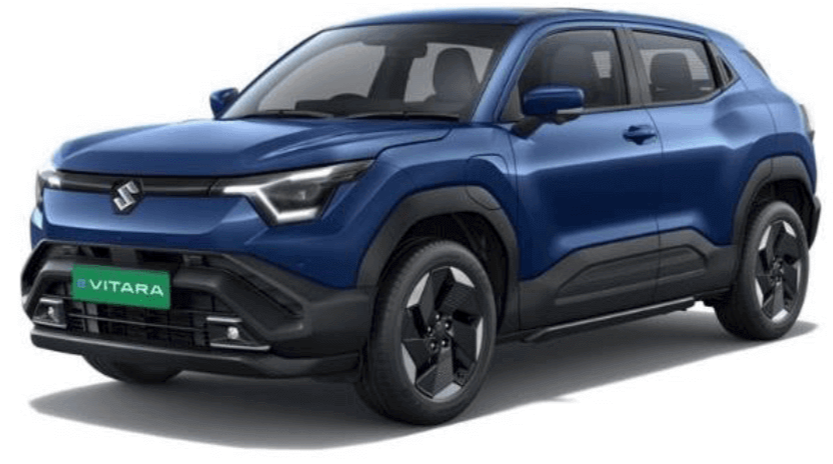
Built on Suzuki’s strong hybrid and EV-ready architecture, the e-Vitara focuses on a blend of range, comfort, and connectivity. On the outside, the SUV carries a futuristic design language with a closed grille, LED projector headlamps, sleek daytime running lights, and aerodynamically designed alloy wheels that enhance both looks and performance. The interiors continue Maruti Suzuki’s modern design theme, featuring a large infotainment touchscreen with wireless Android Auto and Apple CarPlay, a digital driver’s display, premium fabric or leather upholstery options, and ambient lighting for a more upscale cabin feel. The e-Vitara is expected to offer multiple drive modes, regenerative braking, and an estimated driving range that comfortably supports daily urban commutes and long weekend drives. Safety features are equally emphasized, including multiple airbags, ABS with EBD, traction control, a 360-degree camera, and advanced driver assistance systems in higher variants. The SUV also comes equipped with fast-charging capability that allows a quick top-up of the battery within minutes, along with compatibility for standard home charging. Designed to cater to both families and urban professionals, the e-Vitara promises to deliver a smooth, silent, and eco-friendly drive experience. With its combination of advanced features, bold design, and electric efficiency, the Maruti Suzuki e-Vitara is positioned to redefine the brand’s image in the electric mobility market and strengthen its foothold in India’s fast-evolving compact EV SUV segment.
Get updated on the EV market.
Who is the competition?
| Competitor Model | Approx Battery Size / Versions | Expected Driving Range | Key Advantages / Features | Likely Price-Tier vs e-Vitara |
|---|---|---|---|---|
| Mahindra BE6 | Two versions: mid-battery (~60-70 kWh) and large (~75-90 kWh) | Mid version: ~450-550 km; large version: ~600-700 km | Strong power; good features; wide variant spread; more range options | Somewhat higher end in top trims; base may overlap with e-Vitara |
| Hyundai Creta Electric | Likely two battery options (smaller and larger pack) | Smaller version maybe ~350-450 km; larger pack closer to 500-550 km | Lots of feature fitment; strong dealer & service network; familiar design; brand trust | Usually priced slightly above mid segment; high end variants may cost more than e-Vitara base variants |
| Tata Curvv EV | One or two battery packs; focus on a strong mid-pack option | Expected in the 450-550 km bracket for higher trims | Stylish design; good interior tech; decent dealer support; competitive pricing | Likely to undercut higher spec rivals; may match or slightly undercut e-Vitara at equivalent spec |
| MG ZS EV | Single battery size around 50-60 kWh (or similar) | Probably ~400-500 km for full charge in real-world use | Good feature list; strong safety & comfort; brand presence; after-sales network | Likely to compete closely with e-Vitara’s mid-trim levels; may be cheaper or close on value |
| Tata Harrier EV | Larger battery packs; possibly performance/dual motor options | Expected range ~550-650 km in best variants | Premium build; spacious cabin; more tech & comfort; perhaps higher torque / AWD options | Positioned above e-Vitara in price; viewed as more premium offering |
Suzuki Tech:
Suzuki’s EV platform aims to make the car more trustable at some point where the car can easily make about 500km of range and we all know that Suzuki is well known for its range in its ICE and hybrid vehicles. The ADAS and safety features that compliment the ride along with Suzuki’s AllGrip all wheel drive that gives better control over the car. And fially the design that is made to suit all conditions. The car will be offered with two battery packs, a 48.8 kwh and a 61 kwh LFP battery pack sourced by BYD that would be ideal for city and highway use and promises over 500 km of range. The car produces 144 PS and 192.5 NM of torque in the Smaller 48.8 kwh battery pack, whereas for the larger 61 kwh battery pack, the car produces 174 PS and 192.5 NM of torque. And the price is expected to be around 17 lakhs ex-showroom.
Conclusion:
The car can be a great competition to the currently selling EVs especially when it comes with the brand value and trust of Maruti Suzuki. The car is a good package in itself and gives good value if one is look for a premium and sportier looking car that can manage both, city and highways.
Stay tuned and follow up for more.
