
Honda is set to launch it’s upcoming 7th gen Honda CR-V in India, that is currently being developed in Japan. Honda has skipped the 6th gen of the CR-V in India but plans to bring the 7th gen of CR-V back in the game. Here’s what we know so far.
Expected changes in the Honda CR-V:
The upcoming 7th Generation Honda CR-V is anticipated to redefine its segment with a more advanced suite of hybrid and turbocharged powertrains, blending efficiency, performance, and refinement in a seamless driving experience, as Honda continues its transition toward electrified mobility; it is expected to feature a refined 1.5-liter VTEC Turbo petrol engine offering responsive power delivery, paired with a CVT gearbox tuned for smoother acceleration and improved fuel economy, while a strong hybrid variant derived from Honda’s e:HEV technology may join the lineup, combining a 2.0-liter Atkinson cycle petrol engine with dual electric motors for optimal torque distribution and near-silent electric operation in urban conditions.
Read about The Honda Elevate ADV Edition.
Beyond powertrains, the 7th Gen CR-V is likely to feature an upgraded chassis architecture emphasizing ride comfort and handling precision with improved suspension tuning and enhanced NVH insulation; the cabin design will likely follow Honda’s new minimalistic interior philosophy, highlighted by a wide infotainment display, digital cluster, premium upholstery, and intuitive ergonomics; cabin space and practicality will remain pillars of the CR-V’s identity, possibly enhanced with a fold-flat rear seat system and reconfigurable cargo area.
Advanced safety will take center stage with the latest Honda Sensing suite integrating adaptive cruise control, lane-keeping assist, traffic jam support, and 360-degree monitoring for improved driver awareness; connectivity enhancements may include over-the-air system updates, wireless smartphone integration, and AI-based route optimization; exterior styling will likely evolve toward a bolder, more mature presence with a wider stance, sculpted bonnet, aerodynamically efficient contours, and LED lighting signatures that convey a strong yet refined aesthetic character; overall, the 7th Gen Honda CR-V is poised to offer a perfect synthesis of technological sophistication, electric readiness, luxury comfort, and dynamic confidence fit for modern global markets.
Competition:
| Model | Powertrain Options | Key Features | Design Focus | Market Position | Seating Capacity |
|---|---|---|---|---|---|
| Toyota RAV4 | Petrol, Hybrid, Plug-in Hybrid | Safety tech, reliability, efficiency | Rugged, modern | Value, eco-friendly | 5 |
| Hyundai Tucson | Petrol, Diesel, Hybrid | Bold styling, digital cockpit | Sporty, upscale | Feature-rich, techy | 5 |
| Mazda CX-5 | Petrol, Diesel | Responsive drive, premium interior | Elegant, simple | Dynamic, refined | 5 |
| Volkswagen Tiguan | Petrol, Diesel | Euro styling, quality cabin | Sophisticated, compact | Urban, versatile | 5 |
| Nissan X-Trail | Petrol, Hybrid | Roomy, safety-oriented | Practical, robust | Family-focused | 5–7 (varies) |
| Kia Sportage | Petrol, Diesel, Hybrid | Unique design, tech features | Distinctive, youthful | Young urban buyers | 5 |
| MG Hector | Petrol, Diesel, Hybrid | Large touchscreen, AI assistant | Large, imposing | Value-driven, roomy | 5 |
| Skoda Kodiaq | Petrol, Diesel | Premium features, high safety | European, elegant | Premium, spacious | 7 |
| Jeep Compass | Petrol, Diesel | Off-road prowess, strong brand | Rugged, solid | Adventure, premium | 5 |
| Mitsubishi Outlander | Petrol, Plug-in Hybrid | 3-row seating, practical | Subdued, spacious | Versatile family | 7 |
5th Gen Honda CR-V:
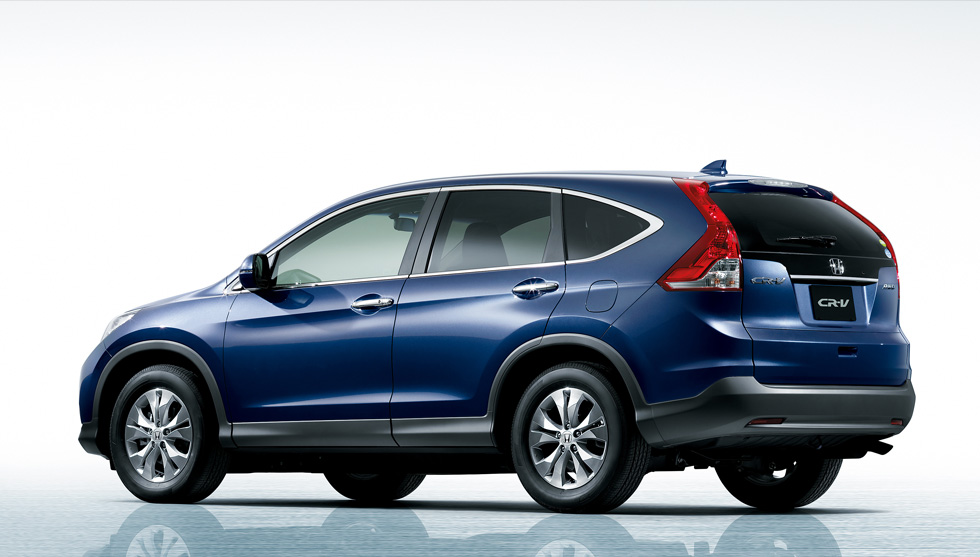
The 5th Gen Honda CR-V in India marked Honda’s successful entry into the premium SUV segment with its blend of style, space, and technology. Launched with a 1.6-litre diesel engine producing 118 bhp and 300 Nm torque paired with a 9-speed automatic transmission and optional AWD, it offered impressive drivability and fuel efficiency around 19.5 kmpl for the diesel.
Visit the Official Honda India website.
The petrol variant had a 2.0-litre engine delivering 156 hp but was limited to five seats, whereas the diesel came with a seven-seat configuration, catering well to families. Its design featured a bold chrome grille, LED headlamps with L-shaped DRLs, panoramic sunroof, and 18-inch alloys, projecting a sporty and premium feel. Spacious interiors with advanced features like the lane watch camera, automatic climate control, and a 7-inch instrument cluster enhanced comfort and convenience. The car’s 208mm ground clearance and all-wheel-drive capabilities made it suitable for varied road conditions, positioning it as a competitive offering in India’s compact SUV market. Its rivals included Hyundai Tucson, Jeep Compass, Skoda Kodiaq, and Volkswagen Tiguan.
Stay tuned and follow up for more.
