
Here’s all the essential info you need to know about the highest growing car brands in India in CY2025.
Also read about the best cars in CY2025.
Highest growth by car brands in CY2025:
A Clear Shift in India’s Passenger Vehicle Market: Who Won, Who Slipped in CY2025
Calendar Year 2025 marked a noticeable turning point in India’s passenger vehicle market. While overall industry volumes stayed fiercely competitive, growth was no longer evenly spread across brands. Instead, it became increasingly concentrated among manufacturers that doubled down on strong SUV line-ups, refreshed their portfolios at the right time, and managed to keep consumer interest alive in a crowded market.
Only a handful of carmakers managed to deliver meaningful year-on-year gains—both in absolute volumes and growth percentage—while several established players struggled to hold ground, losing volumes and market share in the process. The year clearly underlined one key reality: brands that moved quickly with the right products surged ahead, while others paid the price for stagnation.
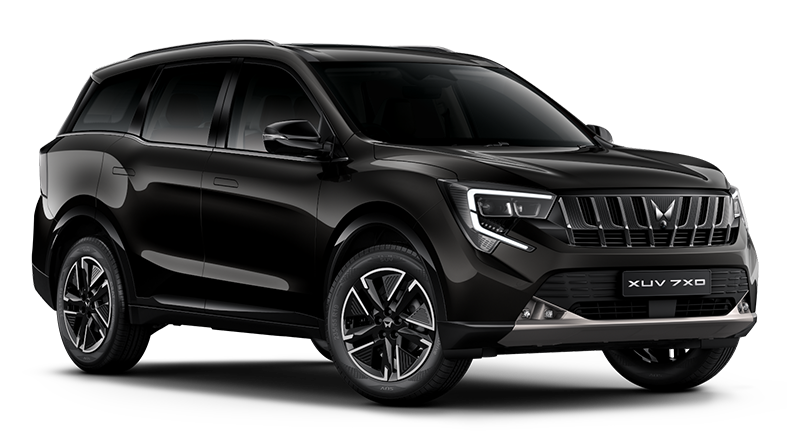
Mahindra stood out as the undisputed star performer of CY2025. The homegrown automaker emerged as the biggest gainer in the industry by adding a massive 97,739 units compared to the previous year. This translated into a robust 18 per cent growth, the highest volume increase recorded by any manufacturer. Even more importantly, Mahindra expanded its market share by 1.5 per cent—the largest gain among all brands—cementing its growing dominance in the passenger vehicle space.
Visit the official Mahindra India website.
The company’s success was largely driven by its powerful SUV portfolio. Consistent demand for the Scorpio, Thar, and the XUV range ensured strong order books throughout the year. Mahindra’s ability to capitalise on the country’s SUV obsession proved decisive, helping it pull away from rivals and reshape the competitive order.
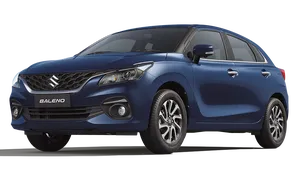
Maruti Suzuki, India’s largest carmaker by volume, ranked second in terms of absolute growth. The brand added 51,091 units in CY2025, pushing its total sales close to the two-million-unit mark. However, its growth rate stood at a modest 3 per cent, and it simultaneously witnessed a 1.1 per cent decline in market share. This indicates that while Maruti continued to grow in volume, competition intensified sharply in the mass-market segments where it traditionally dominates.
Toyota followed closely behind Maruti in volume addition, posting an increase of 50,832 units. Unlike Maruti, Toyota’s growth was more efficient, delivering a strong 17 per cent rise in sales and improving its market share by 0.7 per cent. The Japanese brand benefited from sustained demand for its SUVs and MPVs, allowing it to punch well above its weight in overall market performance.
Among mid-sized players, Skoda delivered one of the most remarkable turnarounds of the year. The brand recorded a staggering 107 per cent growth by adding 37,478 units—one of the highest percentage gains in CY2025. This surge helped Skoda increase its market share by 0.8 per cent, highlighting the impact of its refreshed product strategy and improved consumer traction.
Kia also continued its steady upward momentum. The Korean automaker added 35,286 units, translating into a healthy 14 per cent growth. Alongside this volume increase, Kia gained 0.5 per cent market share, reinforcing its position as a consistent performer in the highly competitive SUV and premium mass segments.
Tata Motors posted a more moderate performance. The brand added 16,291 units in CY2025, reflecting a 3 per cent growth. However, it saw a 0.3 per cent dip in market share, suggesting that while volumes rose, rivals grew faster in key segments. MG Motor recorded a 14 per cent growth by adding 8,279 units, aided largely by demand for the Windsor EV. Citroën, meanwhile, saw a marginal improvement of 450 units, registering a 6 per cent year-on-year growth.
On the other end of the spectrum, several manufacturers faced a difficult year. Hyundai suffered the steepest decline in absolute terms, losing 33,555 units. This resulted in a 6 per cent de-growth and the largest market share loss of 1.5 per cent among all brands. Nissan, Honda, Renault, Volkswagen, and Jeep also ended CY2025 in negative territory, each reporting falling sales volumes and shrinking market presence.
Overall, CY2025 clearly highlighted how quickly fortunes can change in India’s fast-evolving passenger vehicle market. Brands that adapted to shifting buyer preferences—especially the growing appetite for SUVs—thrived, while others struggled to stay relevant.
Passenger Vehicle Sales Comparison – CY2025 vs CY2024
| Brand | CY2024 Sales (Units) | CY2025 Sales (Units) | Volume Change |
|---|---|---|---|
| Mahindra | 536,771 | 634,510 | +97,739 |
| Maruti Suzuki | 1,865,462 | 1,916,553 | +51,091 |
| Toyota | 297,830 | 348,662 | +50,832 |
| Skoda | 35,115 | 72,593 | +37,478 |
| Kia | 259,833 | 295,119 | +35,286 |
| Tata Motors | 552,902 | 569,193 | +16,291 |
| MG Motor | 59,927 | 68,206 | +8,279 |
| Citroën | 7,446 | 7,896 | +450 |
| Hyundai | 567,368 | 533,813 | −33,555 |
| Renault | 49,996 | 46,615 | −3,381 |
| Honda | 91,610 | 85,926 | −5,684 |
| Nissan | 63,089 | 55,434 | −7,655 |
| Volkswagen | 44,786 | 41,186 | −3,600 |
| Jeep | 6,803 | 4,192 | −2,611 |
Stay tuned and follow up for more.