
Here is a detailed comparison and overview of the newly launched Maruti e Vitara and it’s competition in the Indian market.
Also read about the Maruti e Vitara’s direct rival.
Maruti e Vitara comparison Electric SUV Rivals in India:
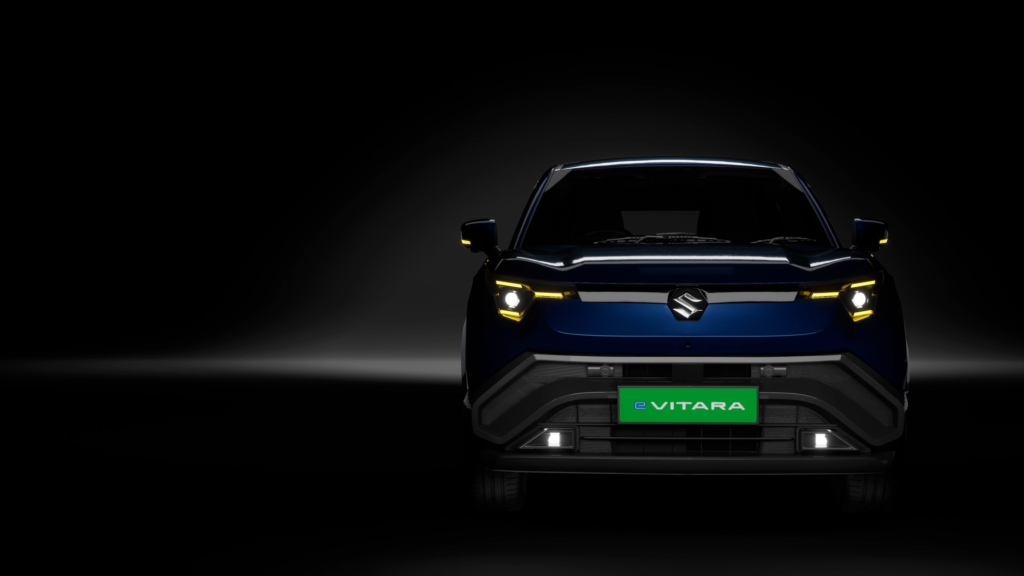
The arrival of the Maruti e Vitara signals a major shift for Maruti Suzuki as it finally enters the competitive electric SUV space with a product designed for mainstream buyers. The model sits in the same arena as offerings from Tata Motors, Mahindra, MG Motor and even upcoming entries from Hyundai. With aggressive expected pricing, flexible battery ownership options and a practical mid-size footprint, the e Vitara positions itself as a family-friendly electric SUV rather than a niche premium experiment. Its entry-level cost structure is designed to undercut several established rivals, while top-end variants promise features and range that compete directly with higher-priced models in the segment.
In terms of performance and hardware, the e Vitara brings a balanced approach. Two battery pack options are expected, offering a claimed driving range that could exceed 500 km for the larger pack. That figure places it comfortably alongside the longest-range options in its category and ahead of several compact electric SUVs that currently dominate urban sales. Power output is expected to sit in the mid-range of the segment—strong enough for daily commuting and highway use without chasing outright performance figures. Rivals such as the Nexon EV and XUV400 emphasise punchy acceleration, while the ZS EV and upcoming Curvv EV push toward premium interiors and stronger power numbers. The e Vitara instead focuses on delivering a well-rounded experience: sufficient power, efficient energy consumption and a more accessible ownership model. One of its key talking points is the battery-subscription concept, which lowers the purchase price and allows buyers to pay for battery usage separately, potentially reducing the entry barrier for first-time EV customers.
Visit the official Maruti India website.
Where the e Vitara could gain a decisive advantage is in practicality and ownership experience. Maruti’s extensive service network across urban and rural India remains unmatched in scale, and that reassurance matters greatly to buyers transitioning from petrol or diesel vehicles. Feature-wise, the e Vitara is expected to include a large touchscreen interface, digital instrumentation, connected car tech, ADAS safety aids, a 360-degree camera, ventilated seats and a premium cabin layout—putting it in direct contention with better-equipped versions of its competitors. While rivals from Tata and MG often lean toward bold styling or premium positioning, the e Vitara aims to strike a middle ground: approachable design, sensible pricing and long-term usability. For many households considering their first electric SUV, that combination of familiarity and modern technology may prove more persuasive than outright performance or luxury.
Maruti e Vitara vs the competition:
| Aspect | Maruti e Vitara | Tata Nexon EV | Tata Curvv EV | Mahindra XUV400 | MG ZS EV |
|---|---|---|---|---|---|
| Segment | Mid-size electric SUV | Compact electric SUV | Coupe-style electric SUV | Compact electric SUV | Mid-size electric SUV |
| Expected Price Range (ex-showroom) | ₹11 lakh – ₹20 lakh (approx.) | ₹14.5 lakh – ₹19.5 lakh | ₹17.5 lakh – ₹22 lakh | ₹16 lakh – ₹19 lakh | ₹19 lakh – ₹26 lakh |
| Battery Options | ~49 kWh / ~60 kWh | 30–40.5 kWh | 45–55 kWh | 34.5–39.4 kWh | 50.3 kWh |
| Claimed Range | Up to ~500 km+ | Up to ~465 km | Up to ~550–580 km | Up to ~456 km | ~460 km |
| Power Output | ~150–170 PS (est.) | 129–145 PS | ~150–170 PS | 150 PS | ~177 PS |
| Drivetrain | Front-wheel drive | Front-wheel drive | Front-wheel drive | Front-wheel drive | Front-wheel drive |
| Charging Support | AC home + DC fast charging | AC + fast charging | AC + fast charging | AC + fast charging | AC + fast charging |
| Ownership Model | Battery subscription option available | Standard ownership | Standard ownership | Standard ownership | Standard ownership |
| Infotainment | Large touchscreen + digital cluster | Touchscreen + digital display | Dual screens, premium UI | Touchscreen system | Large touchscreen |
| Safety | ADAS, multiple airbags, 360° camera | 6 airbags, ESC | ADAS expected | 6 airbags | 6 airbags, ADAS |
| Interior Features | Ventilated seats, sunroof, connected tech | Ventilated seats, JBL audio | Panoramic roof, premium cabin | Sunroof, connected features | Panoramic roof, premium trim |
| Practicality | Spacious cabin, family-focused | Compact footprint | Coupe styling, larger boot | Wide cabin space | Large boot capacity |
| Service Network | Extensive nationwide reach | Strong urban presence | Growing network | Established network | Metro-focused network |
| Key Strength | Affordable entry + long range | Value and reliability | Style and range | Performance and space | Premium feel and power |
The e Vitara steps into a rapidly evolving electric SUV market with a strategy built on accessibility and trust. Instead of chasing extremes, it aims to deliver a comfortable balance of range, features and affordability. Buyers who prioritise ease of ownership, familiar after-sales support and everyday usability may find it especially appealing. Meanwhile, competitors still hold advantages in areas like performance, design flair or premium interiors. This makes the segment more diverse than ever, giving buyers a wide spectrum of choices depending on what matters most.
Ultimately, the e Vitara’s success will depend on how well it delivers on real-world efficiency and ownership costs. If it meets expectations, it could become one of the most approachable electric SUVs for Indian families stepping into EV ownership for the first time.
Stay tuned and follow up for more.