
Reports suggest that Luxury cars that are currently being sold in India, might get cheaper. Here’s why?
Also read about the record sales from Skoda-VW group as of 2025.
Luxury cars cheaper in India:
A New Door Opens for European Cars in India
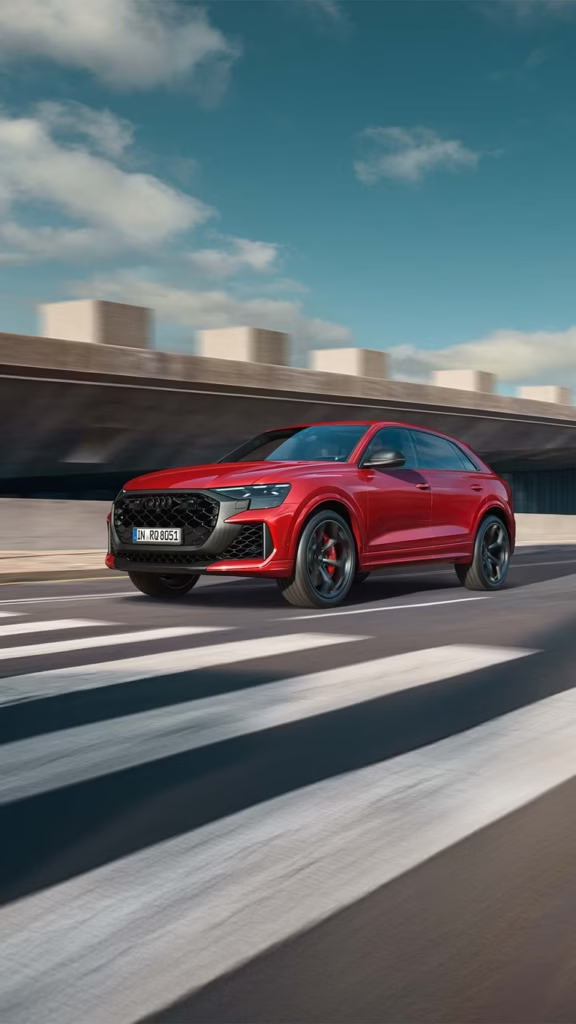
India’s car market is standing at the edge of a major shift, one that could finally bring premium European cars closer to Indian buyers than ever before. With the proposed India–European Union Free Trade Agreement expected to be formally announced tomorrow, long-standing barriers around imported passenger vehicles are about to change in a big way.
For years, fully built cars imported from Europe have been heavily taxed in India. In some cases, import duties alone went up to a staggering 110 per cent. That single factor pushed prices so high that even well-known global brands struggled to grow beyond a niche audience. The upcoming trade agreement aims to rewrite that story.
Under the new framework, import duties on internal combustion engine cars priced above 15,000 euros will be sharply reduced. In the first phase, customs duty is expected to drop to around 40 per cent, subject to an annual import limit of approximately two lakh units. Over time, tariffs are likely to be reduced further, eventually settling close to the 10 per cent mark. For the Indian market, this is a massive change.
Electric vehicles from Europe, however, will not see immediate benefits. Battery electric cars will remain outside the agreement for roughly five years. This pause appears designed to protect India’s growing EV ecosystem, particularly domestic players like Tata Motors and Mahindra & Mahindra that are investing heavily in local electric platforms. Once this protection window closes, European EVs are expected to follow the same phased duty reduction path.
Visit the official Audi India website.
The biggest impact of the agreement will be seen in pricing. Today, a European car priced between 45,000 and 50,000 euros can end up costing almost double its original price by the time it reaches Indian showrooms. Import duties, GST, logistics costs and dealer margins combine to inflate prices beyond reach for most buyers. With duties capped at 40 per cent, that tax burden comes down dramatically. Even after accounting for other charges, ex-showroom prices could drop by 30 to 50 per cent, making luxury cars far more attainable.
Brands like BMW, Mercedes-Benz, Audi, Volkswagen and Porsche stand to gain the most. These manufacturers already enjoy strong brand recognition in India but have been held back by pricing and limited import volumes. A more balanced duty structure could allow them to offer a wider range of models, better equipment levels and more competitive pricing.
Despite India being one of the fastest-growing car markets in the world, with annual passenger vehicle sales crossing 4.4 million units, European brands still occupy only a small slice of the pie. High import taxes have forced them to play safe, limiting expansion plans and slowing decision-making. The new tariff structure changes that equation.
What makes the deal particularly interesting is its controlled approach. The annual import cap allows manufacturers to test the waters without making immediate investments in factories or large-scale localisation. Brands can study demand, refine pricing strategies and gradually plan deeper involvement in the market. Local assembly and manufacturing will still enjoy tax advantages, ensuring that long-term commitment to India remains attractive.
Negotiations between India and the European Union have taken several years, often delayed by disagreements across industries. The timing of this agreement is notable, arriving at a moment when global trade is becoming more fragmented and protectionist. In that context, the deal signals India’s willingness to selectively open its doors while still protecting key domestic industries.
In the short term, demand for premium and luxury cars is show expected to respond first. Mass-market segments are unlikely to see major changes immediately. But if implemented as outlined, this agreement could permanently reshape how global carmakers view India—not just as a volume market, but as a viable destination for premium imports as well.
Basic Comparison: European Imports vs Existing Market Options
| Aspect | European Imported Cars (Post-FTA) | Locally Assembled Luxury Cars | Mass-Market Indian Cars |
|---|---|---|---|
| Import Duty | Starts at ~40%, may drop to ~10% | Lower due to local assembly | Minimal or none |
| Price Impact | 30–50% price reduction expected | Stable pricing | Largely unchanged |
| Brands Benefiting | BMW, Mercedes-Benz, Audi, VW, Porsche | BMW, Mercedes-Benz, Audi | Maruti Suzuki, Hyundai, Tata |
| Annual Volume | Capped at ~2 lakh units initially | Higher flexibility | High volume |
| EV Inclusion | Excluded for ~5 years | Already available | Rapidly expanding |
| Target Buyers | Premium & luxury customers | Luxury buyers | Mass & mid-segment buyers |
Stay tuned and follow up for more.
