
Hyundai FY26 sales
Not every brand ends a financial year with something to celebrate. Hyundai Motor India closed FY26 with total dispatches of 5,84,906 units, a 2 per cent decline over FY25’s 5,98,666 units. On the surface, that sounds like a quiet step backward. But dig a little deeper and what you find is far more interesting than a simple dip in numbers.
This isn’t a brand in trouble. It’s a brand mid-shift, one where some products are running hot, others are running out of excuses, and the overall story is less about volume and more about where Indian buyers are actually putting their money.
Also read about the safety tast of the recently launched Renault Duster.
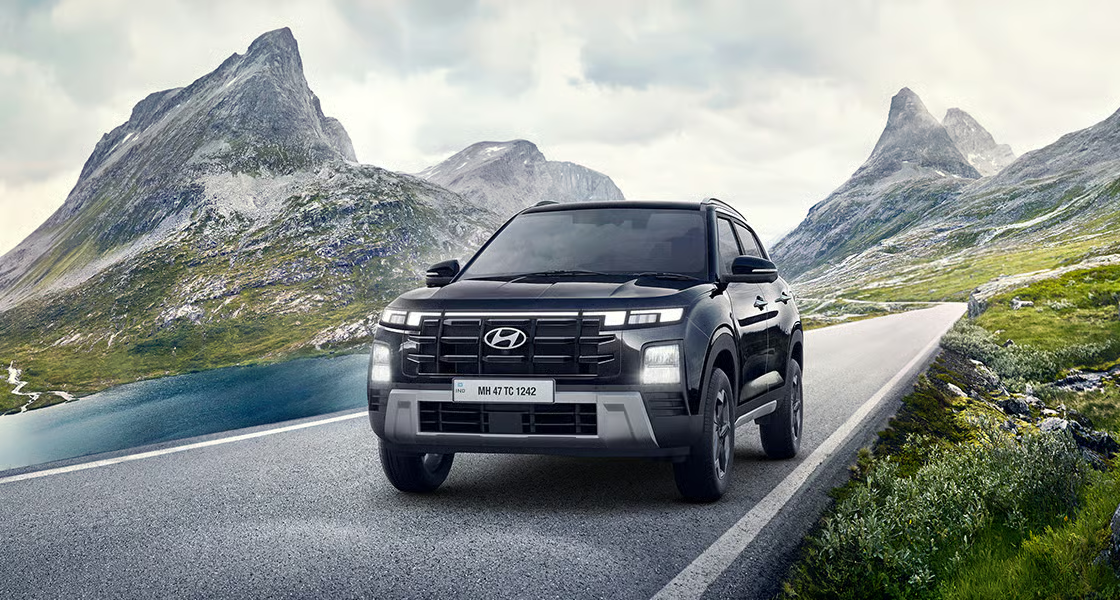
The Creta Is Now Untouchable
If there’s one thing FY26 confirmed, it’s that the Hyundai Creta has moved beyond being a bestseller. It’s now a category of its own.
With 2,01,921 units dispatched, a 4 per cent year-on-year growth, the Creta didn’t just top Hyundai’s charts. It accounted for over one-third of the brand’s entire annual volume. That’s a staggering concentration for a single model, and it says as much about the midsize SUV craze in India as it does about the Creta itself. Competition in this segment has intensified considerably, yet the Creta hasn’t blinked. The five-seat SUV from a Korean brand somehow manages to keep feeling relevant, fresh, and worth waiting for.
Venue Holds On, But Just About
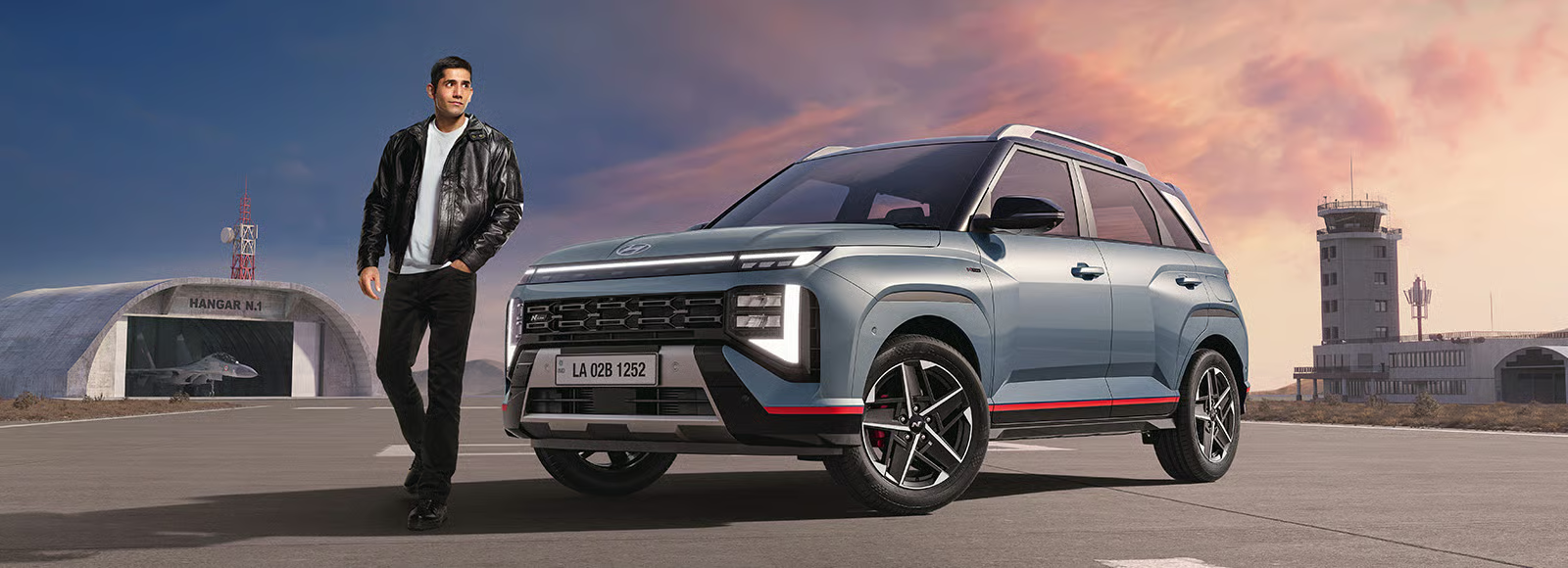
The Venue posted 1,17,737 units, down a marginal 1 per cent from the previous year. That kind of decline, on its own, wouldn’t raise eyebrows. But context matters here.
The compact SUV space in India is genuinely crowded now. New entrants, facelifted rivals, and aggressive pricing from competitors have made this one of the most contested segments in the market. The arrival of a new-generation Venue helped sustain the numbers, and the model remains a solid second-pillar for Hyundai. Still, the flat trajectory is something the brand will want to address sooner rather than later.
The Aura Is Doing Something Sedans Aren’t Supposed to Do
Here’s the number that genuinely surprised: the Hyundai Aura grew 24 per cent in FY26, ending the year with 68,066 units.
Sedans are supposed to be dying. That’s the accepted narrative in Indian automotive circles, and for most models in this space, it holds true. Yet the Aura quietly ignored the script. The compact sedan continues to find buyers, largely in fleet operations and among value-driven private buyers who want more boot space and a traditional silhouette without breaking the bank. It’s not glamorous, but it works, and the 24 per cent growth is impossible to dismiss.
Where Hyundai Is Losing Ground
The Exter was one of the brand’s most talked-about launches when it arrived. In FY26, it sold 66,877 units, a 14 per cent decline from 77,412 units in FY25. The initial curiosity has worn off, and without a significant update, the model is struggling to maintain its early momentum in an entry-level SUV space that keeps getting noisier.
The hatchback story isn’t much better. The Grand i10 dropped 9 per cent to 56,750 units, and the i20 followed with an identical 9 per cent fall to 50,596 units. These aren’t catastrophic numbers, but they reflect a structural shift in buyer preferences that no facelift is going to reverse. Hatchbacks are losing relevance at the entry and premium ends alike, and Hyundai knows it.
The Alcazar had arguably the roughest year of them all. Its volumes fell 28 per cent to just 12,393 units. The three-row SUV segment, once Hyundai’s to own, has become intensely competitive. More feature-loaded, better-priced alternatives have eaten into the Alcazar’s appeal, and the numbers are showing it plainly.
The Verna, Hyundai’s premium sedan, dropped 36 per cent to 9,925 units. It’s a car with genuinely strong hardware, but in a market where buyers at that price point are going straight to SUVs, the Verna’s uphill battle only gets steeper.
So What Does FY26 Actually Tell Us?
Hyundai’s FY26 isn’t a warning sign. But it is a clear message.
The brand’s future in India runs through SUVs, specifically, the Creta and Venue duopoly that’s keeping the volume engine running. Everything outside that core is either declining, stagnating, or depending on niche demand to stay relevant. The Aura’s surprise showing aside, non-SUV products are facing real headwinds.
What Hyundai needs going into FY27 is less portfolio breadth and more depth in the segments that are actually growing. A revitalised Alcazar, a sharper Exter, and continued investment in the Creta and Venue ecosystem would be a sensible starting point.
For now, though, the data says it clearly: Indian buyers want SUVs, they want them mid-sized, and they want them from a brand they trust. On that front, at least, Hyundai still has the right answer.
Stay tuned and follow up for more.
