
India EV sales FY2026
Introduction
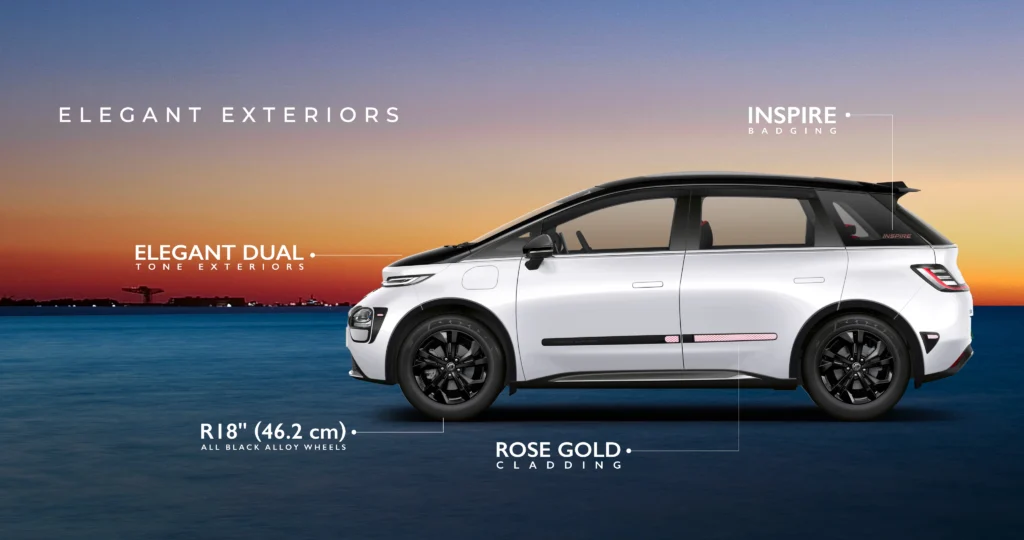
- The India EV sales FY2026 story highlights a rapidly evolving market where scale and strategy are both critical.
- The zero-emission passenger vehicle segment closed the fiscal with 2,20,105 units, reflecting steady adoption despite infrastructure challenges.
- While MG Windsor emerged as the top-selling individual model, the broader competition reveals a different narrative, one dominated by portfolio strength rather than a single bestseller.
- The market remains heavily concentrated, with Tata Motors, MG Motor, and Mahindra controlling over 92% of total EV sales, indicating limited fragmentation but intensifying rivalry.
Also read about the upcoming Honda City and Honda ZR-V Hybrid.
Price & Variants (Market Positioning View)
- Since this is a market-wide analysis, pricing varies across models and segments:
- Entry-Level EVs
- ₹7 lakh – ₹10 lakh (ex-showroom)
- Example segment: compact city EVs
- Mid-Segment EVs
- ₹10 lakh – ₹20 lakh (ex-showroom)
- Includes mass-market SUVs like Nexon EV
- Premium EVs
- ₹20 lakh+ (ex-showroom)
- Includes larger SUVs and long-range models
- Insight:
- The wide pricing spread allows OEMs like Tata and Mahindra to capture multiple buyer segments, unlike MG which relies heavily on fewer models.
Key Highlights
- Total EV sales reached 2,20,105 units in FY2026
- MG Windsor became the top-selling EV with 46,720 units
- Tata Motors led OEM sales with 85,405 units (38.8% share)
- MG Motor secured second with 62,591 units (28.4%)
- Mahindra ranked third with 54,626 units (24.8%)
- Top 3 brands controlled over 92% market share
Engine & Performance (EV Architecture Insight)
- Modern EVs in this segment are built on dedicated electric platforms like Mahindra’s INGLO architecture.
- Key technical characteristics:
- Battery Packs: Multiple options across models
- Driving Range: Typically 300 km to 500+ km
- Power Delivery: Instant torque, ideal for city driving
- Transmission: Single-speed automatic (no gearbox shifts)
- Real-world usability:
- Strong low-speed acceleration for urban conditions
- Increasing focus on highway range and efficiency
- Mahindra’s EV lineup stands out with 500+ km claimed range, improving long-distance usability
Chassis, Wheels & Features
- EVs across the top 10 models offer:
- Platform & Build
- Dedicated EV platforms (Mahindra INGLO, Tata Ziptron-based architecture)
- Improved weight distribution due to battery placement
- Wheels & Suspension
- Independent suspension setups for better ride comfort
- Aerodynamically optimized alloy wheels
- Safety Features
- ABS with EBD
- Electronic Stability Control (ESC)
- Multiple airbags standard
- Braking Systems
- Regenerative braking systems
- Disc brakes across most models
Design & Styling
- EV design language in India is evolving rapidly:
- MG Windsor
- Modern and premium styling approach
- Appeals to urban premium buyers
- Tata EV lineup
- Familiar ICE-derived designs with EV-specific tweaks
- Focus on practicality over radical styling
- Mahindra EVs (INGLO-based)
- Futuristic and aggressive design
- Distinct identity compared to earlier models
- Trend Insight:
- Shift toward aerodynamic efficiency + bold LED lighting signatures
- Increasing differentiation between EVs and ICE vehicles
Ownership & After-Sales
- OEMs are strengthening ownership experience to boost adoption:
- Warranty Coverage
- Typically 8 years on battery packs
- Standard vehicle warranty varies by brand
- Service Network
- Tata leads with the widest EV service footprint
- MG and Mahindra expanding rapidly
- Charging Ecosystem
- Fast-charging support across most models
- Growing public charging infrastructure
- Buyer Confidence Factors
- Lower running costs vs ICE vehicles
- Government incentives in select states
Competition
Primary Rivalry
- MG Windsor vs Tata Nexon EV
- Windsor leads in individual sales
- Nexon EV benefits from brand trust and wider reach
Other Key Players
- Mahindra XEV 9e
- Mahindra BE 6
- Tata Punch EV
- MG Comet EV
Balanced Insight
- Tata dominates through portfolio diversity
- MG excels with strong individual products
- Mahindra is gaining momentum with next-gen EV architecture
Final Verdict
- The India EV sales FY2026 data shows a market still in its growth phase but already highly competitive at the top.
- MG Windsor’s success proves that a well-positioned product can lead sales, but Tata’s dominance highlights the importance of range breadth and accessibility.
- Strengths of the market:
- Increasing consumer acceptance
- Wider product range
- Improving infrastructure
- Concerns:
- High concentration among few players
- Charging infrastructure still uneven
- Is it worth investing in EVs now?
- Yes, especially for city users and early adopters, but long-distance buyers may still evaluate options carefully.
What is the total India EV sales FY2026 figure?
Total EV sales reached 2,20,105 units in FY2026.
Which is the top-selling electric car in India FY2026?
The MG Windsor ranked first with 46,720 units sold.
Which company leads the EV market in India?
Tata Motors leads with 38.8% market share and 85,405 units sold.
How does MG compare to Tata in EV sales?
MG leads with a single top-selling model, while Tata dominates through a wider product portfolio across segments.
Stay tuned and follow up for more.
