
Electric two-wheeler sales April 2026 India
Introduction
The electric two-wheeler sales April 2026 India numbers underline just how quickly the segment is expanding. With 1,48,677 units sold, the market registered a strong 61% year-on-year growth, reflecting rising consumer acceptance and better product availability. While legacy players are strengthening their hold, newer brands continue to disrupt the space with aggressive growth strategies. The competition at the top is getting tighter, especially between TVS, Bajaj, and Ather.
Also read about the Diesel Car Sales FY2026.
Price & Variants
- Entry-level electric scooters: ₹80,000 – ₹1 lakh (ex-showroom)
- Mid-range models: ₹1 lakh – ₹1.3 lakh (ex-showroom)
- Premium electric scooters: ₹1.3 lakh – ₹1.6 lakh+ (ex-showroom)
- This pricing spread shows that manufacturers are targeting both first-time EV buyers and premium urban commuters, expanding the overall market reach.
Key Highlights
- Total sales: 1,48,677 units in April 2026
- YoY growth: +61% compared to April 2025
- Top 10 brands contributed 94% of total sales
- TVS Motor Company led with 37,661 units (25% share)
- Bajaj Auto followed with 32,883 units (22% share)
- Ather Energy recorded the highest growth among top 3 at +103%
Engine & Performance
Electric scooters in this segment focus more on smooth acceleration and efficiency rather than outright performance. The riding experience is quiet, responsive, and well-suited for daily commuting in urban traffic. Instant torque makes overtakes easier, especially in city conditions.
On highways, most models are comfortable at moderate speeds, but range and charging infrastructure still influence long-distance usability.
Typical specifications across leading models:
- Motor type: Hub motor / Mid-drive motor
- Power output: 3 kW – 7 kW (approx.)
- Torque: Instant delivery (varies by model)
- Transmission: Automatic (single-speed)
- Battery type: Lithium-ion
- Range: 90 km to 150+ km per charge
- Overall, the setup prioritises low running cost, ease of use, and urban practicality.
Chassis, Wheels & Features
- Wheel size: 10-inch to 12-inch alloys
- Tyres: Tubeless, low rolling resistance
- Suspension: Telescopic front, dual rear shock absorbers
- Ground clearance: ~160 mm to 180 mm
- Seat height: ~760 mm to 800 mm
- Brakes: Front disc + rear drum/disc
- Safety features:
- Combined Braking System (CBS)
- Regenerative braking
- Reverse assist (select models)
- Tech features:
- Digital instrument cluster
- Bluetooth connectivity
- Navigation support
- This setup is best suited for daily city commuting with occasional longer rides, balancing comfort and efficiency.
Design & Styling
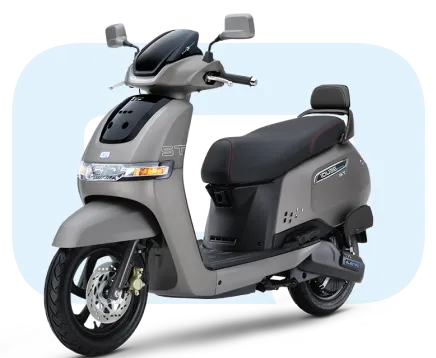
Electric scooters in this segment are moving toward a more distinct identity instead of mimicking petrol counterparts. The TVS iQube maintains a clean and functional look, while Bajaj’s Chetak leans on a more classic silhouette. Ather models stand out with sharper lines and a more modern finish.
Newer entrants like River and Simple Energy are experimenting with more utilitarian and aggressive designs, targeting younger buyers. Overall, the focus is shifting toward practical design with subtle premium touches, rather than flashy styling.
Ownership & After-Sales
- Battery warranty: Typically 3–5 years
- Vehicle warranty: 2–3 years standard
- Extended warranty: Available with select brands
- Roadside assistance: Offered by most OEMs
- Service network:
- TVS and Bajaj have wide reach
- Ather expanding rapidly in metro cities
- Charging options:
- Home charging standard
- Public fast-charging networks growing
- Lower maintenance and running costs remain a key advantage for EV buyers.
Competition
The primary battle in electric two-wheeler sales April 2026 India is between TVS and Bajaj, as both brands target similar urban buyers with reliable products and strong dealer networks.
Other key competitors:
- Ather Energy (performance-focused scooters)
- Vida (Hero MotoCorp’s EV arm)
- Ola Electric (once dominant, now recovering)
- While TVS and Bajaj benefit from brand trust and reach, Ather leads in technology and refinement, and Ola still has scale advantage despite declining YoY numbers.
Final Verdict
The electric two-wheeler sales April 2026 India figures confirm that the market is no longer niche — it’s scaling fast. TVS has taken the lead through consistency, while Bajaj remains close with strong demand for the Chetak. Ather’s growth suggests that buyers are also willing to pay for better technology.
However, the sharp drop in Ola’s numbers shows that market leadership can shift quickly in this space. For buyers, this competition is a positive sign, more options, better products, and improving infrastructure.
FAQs:
What were total electric two-wheeler sales in April 2026?
Total sales reached 1,48,677 units, marking a 61% year-on-year growth.
Which brand sold the most electric scooters in April 2026?
TVS Motor Company led with 37,661 units, capturing a 25% market share.
Why did Ola Electric sales decline?
Ola recorded a 39% YoY drop, likely due to increased competition and shifting consumer preferences.
Is this a good time to buy an electric scooter in India?
Yes, especially for city use. More options, better range, and lower running costs make EVs increasingly practical.
Stay tuned and follow up for more.
