
Best Cars for Bad Roads India
Introduction
Here’s something most car reviews won’t tell you clearly, Indian road conditions will matter more than your engine, features, or even mileage in the long run.
Because no matter how good a car looks in a showroom or how smooth it feels on a perfect test drive route, the reality hits the moment you start driving it daily. Broken roads, surprise potholes, badly designed speed breakers, uneven village roads, construction patches, this is the actual environment your car will live in.
And this is exactly where a lot of buyers make a mistake.
They choose cars based on features, touchscreen size, or brand image, and completely ignore how well that car can handle abuse. The result? Constant scraping, uncomfortable rides, frequent suspension repairs, and a car that feels tired within a year.
In 2026, the gap between “good cars” and “good cars for Indian roads” is still very real. Some cars are built to impress. Others are built to survive.
If your daily route isn’t perfect, and for most Indians, it isn’t, this decision becomes critical.
Also read about the Upcoming Cars under 10 Lakhs 2026.
What Actually Matters for Bad Roads (Not What Showrooms Tell You)
- Ground clearance is the first and most obvious factor, but it’s not the only one that matters.
- A car with 190mm+ ground clearance can comfortably handle most Indian speed breakers and rough patches.
- Suspension tuning is more important than just clearance, soft but controlled suspension absorbs impact better.
- Tire profile matters, higher profile tires (more sidewall) handle potholes better than low-profile sporty tires.
- Strong chassis and build quality reduce long-term damage from repeated road shocks.
- Short overhangs (front and rear) reduce the chances of scraping on steep ramps or bad roads.
- Wheel size should be practical, not oversized for looks, bigger wheels with thin tires are more vulnerable.
- Steering feedback and stability matter when navigating broken patches at low speeds.
Best Hatchbacks That Can Actually Handle Rough Roads
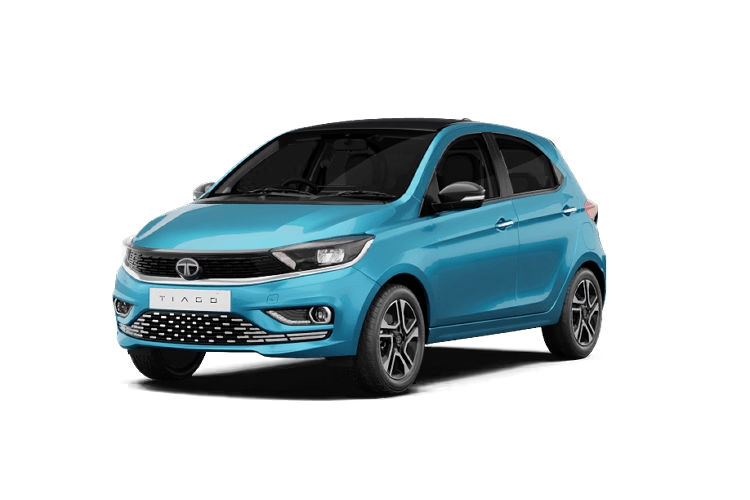
- Tata Tiago is one of the toughest hatchbacks in India, with a suspension setup that feels built for real conditions.
- It absorbs potholes better than most cars in its price range without feeling fragile.
- The build quality is noticeably stronger, which adds long-term durability.
- Maruti Swift is easy to drive and efficient, but its softer build and lower clearance make it less ideal for harsh roads.
- Hyundai Grand i10 Nios focuses more on comfort and refinement, but struggles on heavily broken surfaces.
- If your usage includes bad roads regularly, Tiago is the safer and smarter hatchback choice.
- Hatchbacks in general are limited by ground clearance, so expectations should be realistic.
Best Compact SUVs for Everyday Bad Roads
- Tata Punch is arguably the most sensible choice for bad roads under ₹10 lakh.
- Its high ground clearance and strong suspension allow it to tackle potholes without hesitation.
- It gives drivers confidence, especially in unpredictable conditions.
- Tata Nexon goes a step further, offering better ride quality along with similar toughness.
- It feels more stable at higher speeds while still handling rough roads well.
- Nissan Magnite and Renault Kiger offer good ground clearance, but their suspension setup is slightly softer.
- These cars are more city-focused and may not feel as durable over long-term rough usage.
Rugged SUVs for Extreme Conditions
- Mahindra Bolero Neo is built for areas where roads barely exist.
- It uses a ladder-frame-inspired construction that can handle heavy abuse.
- Suspension is tuned for durability rather than comfort, which makes it ideal for rural conditions.
- Mahindra Thar (especially 5-door) offers extreme capability, but is overkill for most urban buyers.
- These vehicles are not about comfort, they are about surviving the worst conditions.
- If your usage includes villages, farms, or construction-heavy routes, these make sense.
Why Most “Premium” Cars Fail on Bad Roads
- Low ground clearance leads to frequent scraping on speed breakers.
- Stiff suspension setups prioritize handling over comfort, making potholes unbearable.
- Low-profile tires increase the risk of wheel and tire damage.
- Expensive alloy wheels are more vulnerable to cracks and bends.
- Repair costs for premium cars are significantly higher.
- Many premium cars are designed for highways, not Indian city conditions.
- Buyers often realize this only after a few months of ownership.
Real-World Ownership Impact
- Cars built for bad roads require fewer suspension repairs over time.
- They maintain structural integrity better, which improves long-term reliability.
- You experience less stress while driving, no constant worry about scraping or damage.
- Maintenance costs stay lower because parts last longer.
- Resale value remains stronger for durable vehicles.
- Daily driving becomes more comfortable, even on poor roads.
- Choosing the wrong car leads to constant frustration and unexpected expenses.
What You Should Prioritize (In Order)
- Ground clearance above 190mm for peace of mind.
- Suspension quality that absorbs impact without feeling too soft.
- Proven durability based on real-world usage, not just specs.
- Practical tire setup instead of flashy large alloys.
- Brand reliability in terms of service and spare parts availability.
- Real user reviews from similar road conditions, not just city reviews.
Who Should Buy What
- If your roads are moderately bad: Tata Nexon is the best balance of comfort and toughness.
- If your roads are consistently bad: Tata Punch offers unbeatable practicality for the price.
- If your roads are extremely poor: Mahindra Bolero Neo is the most durable choice.
- If you want a hatchback: Tata Tiago is the safest bet.
- If you mostly drive in the city with occasional bad patches: Magnite or Kiger can work.
FAQs
Which is the best car for bad roads in India?
Tata Punch and Tata Nexon are among the best options for most buyers due to their suspension and ground clearance.
Is ground clearance the most important factor?
It’s important, but suspension quality and build strength matter just as much.
Are hatchbacks suitable for bad roads?
Only to a certain extent. They can handle mild rough roads but struggle in harsher conditions.
Should I avoid premium cars for bad roads?
Not necessarily, but many premium cars are not designed for rough usage and may lead to higher maintenance costs.
Final Verdict
If your daily drive includes bad roads, and for most Indians, it does, your car choice should be brutally practical. Forget trends, forget features, forget what looks good on Instagram. Buy something that can take a beating without complaining. Because in India, durability isn’t a bonus, it’s a necessity.
Author: Manav Akbari, TheWheelFeed
