
Tata Punch flex fuel India 2027
Introduction
Petrol cars aren’t going anywhere. But they are definitely being pushed into a corner.
Rising fuel prices, stricter emission norms, and the constant push towards EVs have made buyers uneasy. You’re not just choosing a car anymore, you’re choosing a fuel strategy for the next 5–10 years.
And right in the middle of this shift comes something interesting.
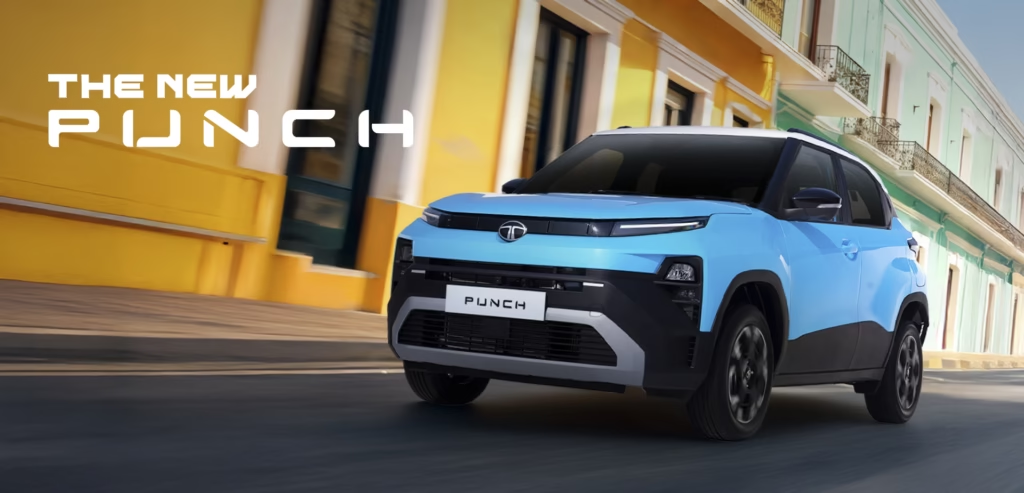
The Tata Punch flex-fuel India 2027 plan.
At first glance, it sounds technical. Almost irrelevant. But if you understand what flex-fuel actually does, it might quietly become one of the most important changes in how Indians buy and run cars.
Because this isn’t about replacing petrol. It’s about making petrol smarter, cheaper, and more flexible.
Also read about the Maruti Suzuki Dzire 2025.
What exactly is flex-fuel and why it matters
- Flex-fuel vehicles can run on a mix of petrol and ethanol, or even 100% ethanol in some cases.
- Ethanol is significantly cheaper than petrol in India.
- It is produced domestically, reducing dependency on imported crude oil.
- Government is actively pushing ethanol blending targets.
- Flex-fuel gives buyers the freedom to choose fuel based on availability and cost.
- It creates a middle ground between petrol and EVs.
Why Tata is betting on flex-fuel for Punch
- The Punch is already one of Tata’s highest-selling entry SUVs.
- It targets budget-conscious buyers who are sensitive to fuel costs.
- Adding flex-fuel capability makes it future-ready without going fully electric.
- Tata is diversifying its strategy beyond EVs.
- Flex-fuel aligns with government fuel policies.
- It strengthens Tata’s position in affordable mobility.
Cost advantage — where flex-fuel changes the game
- Ethanol is typically cheaper than petrol by a noticeable margin.
- Running costs can drop significantly depending on fuel mix used.
- Daily commuters benefit the most from lower per-km cost.
- Over 5 years, savings can be substantial.
- Fuel flexibility allows users to switch based on price fluctuations.
- Cost advantage depends on ethanol availability in your area.
Performance differences — what to realistically expect
- Ethanol has lower energy density compared to petrol.
- Slight drop in mileage is expected when using higher ethanol blends.
- Engine tuning compensates to maintain performance balance.
- Real-world driving difference will be minimal for most users.
- Acceleration and drivability will remain similar.
- Performance compromise is small compared to cost savings.
Availability challenge — the biggest real-world hurdle
- Ethanol availability is still limited in many parts of India.
- Fuel stations offering high ethanol blends are not widespread yet.
- Infrastructure expansion is planned but will take time.
- Urban areas will adopt faster than rural regions.
- Buyers must check fuel availability before considering flex-fuel.
- Without proper infrastructure, benefits reduce significantly.
Maintenance and reliability concerns
- Flex-fuel engines are designed to handle ethanol without damage.
- Ethanol can be more corrosive, requiring specialised materials.
- Maintenance costs are expected to remain similar to petrol cars.
- Long-term reliability will depend on real-world usage patterns.
- Tata’s engineering will be crucial in building trust.
- Early adopters may face uncertainty until system matures.
Environmental impact — the bigger picture
- Ethanol produces lower emissions compared to petrol.
- It supports India’s goal of reducing carbon footprint.
- Locally produced fuel reduces import dependency.
- Agriculture sector benefits from ethanol production.
- Flex-fuel acts as a transitional solution toward cleaner mobility.
- It’s not zero-emission, but it’s a step in the right direction.
How it compares to EVs and CNG options
- EVs offer zero tailpipe emissions but require charging infrastructure.
- CNG offers low running cost but compromises boot space and performance.
- Flex-fuel retains petrol-like convenience with lower cost potential.
- No charging anxiety like EVs.
- No storage compromise like CNG.
- It sits comfortably between traditional and future technologies.
Who should actually consider the Punch flex-fuel
- Daily commuters looking to reduce fuel expenses.
- Buyers not ready to switch to EVs yet.
- Users living in areas with ethanol fuel availability.
- Budget-conscious buyers planning long-term ownership.
- First-time buyers wanting flexibility in fuel choices.
- People who want future-ready petrol alternatives.
Who should avoid it (at least initially)
- Buyers in areas without ethanol fuel infrastructure.
- People who prefer proven, established technologies.
- Users who drive very little and won’t benefit from fuel savings.
- Buyers looking for high-performance vehicles.
- Those who don’t want to deal with fuel choice decisions.
- Early adopters uncomfortable with new systems.
What this means for petrol cars in India
- Petrol cars are evolving rather than disappearing.
- Flex-fuel extends the relevance of petrol engines.
- Fuel choice becomes part of the ownership experience.
- Government policy will heavily influence adoption.
- Buyers will start thinking beyond just mileage figures.
- Petrol cars will become more adaptable and efficient.
FAQs
What is a flex-fuel car in India?
A flex-fuel car can run on petrol, ethanol, or a mix of both, giving users flexibility in fuel choice.
Will Tata Punch flex-fuel be cheaper to run?
Yes, especially if ethanol is available at lower prices in your region.
Is ethanol fuel available everywhere in India?
No, availability is still limited and expanding gradually.
Should I wait for the flex-fuel Punch?
Only if you have access to ethanol fuel and want long-term cost savings.
Final Verdict
Flex-fuel isn’t a gimmick, it’s a smart workaround for India’s fuel problem. The Punch flex-fuel could quietly become a practical alternative for buyers stuck between petrol and EV confusion. But here’s the truth: it only works if the infrastructure catches up. Until then, it’s a promising idea with real potential, not an instant revolution.
Author: Manav Akbari, TheWheelFeed
