
Tata EV BaaS price
Also visit the official website of Tata Motors
The Tata EV BaaS price list is now complete. In late September, Tata Motors extended Battery as a Service from the Tiago EV and Punch EV to the Nexon EV, Curvv EV, Sierra EV and Harrier EV, so the entire electric car range is covered. The headline is striking: a Harrier EV for ₹14.49 Lakh instead of ₹21.79 Lakh, a ₹7.30 Lakh cut to the sticker price.
That number is real, but it is not free money. You are not saving ₹7.30 Lakh, you are postponing it and paying a per-kilometre fee for the battery. The useful question is how long you have to drive before the fee overtakes the saving, and none of the coverage I read answered it. So I did.
The complete Tata EV BaaS price list
According to Autocar India, DriveSpark and 91wheels, the regular and BaaS prices are as follows, all ex-showroom. Tiago EV: ₹6.99 Lakh falls to ₹4.69 Lakh. Punch EV: ₹9.79 Lakh to ₹6.59 Lakh. Nexon EV: ₹14.34 Lakh to ₹8.99 Lakh. Curvv EV: ₹17.19 Lakh to ₹10.99 Lakh. Sierra EV: ₹18.79 Lakh to ₹11.99 Lakh. Harrier EV: ₹21.79 Lakh to ₹14.49 Lakh.
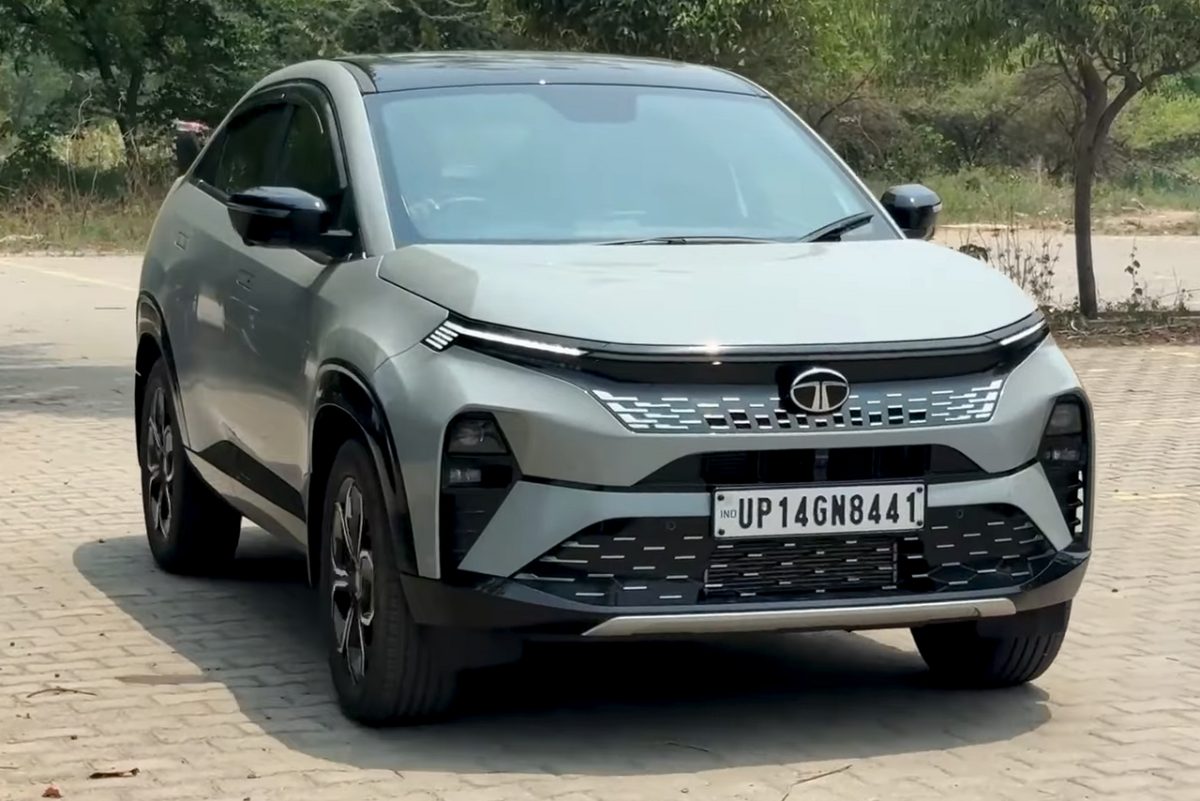
The upfront savings are ₹2.30 Lakh, ₹3.20 Lakh, ₹5.35 Lakh, ₹6.20 Lakh, ₹6.80 Lakh and ₹7.30 Lakh respectively. Tata states the battery fee as ₹2.6 per km on the Tiago EV and Punch EV, ₹4.4 on the Nexon EV, ₹5 on the Curvv EV, ₹5.5 on the Sierra EV and ₹5.9 on the Harrier EV. These rates assume 60 km of daily driving, or 44 km for the Tiago EV, and exclude charging, maintenance and government levies.
BaaS is optional. You can still buy any of these cars with the battery included at the regular price.
Who gets the biggest discount in percentage terms
The Harrier EV has the largest rupee saving, but not the largest percentage. Dividing each saving by the regular price gives the following: Nexon EV 37.3 percent, Sierra EV 36.2 percent, Curvv EV 36.1 percent, Harrier EV 33.5 percent, Tiago EV 32.9 percent and Punch EV 32.7 percent.
The Nexon EV is the real winner. Its sticker drops by more than a third, and at ₹8.99 Lakh it lands in a price band that petrol compact SUVs also occupy. That is probably the most strategically important number on the sheet, because it puts an EV in direct conversation with petrol buyers.
The break-even maths nobody printed
Take Tata’s own assumptions and multiply them out. At 60 km a day, a Nexon EV owner clocks about 1,800 km a month, which at ₹4.4 per km is roughly ₹7,920 monthly. A Harrier EV owner at ₹5.9 per km pays about ₹10,620 a month. A Tiago EV owner at 44 km a day pays about ₹3,430.
Now divide the upfront saving by the per-km fee. For the Punch EV, Nexon EV, Curvv EV, Sierra EV and Harrier EV, the answer lands in a remarkably tight band of roughly 1.22-1.24 lakh km. The Tiago EV is lower at about 88,000 km. At 60 km a day, which is about 21,900 km a year, a big Tata EV crosses the 1.2 lakh km line in a little under 5.7 years.
In plain words: if you keep the car for less than about five and a half years at that usage, BaaS costs you less in total. Beyond that, the fee has outspent the discount. This is arithmetic on Tata’s published figures, not a verdict, because it ignores loan interest and the exact repayment terms, which Tata has not summarised in the launch coverage.
The catch: it is a loan, not a meter
Autocar India explains that the vehicle and the battery are financed separately, and that monthly battery payments depend on battery capacity, down payment and loan duration. That reads like a loan, not a metered rental. The per-km figure looks like a way of translating a fixed monthly instalment into familiar terms.
If that is right, the true per-km cost rises when you drive less and falls when you drive more. A 30 km a day user pays the same instalment but spreads it over half the distance. Before signing, ask the dealer whether the battery payment is fixed per month, what happens if you prepay, and who owns the battery at the end. Those three answers matter more than the sticker.
We raised the same questions when we looked at Kia Battery as a Service, and the logic repeats here. BaaS rewards people who want a lower entry price today and either drive a lot or plan to sell within a few years.
How it changes the EV buying decision
The Sierra EV at ₹11.99 Lakh under BaaS sits ₹2.35 Lakh below the Nexon EV’s regular price of ₹14.34 Lakh, which will tempt buyers who earlier chose between them. If you are weighing that decision, our comparison of the Sierra EV and Harrier EV explains why both share a powertrain but not a purpose.
Tata is also pricing the Punch EV carefully. It already raised that car’s price recently, as we covered in the Punch EV price hike, and BaaS at ₹6.59 Lakh softens that. The result is a lineup where nearly every model has two price points, which confuses some buyers but widens the funnel for Tata.
Final Verdict
The Tata EV BaaS price list is a smart tool for the right buyer and a trap for the wrong one. It lets a Nexon EV cost ₹8.99 Lakh up front, but the saving is roughly 1.2 lakh km of battery fees, so heavy drivers who keep the car long will pay more over time. Choose BaaS if you want a low entry price and expect to sell within five years. Pay outright if you drive a lot and keep cars for ten.
Stay tuned and follow up for more.
What is the Tata EV BaaS price for each model?
Tiago EV ₹4.69 Lakh, Punch EV ₹6.59 Lakh, Nexon EV ₹8.99 Lakh, Curvv EV ₹10.99 Lakh, Sierra EV ₹11.99 Lakh and Harrier EV ₹14.49 Lakh, all ex-showroom.
How much is the Tata BaaS battery fee per kilometre?
₹2.6 on the Tiago EV and Punch EV, ₹4.4 on the Nexon EV, ₹5 on the Curvv EV, ₹5.5 on the Sierra EV and ₹5.9 on the Harrier EV, based on 60 km of daily driving.
Is Tata BaaS mandatory for EV buyers?
No. Buyers can still purchase any of these EVs with the battery included at the regular price. BaaS is an optional alternative.
Does the Tata BaaS fee include charging and maintenance?
No. The per-km figure excludes charging, maintenance, repairs and government levies, and the battery is financed separately from the car.
Stay tuned and follow up for more.
