
Porsche Cayenne Electric price
Also visit the official website of Porsche
The Porsche Cayenne Electric price in India starts at ₹1.77 Crore (ex-showroom), and the Cayenne Turbo Electric costs ₹2.27 Crore. Porsche launched both in Mumbai on 30 September 2026, with deliveries starting the same day, according to Autocar Professional.
The interesting question is not whether a Cayenne can be electric. It is whether the ₹50 Lakh step up to the Turbo is rational. I ran the numbers, and the answer is more surprising than you would expect: the Turbo may be the better deal per unit of performance, even though it is the more extreme car.
The two variants at a glance
Both variants share a 113 kWh battery with dual motors and all-wheel drive. The standard Cayenne Electric makes up to 442 PS and does 0 to 100 km/h in 4.8 seconds with a 230 km/h top speed. The Turbo makes up to 1,156 PS, hits 100 km/h in 2.5 seconds and tops out at 260 km/h. Claimed WLTP range is up to about 643 km for the standard car and 624 km for the Turbo, per EVFY.
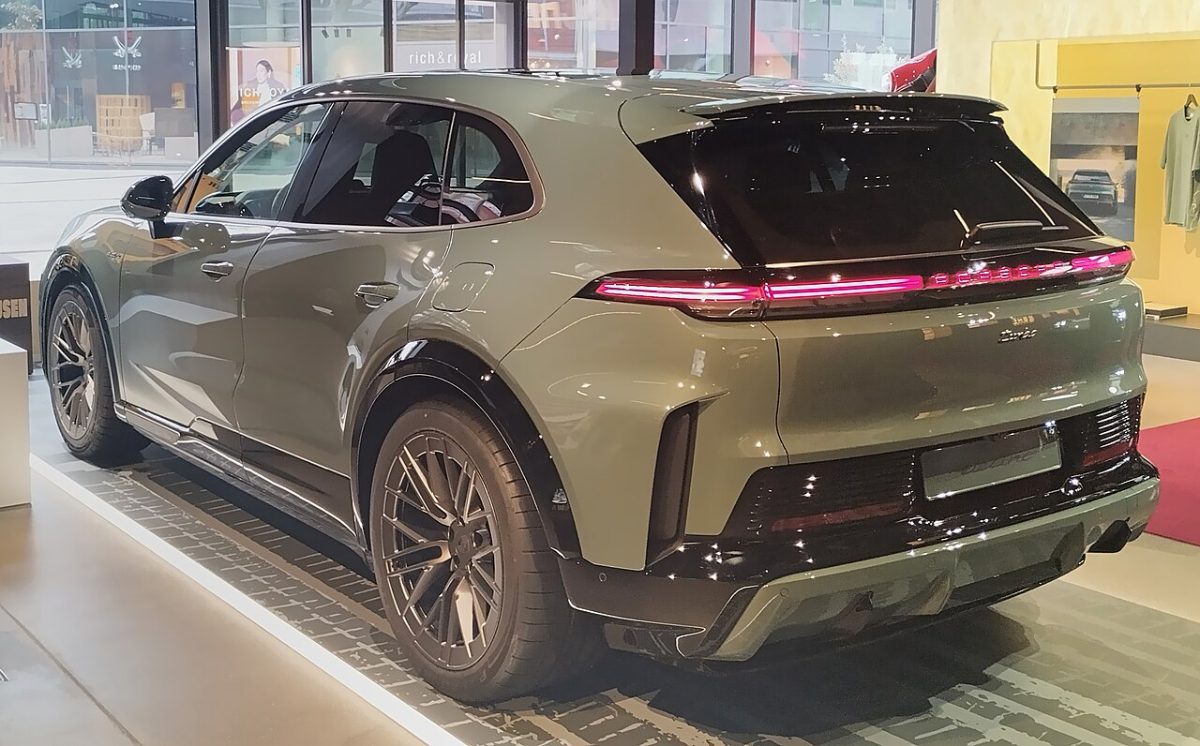
Exact prices are ₹1,77,27,000 for the Cayenne Electric and ₹2,27,51,000 for the Turbo Electric. Porsche has also said it will keep selling petrol-powered Cayenne variants well into the next decade, so this is an addition to the range, not a replacement. It is Porsche’s third electric model in India after the Taycan and the Macan Electric.
The ₹50 Lakh calculation
Here is the arithmetic. The Turbo costs ₹50.24 Lakh more than the standard car, which is a 28 percent increase in price. In return, you get about 2.6 times the power: 1,156 PS divided by 442 PS is 2.6.
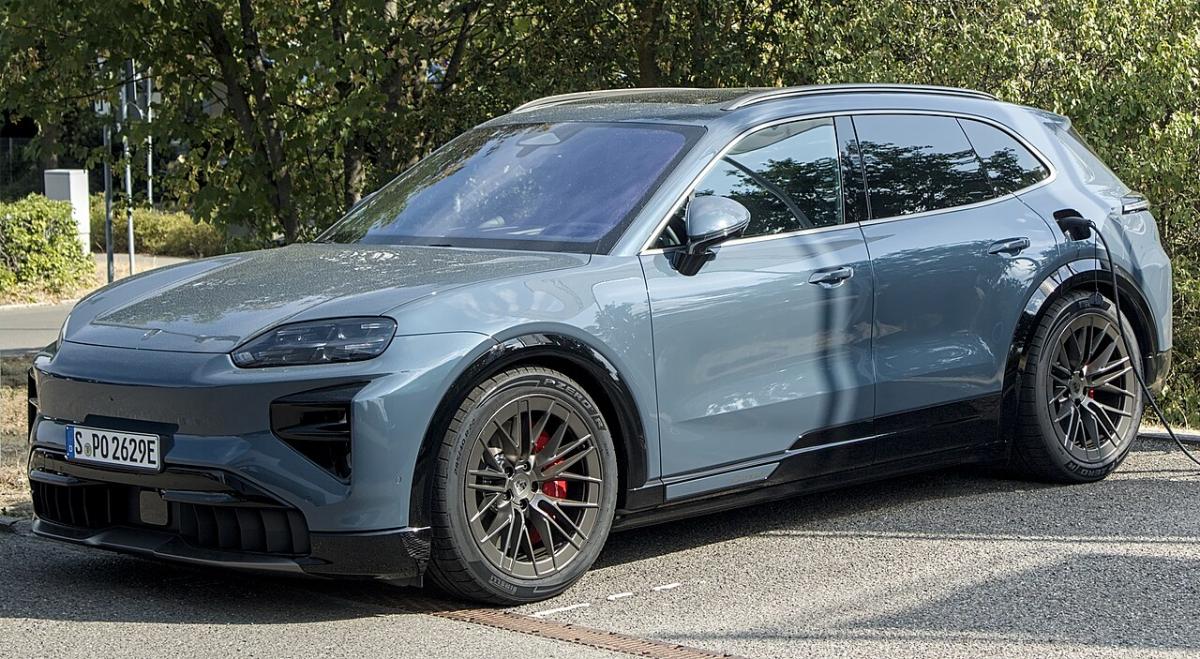
Put it in rupees per PS. The standard Cayenne Electric works out to about ₹40,100 for every PS. The Turbo works out to about ₹19,700 per PS. In other words, each unit of power on the Turbo costs roughly half as much as on the standard car.
The sacrifice is small. The Turbo’s claimed range is about 19 km shorter, a loss of roughly 3 percent. For buyers who want the thrill, the headline gap in price hides a surprisingly small gap in everyday capability.
Why this logic has limits
Before you rush to the Turbo, a reality check. Rupees per PS is a vanity metric. Nobody uses 1,156 PS on an Indian road, and a 0 to 100 km/h time of 2.5 seconds is something you will use perhaps twice a year, in a place you should not be doing it.
The honest buyer’s question is how much of the 442 PS you already use. For most owners, the answer is a small fraction. At 4.8 seconds to 100 km/h, the standard Cayenne Electric is already very quick by any standard. The extra ₹50 Lakh therefore buys an experience and a badge rather than a practical gain.
There is also a resale angle. Buyers at this price typically hold the car for a few years, and the cheaper variant’s lower entry cost means less money tied up and less depreciation in absolute terms. That is a general principle, not a Porsche figure, but it is worth thinking about. Ask the dealer for the on-road price too, because insurance and registration on a ₹2 Crore plus car add a very large sum on top of the ex-showroom figure, and that gap grows with the sticker price.
Charging and range in Indian conditions
The charging figures are impressive. The Cayenne Electric supports DC fast charging at around 390 kW and AC charging up to 11 kW. The pack architecture is built for ultra-fast charging, but India has very few chargers that can deliver anything close to 390 kW.
In practice, most owners will charge at home overnight, and use public fast chargers on trips at whatever speed the station allows. A claimed 643 km WLTP will translate into noticeably less on a hot-weather expressway run with the air-conditioning on. Check the EV charging reality in India before assuming a long trip is effortless.
If you are buying for a Mumbai to Pune style weekend run, the range is more than enough. For a longer inter-city trip, plan your charging stops in advance, confirm that each charger is working before you leave, and keep a buffer of at least 20 percent in the battery. A car that costs this much should never leave you waiting anxiously at a broken charger.
How it fits against the market
The luxury electric SUV space is getting crowded. Our comparison of the BMW iX, Mercedes EQE SUV and Audi Q8 e-tron shows how much choice a buyer has at this price. Autocar India’s coverage lists the Audi Q8 e-tron, BMW iX and Lotus Eletre as the Cayenne Electric’s rivals.
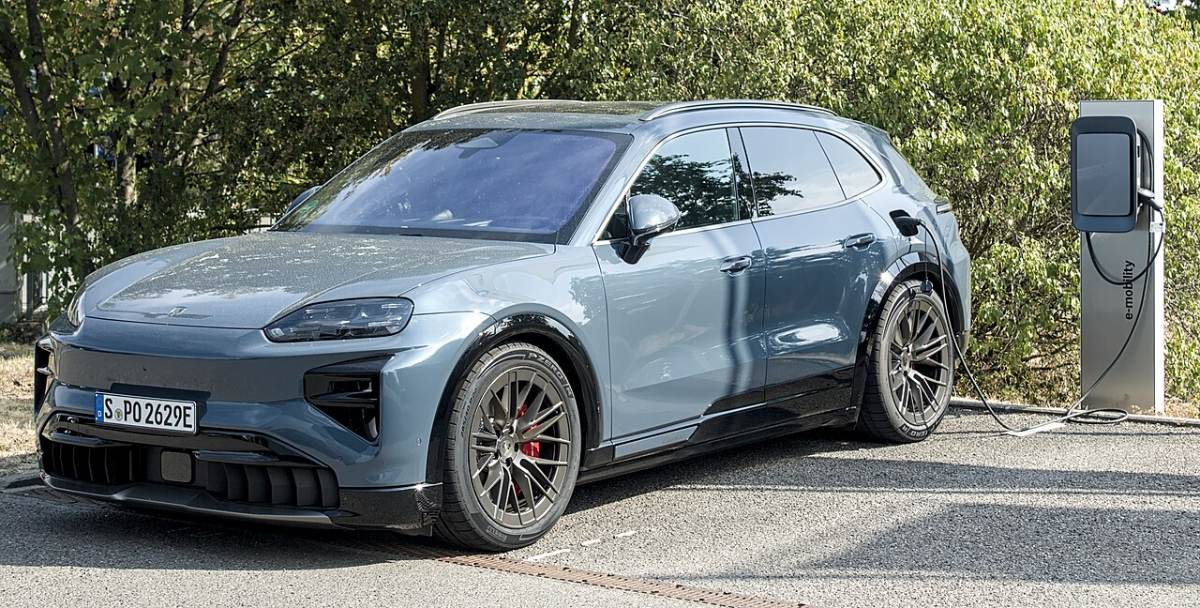
The Cayenne’s argument is its badge and its driving dynamics. If you want the lowest sticker price in the class, it is not the answer. If you want an electric SUV from a brand with decades of performance tuning, it makes a strong case. For readers who still prefer petrol, our earlier piece on the Urus, Cayenne and RS Q8 covers the combustion options.
Final Verdict
The Porsche Cayenne Electric price of ₹1.77 Crore is steep, but the standard car already delivers very quick acceleration and a claimed range of about 643 km. The Turbo is the better value per PS, yet it is a poor value in practical terms. My advice: buy the standard Cayenne Electric unless you honestly want the extra drama.
Whichever you choose, install a home charger before delivery and treat public fast charging as a bonus, not a plan.
Stay tuned and follow up for more.
What is the Porsche Cayenne Electric price in India?
The Cayenne Electric costs ₹1,77,27,000 (about ₹1.77 Crore) and the Cayenne Turbo Electric costs ₹2,27,51,000 (about ₹2.27 Crore), both ex-showroom.
What is the range of the Porsche Cayenne Electric?
Claimed WLTP range is up to about 643 km for the Cayenne Electric and about 624 km for the Turbo Electric. Real-world range will be lower.
How powerful is the Cayenne Turbo Electric?
It makes up to 1,156 PS and reaches 100 km/h in 2.5 seconds with a top speed of 260 km/h. The standard car makes up to 442 PS.
Has Porsche stopped selling the petrol Cayenne?
No. Porsche has said it will continue to offer petrol-powered Cayenne variants alongside the electric models into the next decade.
Stay tuned and follow up for more.
