
Renault Duster 2026 vs Hyundai Creta
There is a certain irony in this comparison. For most of the last decade, the Hyundai Creta has been the car that other cars are measured against in India. And now, in 2026, Renault has brought back the one name that actually outsold it in some months, before it disappeared entirely in 2022. The Duster is back. And it’s not here to play second fiddle.
So when someone asks about the Renault Duster 2026 vs Hyundai Creta, the honest answer isn’t “both are good.” The honest answer is: they are built for two very different kinds of buyers, and getting that wrong will cost you a few lakhs and years of mild regret.
Let’s be precise about what each car actually is.
Also read about how much sense does the diesel Tata Sierra makes?
Visit the official Renault India website.
Price & Variants
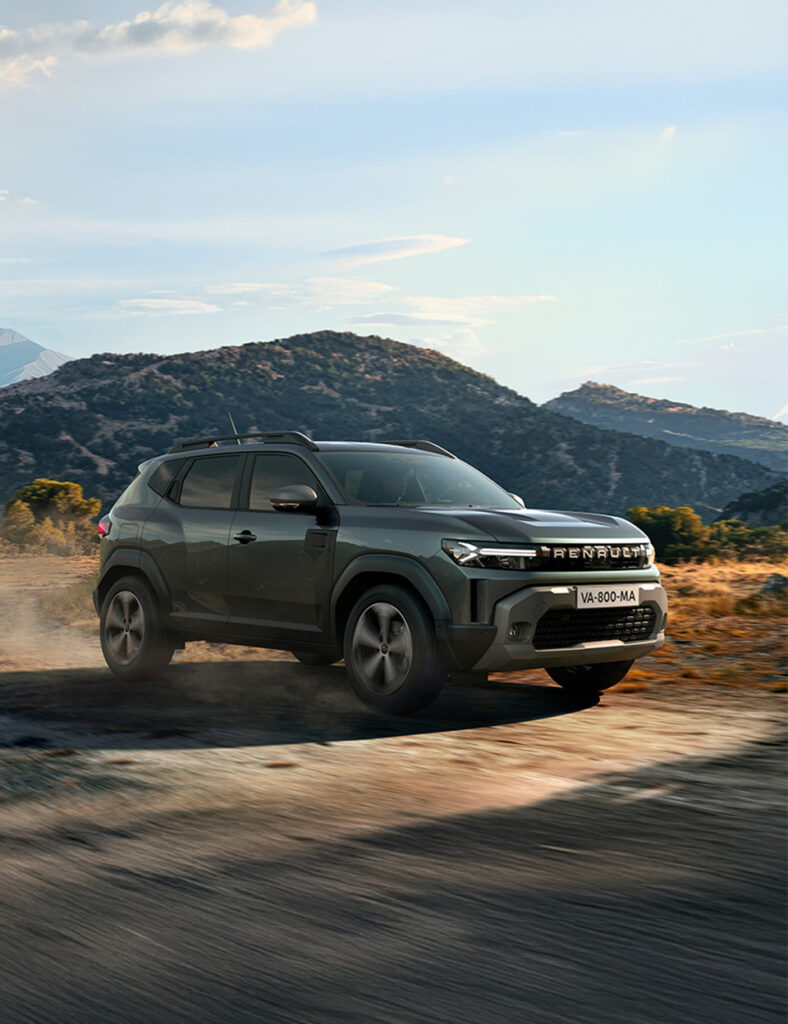
Renault Duster 2026 Variant-wise Prices (Ex-Showroom)
- Authentic 1.0T MT: ₹10.49 lakh (entry point, steel wheels, manual AC)
- Evolution 1.0T MT: ₹12.49 lakh (alloys, touchscreen, keyless entry)
- Techno 1.3T MT: ₹14.49 lakh (bigger engine, ADAS begins here)
- Techno+ 1.3T DCT: ₹15.99 lakh (adds automatic, panoramic sunroof)
- Iconic 1.3T DCT : ₹17.49 lakh (full spec, ventilated seats, 360-cam)
- Iconic Launch Edition : ₹18.49 lakh (yellow decals, adventure black 18-inch wheels)
- Strong Hybrid (E-Tech) : arriving Diwali 2026, expected ₹20–24 lakh
The variant structure is clean. Six trims, clear feature progression, no confusing suffix soup. You know what you’re getting at each level.
Hyundai Creta 2026 Variant-wise Prices (Ex-Showroom)
- E 1.5 NA Petrol MT: ₹10.79 lakh
- EX / EX(O): ₹12.00–12.97 lakh
- S / S(O): ₹13.50–15.00 lakh
- SX / SX Tech / SX Premium: ₹15.50–18.00 lakh
- SX(O) / King: ₹17.89–18.50 lakh
- King Knight DT (Top): ₹20.20 lakh
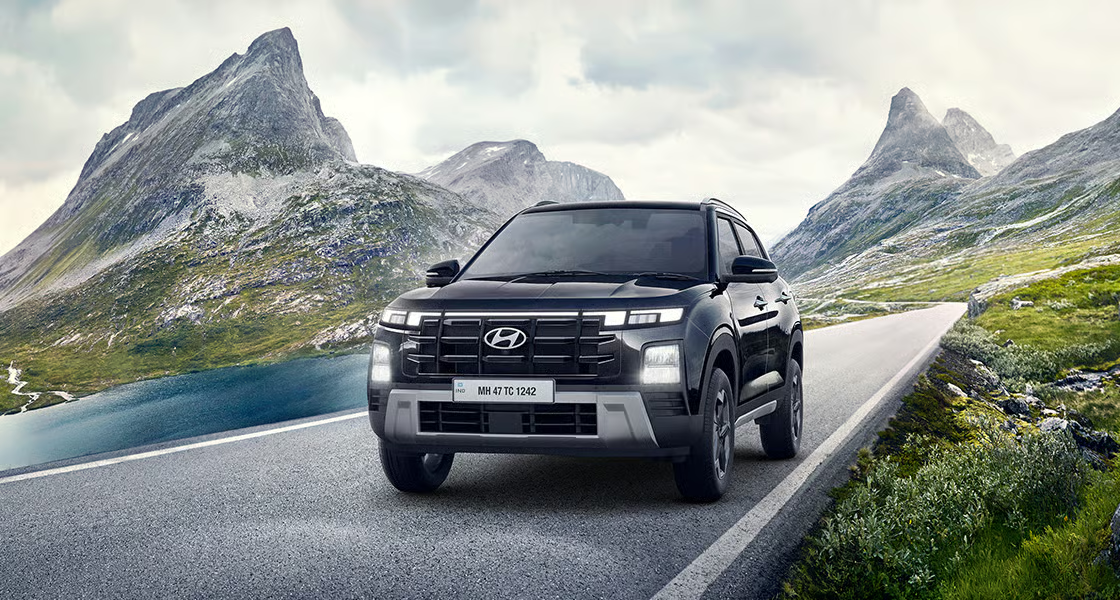
The Creta spans 40+ variants across three engine families. For most buyers, navigating it requires a spreadsheet and considerable patience. That said, the flexibility is real, diesel, petrol, automatic, CVT, you name it.
The positioning reality: At ₹15–18 lakh, where most buyers actually shop, the Duster hands over more hardware per rupee. The Creta fights back with brand trust, diesel efficiency, and a wider service net.
Key Highlights
Renault Duster 2026:
- 163PS and 280Nm from the 1.3-litre turbo, segment-leading torque figure, not just on paper but noticeably so in actual driving
- 212mm ground clearance, higher than the Creta’s 190mm, relevant if you go anywhere other than a flyover
- 518-litre boot (to parcel shelf), expandable to 700 litres to the roof, genuinely family-trip-capable
- 5-star Bharat NCAP rating (achieved April 2026), Level 2 ADAS with 17 functions
- 7-year / 1,50,000km warranty, the longest coverage in its class
Hyundai Creta 2026:
- Three powertrain choices including a 1.5-litre diesel, a meaningful differentiator the Duster simply doesn’t offer right now
- 160PS turbo-petrol with a 7-speed DCT is smooth and responsive for urban daily driving
- Dual 10.25-inch screens, Bose sound, 8-way powered driver seat, and rear wireless charging on top trims
- Level 2 ADAS (Hyundai Smart Sense) on SX(O) and above
- A service network that covers the country in a way Renault’s still working towards
Engine & Performance: The Numbers That Actually Matter
Renault Duster 1.3T TCe 160
The headline engine 163PS and 280Nm, has no peer in this segment on torque alone. Paired with a wet-clutch 6-speed DCT, it delivers the kind of confident mid-range pull that makes overtaking on two-lane highways feel routine rather than anxious. Turbo lag is present but not intrusive. At city speeds, the 1.3T feels relaxed, not strained.
The base 1.0T (100PS / 160Nm) is a different proposition. It works fine within city limits, holds its own on moderately hilly terrain, but at 120 kmph on an expressway you’ll feel it working harder than it should. If you’re buying a Duster, buy it with the 1.3T.
ARAI mileage: 17.75 kmpl (1.3T MT) and 18.45 kmpl (DCT).
Hyundai Creta 1.5 Powertrain Family
The Creta’s 1.5-litre turbo-petrol (160PS / 253Nm) with a 7-speed DCT is smoother and more refined in character than the Duster’s 1.3T. It’s tuned for hustle-free urban driving. The gap between the two on a straight road is not dramatic, but the Creta feels more polished at low speeds.
Where the Creta decisively wins: the 1.5-litre diesel. At 116PS and 250Nm, with claimed mileage up to 21.8 kmpl on the highway, it remains the most economical powertrain in the segment for high-mileage drivers. If you’re clocking 2,500 km or more per month, this engine alone justifies the Creta.
The naturally aspirated 1.5-litre petrol (115PS) is entry-level transport. Competent, nothing more.
Chassis, Ground Clearance & Safety Hardware
| Spec | Renault Duster 2026 | Hyundai Creta 2026 |
|---|---|---|
| Length | 4,343mm | 4,330mm |
| Width | 1,815mm | 1,790mm |
| Wheelbase | 2,657mm | 2,610mm |
| Ground Clearance | 212mm | ~190mm |
| Boot Space | 518L / 700L | ~433L |
| Safety Rating | 5-star Bharat NCAP | Not tested (current gen) |
The Duster’s wider track and longer wheelbase give it better highway stability and tangibly more rear legroom. The 212mm ground clearance isn’t a marketing claim, it pairs with an approach angle of 26.9° and a departure angle of 34.7°, both of which are genuinely off-road-capable figures.
Both cars come with 6 airbags standard, ABS with EBD, ESC, hill hold, TPMS, and ADAS on upper variants. The Duster adds front and rear disc brakes and an electronic parking brake with auto-hold across its upper trims. On safety hardware, the Duster currently holds the advantage of an actual 5-star Bharat NCAP result.
Design: Rugged Intent vs Urban Polish
The Duster is not trying to be subtle. The India-spec model gets eyebrow-shaped LED DRLs that double as turn indicators, oversized ‘DUSTER’ lettering stamped across the grille in place of the Renault badge, heavy body cladding, C-pillar-mounted rear door handles, and a full-width LED light bar at the back that makes the car look wider than it is. The Iconic Launch Edition adds yellow decals and adventure-black 18-inch wheels that lean further into the utilitarian-adventure aesthetic.
The Creta’s design is cleaner, more deliberately premium. Connected LED tail lamps, a layered front fascia, dual-tone roof options, it reads as a city SUV that occasionally does weekend trips, which is probably accurate for most of its buyers.
The two cars are honest about what they are through their design language alone. One looks like it’s ready to go somewhere interesting. The other looks like it belongs in a premium residential society’s parking lot. Neither is wrong.
Cabin & Features: What You Actually Use Daily
At the top-end Iconic trim, the Duster’s cabin punches hard:
- 10.1-inch infotainment with Google Built-in (real-time navigation, Play Store access)
- 10.25-inch TFT driver display with map replication
- 6-way powered and ventilated front seats
- Dual-zone automatic AC with an AQI display and PM2.5 filter
- Wireless charging, electronic parking brake with auto-hold
- Panoramic sunroof with single-touch operation
- 360-degree camera, 17-feature ADAS suite
The Creta’s top trims match most of this and add Bose’s 8-speaker audio, an 8-way powered driver seat, scooped leather upholstery, and rear wireless charging, areas where the Creta still feels more refined in material execution.
The Duster’s interior uses more hard plastics in lower sections but the dual-screen layout and seating position are genuinely good. The longer wheelbase gives rear passengers noticeably more knee room. And the boot, 518 litres to the parcel shelf and 700 litres to the roof, is in a different league compared to the Creta’s 433 litres. If your household involves airport runs with full family luggage, this difference is not academic.
Ownership Costs & After-Sales
The Duster’s 7-year / 1,50,000km warranty is the longest coverage currently offered by any manufacturer in this segment. For a brand that has historically faced scrutiny over after-sales quality in India, this warranty is Renault putting money where its confidence is.
Hyundai’s service infrastructure, 1,300+ outlets, consistent service costs, well-documented maintenance schedules, remains one of the strongest in the country. Renault is expanding, but if you’re based in a tier-2 or smaller city, the peace of mind gap is real.
For urban buyers in metros, both brands are adequately covered. For buyers in smaller towns and cities, the Creta remains the safer ownership proposition until Renault’s network matures further.
Competition: Four Alternatives Worth Considering
- Kia Seltos: Nearly spec-for-spec with the Creta; slightly more engaging to drive, priced similarly
- Maruti Grand Vitara / Toyota Hyryder: If you want the best real-world fuel economy in the segment, the strong hybrid variants here still lead
- Skoda Kushaq: Noticeably better build quality feel inside; European driving character; smaller boot
- Tata Curvv: Coupe SUV styling at competitive pricing; NCAP-rated; worth shortlisting if looks matter as much as functionality
On the turbo-petrol + DCT axis specifically, the Duster and Kushaq are the Creta’s closest rivals in the ₹15–18 lakh range.
Final Verdict: Stop Asking Which Is Better. Start Asking Which Is Right for You.
The Renault Duster 2026 vs Hyundai Creta comparison doesn’t have a universal winner. What it has is two genuinely capable SUVs with clearly different priorities.
The Duster makes more sense if: You drive on mixed roads, travel long distances, need a large boot, want the highest ground clearance in the segment, care about crash safety scores, and value a longer warranty over brand familiarity. At ₹15–18 lakh, the Techno+ and Iconic trims offer hardware that rivals can’t fully match at the same money.
The Creta makes more sense if: High monthly mileage makes the diesel option financially significant, you live outside a major metro where service network matters, and you want a more polished, refined city car with a decade of proven reliability behind it. The Creta also works better if you simply don’t want to think about resale value, it holds it better than almost anything else in the segment.
The Duster is the smarter buy on paper. The Creta is the safer bet in practice. Most buyers won’t go wrong with either, as long as they’re honest about which of those two things matters more to them.
Q1. What is the price range of the Renault Duster 2026 in India?
The Duster 2026 starts at ₹10.49 lakh (Authentic 1.0T MT) and goes up to ₹18.49 lakh (Iconic Launch Edition), all ex-showroom. A strong hybrid variant will be added by Diwali 2026 at a higher price point.
Q2. How does the Duster 1.3T engine compare to the Creta’s 1.5T engine?
The Duster’s 1.3T makes 163PS and 280Nm — 27Nm more torque than the Creta’s 1.5T (160PS / 253Nm). In real-world driving, the Duster feels punchier at highway speeds, while the Creta is more refined and settled in city conditions.
Q3. Does the Hyundai Creta offer a diesel engine that the Duster doesn’t?
Yes. The Creta’s 1.5L diesel (116PS / 250Nm) returns up to 21.8 kmpl ARAI — a significant fuel cost advantage for buyers with high monthly mileage. The Duster currently has no diesel option; one may arrive with the hybrid lineup later in 2026.
Q4. Which car has better safety — Duster 2026 or Hyundai Creta?
The Duster 2026 has already received a 5-star Bharat NCAP rating (April 2026). The current-generation Creta has not yet been tested under Bharat NCAP. Both cars offer 6 airbags as standard and Level 2 ADAS on upper variants.
Stay tuned and follow up for more.
