
Best Family SUV Under ₹20 Lakh in India 2026
Buying a family SUV in India is no longer just about choosing a big car with seven seats. In 2026, expectations have evolved significantly. Buyers now look for a complete package, comfort for long journeys, safety for peace of mind, efficiency for daily use, and features that enhance convenience.
The ₹20 lakh segment is particularly important because it sits at the sweet spot of affordability and premium experience. It is where most serious family buyers invest, expecting long-term usability and minimal compromises.
However, the biggest challenge is that not all SUVs in this segment are built for the same purpose. Some prioritize performance, others focus on comfort, while a few try to balance everything.
This makes it essential to understand what “family SUV” actually means in practical terms.
A true family SUV should not just offer space, but also ensure that every passenger, whether in the front or third row, experiences comfort. It should be easy to drive in the city, stable on highways, and efficient enough to manage running costs.
Most importantly, it should feel reliable over years of ownership.
What Defines a Good Family SUV in 2026
Before looking at specific models, it is important to understand the key factors that truly matter.
- Safety
- Multiple airbags and strong build quality
- Electronic stability control as standard
- Proven crash test performance
- Comfort
- Spacious cabin with good legroom
- Comfortable suspension for long journeys
- Usable third-row seating
- Practicality
- Adequate boot space even with all seats up
- Easy ingress and egress for all passengers
- Good visibility for the driver
- Efficiency
- Reasonable mileage for long-term savings
- Balanced performance and fuel economy
- Ownership
- Reliable service network
- Affordable maintenance
- Good resale value
These factors matter far more than just features on paper.
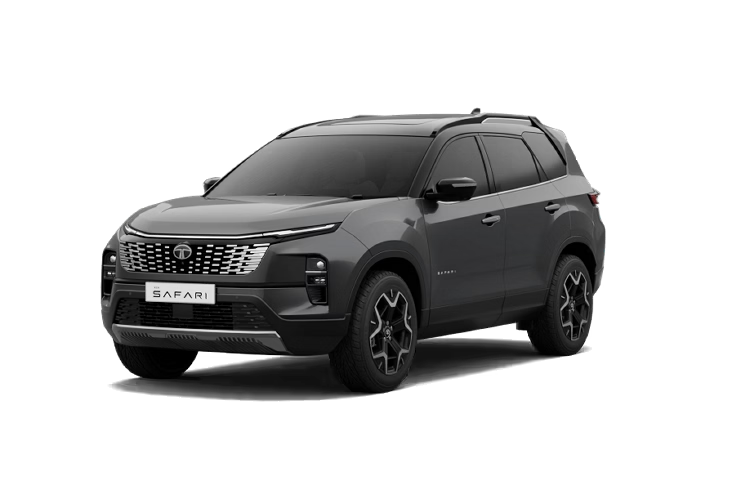
Top Family SUVs Under ₹20 Lakh — Ranked by Real Value
Tata Safari
- Strong build quality and safety focus
- Excellent ride comfort, especially for highways
- Spacious cabin with practical third row
- Premium interior feel
Safari stands out as one of the most balanced family SUVs, especially for long-distance travel.
Mahindra XUV700
- Highly feature-loaded
- Powerful engine options
- Advanced technology including ADAS
- Strong road presence
However, real-world mileage and waiting periods can be concerns.
Hyundai Creta
- Extremely refined driving experience
- Easy to drive in city conditions
- Feature-rich and reliable
While not a true 7-seater, it works well for smaller families.
Kia Seltos
- Stylish design and premium interior
- Smooth performance
- Good feature list
Similar to Creta, but more design-focused.
Maruti Grand Vitara
- Strong hybrid option with excellent mileage
- Low running cost
- Comfortable for daily usage
Best suited for buyers prioritizing efficiency.
Real-World Comparison — What Actually Matters
When you move beyond specifications, a clearer picture emerges.
- Safari and XUV700 dominate in space and presence
- Creta and Seltos lead in ease of driving
- Grand Vitara stands out in efficiency
But the real winner depends on how you plan to use the vehicle.
FAQs
Q1. Which is the best family SUV under ₹20 lakh?
Tata Safari stands out for overall comfort, safety, and practicality.
Q2. Which SUV offers best mileage?
Maruti Grand Vitara, especially the hybrid variant.
Q3. Which SUV is most feature-loaded?
Mahindra XUV700 leads in features and technology.
Q4. Should I buy a 5-seater or 7-seater SUV?
Choose based on family size and usage needs.
Final Verdict
In 2026, the definition of a family SUV has become more refined. Buyers are no longer impressed by size alone, they expect comfort, safety, efficiency, and long-term reliability.
The Tata Safari emerges as the most balanced choice for families who prioritize comfort and practicality. The Mahindra XUV700 is ideal for those who want performance and features, while the Grand Vitara appeals to buyers focused on efficiency.
The smartest choice is the one that fits your family’s real-world usage, not just specifications on paper.
Author: Manav Akbari
