
Diesel Cars in India 2026
For a long time, diesel cars were considered the smartest purchase decision for Indian buyers, especially those who drove frequently or covered long distances. The logic was simple, better fuel efficiency, lower running cost, and strong performance, particularly in SUVs.
However, the situation in 2026 is far more complex.
The rise of stricter emission norms, shrinking price gap between petrol and diesel fuel, and the rapid growth of alternative technologies like hybrid and electric vehicles have significantly changed the landscape. At the same time, government policies in certain regions have introduced uncertainty around the long-term viability of diesel vehicles.
Despite these challenges, diesel cars continue to maintain a strong presence in the Indian market. They are still widely used in SUVs, commercial applications, and by high-mileage users.
This creates an important dilemma for buyers, is diesel still worth the investment, or is it becoming outdated?
To answer this, you need to evaluate diesel cars not just from a fuel cost perspective, but from a complete ownership viewpoint.
Also read about the Best Family SUV under 20 Lakhs.
Mileage and Running Cost — The Core Advantage
The biggest strength of diesel cars has always been their efficiency.
- Diesel engines typically deliver better mileage compared to petrol engines
- Real-world fuel efficiency remains consistent even under load
- Cost per kilometer is lower, especially for long-distance driving
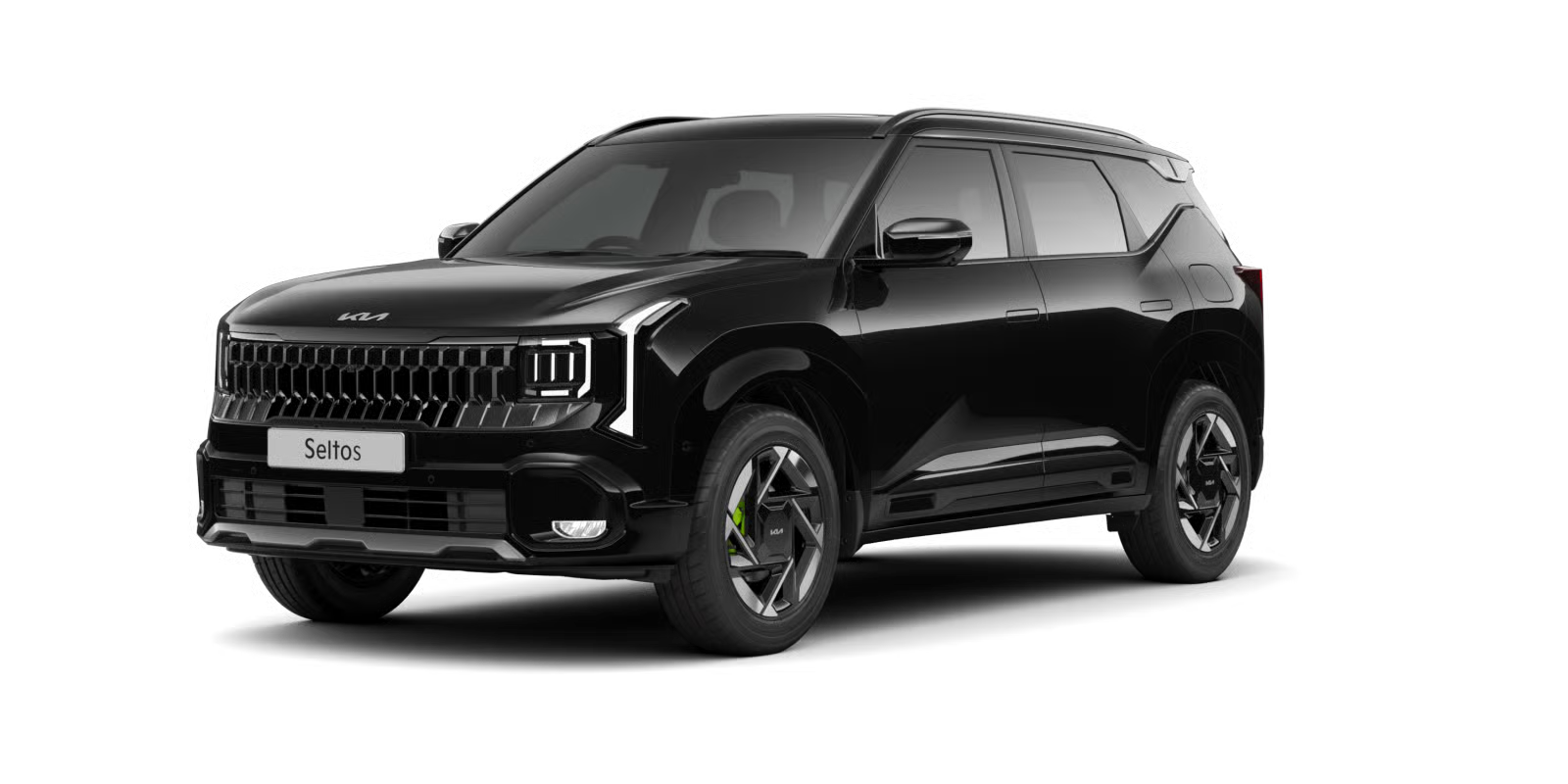
For example, a diesel SUV can easily deliver 18–22 km/l under highway conditions, which significantly reduces fuel expenses over time.
For someone driving more than 1,500 to 2,000 kilometers per month, this difference becomes financially meaningful.
However, the gap is not as wide as it used to be. Petrol engines have improved, and hybrid options are now offering comparable efficiency.
Performance and Driving Experience
Diesel engines offer a distinct driving character that still appeals to many buyers.
- High torque output at lower RPMs
- Better pulling power, especially in SUVs
- Comfortable highway cruising with minimal gear changes
This makes diesel particularly suitable for:
- Long highway drives
- Fully loaded vehicles
- Driving in hilly or challenging terrain
However, diesel engines are not without drawbacks:
- They are generally less refined than petrol engines
- Engine noise and vibration are more noticeable
- Not as smooth for stop-and-go city traffic
For city-focused users, this can reduce overall driving comfort.
Upfront Cost and Ownership Investment
One of the biggest barriers to diesel ownership is the higher initial cost.
- Diesel variants typically cost ₹1 to ₹1.5 lakh more than petrol
- Maintenance costs are higher due to more complex engine components
- Insurance cost is also slightly higher
Earlier, this extra cost could be easily justified through fuel savings. But in 2026, that calculation requires more careful evaluation.
If your usage is low, it may take several years to recover the additional investment.
Maintenance and Long-Term Reliability
Diesel engines are built to be durable, but they also require proper maintenance.
- Regular servicing is essential
- Components like injectors and turbochargers can be expensive
- Maintenance costs increase as the car ages
On the positive side:
- Diesel engines generally last longer when maintained well
- Ideal for heavy usage scenarios
For low-usage owners, however, diesel engines may not perform optimally over time.
Regulatory and Future Concerns
This is where the biggest uncertainty lies.
- Stricter emission norms are being implemented
- Some metro cities have restrictions on diesel vehicles
- Registration limits (like 10-year rule in certain regions)
While diesel is not banned nationwide, these policies create hesitation among buyers who plan long-term ownership.
In addition, the government’s push towards electrification may further impact diesel’s future.
Who Should Still Buy a Diesel Car?
Diesel cars still make sense in specific scenarios.
- High monthly running (1,500 km or more)
- Frequent highway driving
- SUV buyers needing strong torque
- Commercial or heavy-duty usage
These users can still benefit significantly from diesel’s strengths.
Who Should Avoid Diesel Cars?
Diesel may not be suitable if:
- Your usage is limited to city driving
- Monthly running is low
- You prioritize refinement and comfort
- You want long-term regulatory certainty
In such cases, petrol, hybrid, or EV options may offer better value.
FAQs
Q1. Are diesel cars still worth buying in India in 2026?
Yes, but only for high-mileage users and highway driving conditions.
Q2. Is diesel cheaper than petrol now?
Yes, but the difference in overall savings has reduced compared to earlier years.
Q3. Are diesel cars being phased out?
Not immediately, but stricter regulations are gradually reducing their appeal.
Q4. Should city users buy diesel cars?
Generally no, unless their running is high.
Final Verdict
Diesel cars in 2026 are no longer the default smart choice, but they are far from obsolete. They continue to offer strong value for specific users, particularly those who drive long distances or require high torque.
However, for the average urban buyer, the advantages of diesel are no longer as compelling as they once were. With better petrol engines, hybrid options, and the rise of EVs, buyers now have more efficient and future-ready alternatives.
The smartest decision is to choose diesel only if your usage truly justifies it.
Author: Manav Akbari
