
Kia Syros EV vs Tata Nexon EV
Two months. That’s how long you might have to wait if you want to be among the first to drive the Kia Syros EV. Kia has confirmed a July 2026 debut for its most affordable electric SUV in India, and if the expected pricing of Rs 14–18 lakh holds, it’s going to land right on top of the Tata Nexon EV’s turf. So the Kia Syros EV vs Tata Nexon EV 2026 debate isn’t hypothetical anymore. It’s the decision that thousands of EV-curious Indian buyers are going to face very soon.
Here’s how the two stack up, and more importantly, which one deserves your booking amount.
Also read about why Creta Sales dropped down?
What We Know About the Kia Syros EV
Kia has officially confirmed the Syros EV will debut in India in July 2026 as its second locally manufactured electric vehicle, after the Creta Electric. Based on confirmed spy shots and Kia’s own investor presentation, here’s what we know with reasonable certainty:
The Syros EV will be built on the K1 platform, the same architecture underpinning the Hyundai Inster EV sold globally. It’s expected to offer two battery options mirroring the Creta Electric: a 42 kWh pack (claiming approximately 390 km range) and a 51.4 kWh pack (claiming around 473 km). Fast charging is expected to take the battery from 10–80% in about 58 minutes.
Design-wise, expect a look near-identical to the ICE Syros, the boxy, square-shouldered silhouette with closed EV grille, revised front bumper, and neon-accented alloys. Inside, the Syros EV should carry the same triple-screen setup, 8-speaker Harman Kardon audio, ventilated seats, panoramic sunroof, and a dashcam that make the ICE Syros one of the most feature-packed sub-compact SUVs in India. Vehicle-to-Load (V2L) support is also expected.
Estimated price: Rs 14 lakh to Rs 18 lakh (ex-showroom), with the base variant likely starting closer to Rs 15 lakh.
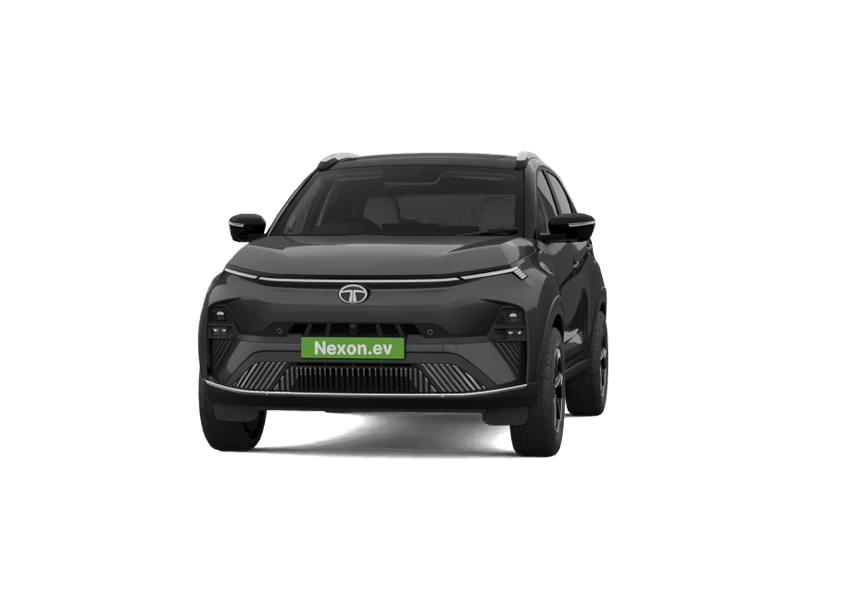
Tata Nexon EV 2026: The Known Quantity
The Tata Nexon EV needs no introduction. With 18,126 combined Nexon units sold in April 2026 alone (petrol, diesel, CNG, and EV combined), it remains Tata’s Swiss Army knife, and the EV variant has been one of India’s best-selling electric SUVs since 2020.
The current Nexon EV is available with two battery options: a 30 kWh medium range variant starting around Rs 14.49 lakh and a 40.5 kWh long range variant priced from approximately Rs 17.69 lakh (ex-showroom, prices as of May 2026). The long-range claims 465 km ARAI range, while real-world highway figures settle around 300–340 km depending on AC usage and speed.
Features include a 12.3-inch touchscreen, 10.25-inch digital cluster, panoramic sunroof, ventilated seats, and an ADAS suite in top trims. Build quality on the Nexon EV is solid, Tata’s years of refinement show in NVH levels and everyday usability. Importantly, Tata has over 600 service centres across India, which means owners in Tier 2 and Tier 3 cities don’t have to panic when something needs attention.
Kia Syros EV vs Tata Nexon EV: Head-to-Head Breakdown
Battery & Range: On paper, the Syros EV likely edges the Nexon EV on claimed range, 390–473 km versus the Nexon’s 465 km long-range variant. But paper range and road range are two different things. The Nexon EV’s real-world performance is well-documented across Indian conditions by thousands of owners, while the Syros EV’s real-world credentials are yet to be validated. Edge: Nexon EV until proven otherwise.
Features & Interior: Here the Syros EV looks likely to win decisively. The ICE Syros already packs a triple-screen setup, Harman Kardon audio, a dashcam, and ventilated seats in mid and top trims, all for a starting price of Rs 8.39 lakh. If Kia carries the same philosophy into the EV, the Syros EV will be feature-for-feature richer than the Nexon EV at comparable price points. V2L support would also be a genuine differentiator for buyers who want the car to power appliances during camping or power outages. Edge: Syros EV (expected).
Service Network: This is where Tata wins, and it’s not close. Tata’s 600+ service network for EVs, combined with its years of EV ownership experience in India, gives the Nexon EV a significant peace-of-mind advantage, especially outside metros. Kia has been expanding its network but remains concentrated in urban areas. Edge: Nexon EV, clearly.
Price: Both will likely compete in the Rs 14–18 lakh bracket. If the Syros EV comes in at the lower end of expectations (Rs 14–15 lakh for base), it creates pressure on the Nexon EV’s medium-range variant. If it lands at Rs 17–18 lakh, the Nexon EV long-range looks like better value. We’ll know more at launch. Edge: Too early to call.
Brand Trust in EV: Kia’s Creta Electric has been extremely well-received, with minimal reliability complaints in its first year. The Syros EV builds on that credibility. But Tata has been doing EVs in India since 2020, with 5+ years of owner data across diverse conditions. Edge: Nexon EV for now.
Real-World Buyer Scenarios
Scenario 1: The Metro Commuter in Bengaluru: If you commute 50–70 km daily and charge at home overnight, both cars work perfectly. The Syros EV’s higher feature count might feel like better daily value. But if you’re buying today in May 2026, the Nexon EV long-range is a safer bet — you can read hundreds of owner reviews and the car is available off the shelf.
Scenario 2: The Family Buyer in Surat or Nashik: For a family in a Tier 2 city, the Nexon EV wins on service accessibility alone. Kia’s network in smaller cities is still growing, and when you’re doing a 400 km weekend run to visit family, peace of mind about service matters more than a slightly fancier screen.
Scenario 3: The Feature-Hungry Buyer Who Can Wait: If you’re 30 years old, buying for the long-term, and have home charging sorted, waiting until July for the Syros EV could absolutely make sense. Kia has a track record of delivering feature-rich EVs at competitive prices, and the Creta Electric’s success suggests they’ll price the Syros EV sharply.
What This Means for Indian Buyers
The arrival of the Kia Syros EV is genuinely good for Indian buyers regardless of which car you end up buying. More serious competition in the Rs 14–18 lakh EV space forces Tata to sharpen the Nexon EV further, and that’s already starting to happen with more aggressive trim pricing. If you’re on the fence, watching for Syros EV’s confirmed price post-July launch could even push Tata into an early Nexon EV price correction.
Our take: don’t let FOMO on the Syros EV push you into waiting indefinitely. Set a deadline, if the Syros EV is confirmed at Rs 14–16 lakh in July 2026 with solid range numbers, it becomes a compelling buy. If it comes in above Rs 17 lakh, the Nexon EV long-range remains the smarter purchase.
Final Verdict / Our Take
The Kia Syros EV vs Tata Nexon EV 2026 is going to be one of the closest battles in India’s EV segment. Today, in May 2026, the Nexon EV wins on the strength of known performance, service reach, and zero waiting. In July 2026, the Syros EV could flip that verdict depending on final pricing and real-world range figures.
If you need a car in the next 30 days, buy the Nexon EV long-range with confidence. If you can wait 60–90 days and are buying for 5+ years, hold that booking amount and see what Kia brings to the table.
Frequently Asked Questions (FAQs)
Q1. What is the expected price of Kia Syros EV in India in 2026?
The Kia Syros EV is expected to be priced between Rs 14 lakh and Rs 18 lakh (ex-showroom) when it launches in July 2026. Kia’s investor guidance and market positioning suggest the base variant will likely start around Rs 15 lakh, making it one of India’s most affordable electric SUVs.
Q2. How does Kia Syros EV range compare to Tata Nexon EV in 2026?
The Syros EV is expected to offer 390–473 km of ARAI-claimed range depending on battery variant, while the Nexon EV long-range claims 465 km. In real-world Indian conditions, both are likely to deliver around 300–350 km on highway driving. Actual owner data for the Syros EV will only emerge post-launch.
Q3. Which has a better service network, Kia or Tata for EVs?
Tata Motors has a significantly larger service network with over 600 EV-capable service centres across India, covering Tier 2 and Tier 3 cities well. Kia has strong urban presence but is still expanding. For buyers outside metros, the Nexon EV’s service advantage is a genuine reason to prefer it over the upcoming Syros EV.
Q4. Should I wait for Kia Syros EV or buy Tata Nexon EV now?
If you need a car within 30 days, buy the Nexon EV, it’s proven, available, and well-supported. If you can wait until August–September 2026 to also absorb early Syros EV owner feedback, waiting makes sense. The Kia Syros EV vs Tata Nexon EV 2026 decision will be clearer once confirmed pricing and range are public.
— Manav Akbari, TheWheelFeed
