
Nissan Tekton vs Hyundai Creta
Nissan has been a ghost in India’s SUV conversation for the better part of five years. The Kicks faded quietly. The Terrano aged without updates. Buyers moved on. But June 2026 marks Nissan’s most credible attempt at a comeback, the Nissan Tekton, a midsize SUV built to take on the Hyundai Creta and Kia Seltos directly, priced at an expected Rs 11–19 lakh. So where does the Nissan Tekton vs Hyundai Creta 2026 comparison actually land for a buyer thinking about the mid-year market?
Let’s be honest about both cars, the appeal, the concerns, and the real trade-offs.
Also read about Kia Syros EV vs Tata Nexon EV.
What Is the Nissan Tekton?
The Tekton is not a cobbled-together import. It’s Nissan’s most strategically thought-out India product in over a decade. Built on the CMF-B platform shared with the 2026 Renault Duster, and manufactured locally in Nissan and Renault’s Chennai plant, the Tekton is designed specifically for the Indian midsize SUV segment.
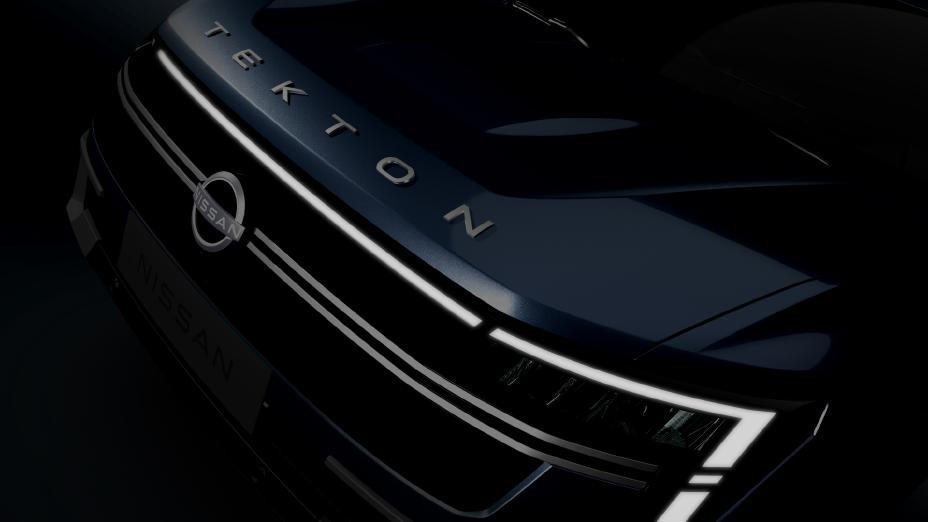
Visually, Nissan has drawn from the iconic Nissan Patrol for the Tekton’s design language. The result is an upright, muscular front fascia with a large V-Motion grille, C-shaped connected LED headlamps with “Himalayas-inspired” trim detailing on the front door, and C-pillar-mounted rear door handles that give it a cleaner 3-door aesthetic from the side. It measures approximately 4,300–4,400mm in length, proper midsize territory, not a sub-compact trying to stretch.
Engine options are confirmed as two turbo-petrol units: a 1.0-litre producing approximately 100 hp for the base, and a 1.3-litre delivering 163 hp and 280 Nm for the range-topper, paired with a 6-speed DCT. A 1.8-litre strong hybrid variant is also expected later. Gearbox options span a 6-speed manual and the DCT automatic. Features include a panoramic sunroof, ventilated seats, a 360-degree camera, Level 2 ADAS, dual-zone climate control, and a triple-screen dashboard with copper accent trim.
Expected prices: Rs 11 lakh (base) to Rs 19 lakh (top petrol), with the hybrid likely running Rs 16–22 lakh.
Hyundai Creta 2026: The Standard Everyone Is Measured Against
The Creta needs little introduction. It’s been India’s bestselling midsize SUV for several years running, and while April 2026 showed a 10% year-on-year dip, it still sold 15,291 units in a single month. Brand recall, service network, resale value, and owner community depth, the Creta has all of it.
The current Creta is priced from Rs 10.79 lakh to Rs 20.05 lakh (ex-showroom). Its feature list includes a panoramic sunroof, a 10.25-inch touchscreen, ADAS, ventilated seats, connected car features, and a 5-star Bharat NCAP rating. Powertrain options include a 1.5-litre petrol, a 1.5-litre diesel, and a 1.5-litre turbo petrol, alongside the Creta Electric for EV buyers.
Hyundai’s 1,400+ service centres across India are a genuine operational advantage that no amount of spec-sheet comparison can replicate.
Head-to-Head: Where the Tekton Wins and Where It Doesn’t
Design & Road Presence: The Tekton wins here, and it’s not close. The Patrol-inspired design is bold, upright, and distinctive, it looks expensive in a way the current Creta, handsome as it is, does not. If you want something that turns heads in a Mumbai parking garage, the Tekton will do it. The Creta is a refined, polished product but has been around long enough to become familiar. Edge: Tekton.
Engine Performance: The Tekton’s 1.3L turbo petrol with 163 hp and 280 Nm is the standout spec here. Compare that to the Creta’s turbo petrol putting out 140 hp and 242 Nm. The Tekton has a meaningful power advantage in the turbo segment, a driver’s spec the Creta cannot match at comparable prices. Edge: Tekton (1.3 turbo vs Creta turbo).
Features at Equivalent Price: Both cars offer panoramic sunroof, ventilated seats, 360-degree camera, and ADAS at their respective mid-to-top trims. The Tekton’s copper-accented triple-screen dashboard arguably feels more premium. Hard to separate them, call it a draw.
Service Network & After-Sales: This is where the Creta is unassailable. Hyundai’s 1,400+ service centres dwarf whatever Nissan’s current India network looks like. In cities like Bengaluru, Mumbai, or Delhi, you’ll find a Hyundai service centre within a short drive. In Tier 2 cities like Vadodara, Jodhpur, or Coimbatore, the Creta’s service advantage becomes a decisive practical factor. Edge: Creta, significantly.
Resale Value: The Creta consistently holds among the best resale values in its segment, 60–65% in 4 years is typical. The Tekton, as a brand-new nameplate from a recently struggling brand, carries resale uncertainty. Five years from now, if Nissan’s India momentum continues, Tekton resale may look reasonable. Today, it’s an unknown. Edge: Creta.
Brand Trust & Peace of Mind: Related to the above, Creta buyers know what they’re getting. The ownership community is vast. Real-world data exists for every potential concern. The Tekton has no ownership history in India yet. For risk-averse buyers, this matters enormously. Edge: Creta.
Real-World Buyer Scenarios
The Urban Enthusiast Who Cares About Driving: If you’re a car enthusiast in their 30s, buying in Pune or Hyderabad, and actually care about how your SUV drives, the Tekton’s 163 hp DCT setup is genuinely exciting. The Creta turbo is capable, but the Tekton has more power on paper and a platform with European pedigree (CMF-B is the same base as the Renault Duster, a car Europeans take to mountain roads). Buy the Tekton.
The Family Buyer in a Tier 2 City: For a family in Indore or Chandigarh buying their first midsize SUV and planning to keep it for 7–8 years, the Creta’s service network and resale certainty make it the logical choice. The Tekton is interesting, but “interesting” doesn’t help when you need a part at 9 PM on a highway outside the city. Buy the Creta.
The Feature-First Buyer With a Rs 14–16 Lakh Budget: At this price point, the Tekton may deliver significantly more kit than the Creta at the same budget, especially if Nissan prices it aggressively to win attention. Wait for confirmed pricing and compare mid-trim specs directly. The Tekton could be excellent value here if Nissan gets aggressive.
The Trust Question: Should You Take a Chance on Nissan?
This is the honest question the Tekton comparison always comes back to. Nissan’s India track record since the Kicks was uninspiring. But the Gravite MPV, launched in early 2026, has received positive early feedback. Nissan achieved a 59.2% year-on-year sales growth in April 2026, from a low base, yes, but it’s directionally positive. The CMF-B platform is proven (Renault Duster’s success validates it). And local manufacturing in Chennai gives Nissan control over parts and after-sales in a way imported models never could.
The trust gap is real but narrowing. If you’re a considered buyer who can wait 6 months after launch to read owner reviews and observe after-sales quality first-hand, the Tekton could be a very rewarding purchase. If you’re buying on Day 1, we’d understand a conservative pivot to the Creta.
What This Means for Indian Buyers
The Nissan Tekton vs Hyundai Creta 2026 decision is fundamentally a question of what you value more: freshness and performance, or certainty and support. The Tekton brings both in design and on spec. The Creta brings both in ownership experience and after-sales.
Our view: the Tekton is the more exciting product. The Creta is the safer purchase. That’s not a cop-out, those are genuinely different things, and which one matters more depends entirely on you.
Final Verdict / Our Take
Nissan has built something genuinely interesting with the Tekton. It’s the first time in years that a Nissan product in India deserves serious consideration, not just as a curiosity, but as a real purchase option. If the pricing lands below Rs 16 lakh for the 1.3 DCT variant, the Tekton will force buyers to genuinely reconsider the Creta at that spec level.
The Creta isn’t going anywhere. But for the first time in a long time, there’s a new challenger in this segment that isn’t just another Korean or Japanese me-too. The Baby Patrol has arrived, and whether it earns its nickname depends on whether Nissan backs its product with the after-sales investment its buyers will need.
Frequently Asked Questions (FAQs)
Q1. How does the Nissan Tekton compare to the Hyundai Creta in price for 2026?
The Nissan Tekton is expected to be priced from Rs 11 lakh to Rs 19 lakh (ex-showroom) for petrol variants, putting it in direct competition with the Hyundai Creta’s Rs 10.79–20.05 lakh range. If Nissan prices the mid and top-spec Tekton aggressively, it could offer more features per rupee than the Creta at equivalent price points.
Q2. What engine options will the Nissan Tekton offer in India?
The Nissan Tekton will offer a 1.0-litre turbo petrol (approximately 100 hp) and a 1.3-litre turbo petrol (163 hp, 280 Nm) with manual and DCT gearbox options. A 1.8-litre strong hybrid variant is expected later. The 1.3L DCT is the performance standout and directly betters the Hyundai Creta’s turbo petrol (140 hp) on paper.
Q3. Is the Nissan Tekton safe to buy if I’m concerned about after-sales service?
The Nissan Tekton is manufactured locally in Chennai, which improves parts availability compared to imported models. However, Nissan’s service network in India remains significantly smaller than Hyundai’s 1,400+ centres. Buyers in Tier 1 cities will be adequately covered; buyers in smaller towns should verify Nissan service centre proximity before committing.
Q4. When will the Nissan Tekton launch in India and can I book it now?
The Nissan Tekton is expected to launch in India in June–July 2026, with bookings likely opening ahead of deliveries by a few weeks. Nissan has confirmed the model for India and it will be manufactured at the Chennai facility shared with Renault. Watch for official price announcements, which will likely trigger a booking opening.
— Manav Akbari, TheWheelFeed
