
Why Indians prefer petrol over EV 2026
Introduction
Walk into any car showroom in India today and ask the salesperson one simple question: “Which sells more—petrol or EV?”
You already know the answer.
Despite all the noise around electric vehicles, flashy launches, and government push, the majority of Indian buyers are still choosing petrol. Not by a small margin, by a massive one.
That might sound outdated in 2026, especially when EVs promise lower running costs and modern tech. But here’s the uncomfortable truth, the average Indian car buyer is not making an emotional or futuristic decision.
They’re making a safe one.
And that’s exactly why the debate around why Indians prefer petrol over EV 2026 is more complex than it looks. This isn’t resistance to change. It’s a reflection of ground reality, money, infrastructure, convenience, and trust.
So the real question isn’t “why aren’t Indians switching to EVs?”
It’s this, are they actually making the smarter choice by sticking to petrol?
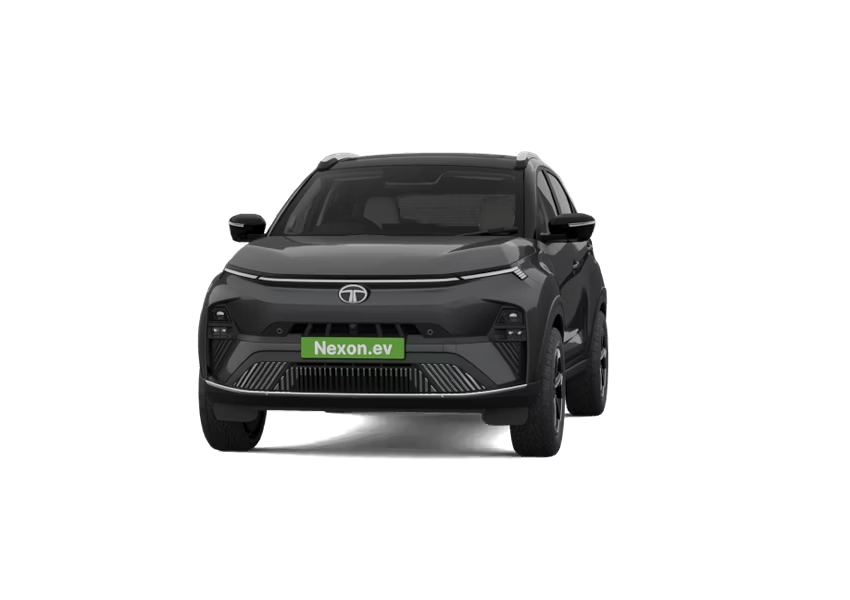
Also read about the Ideal choice for driving 40 Kms every day. EV or Petrol?
The trust factor that EVs still haven’t earned
- Petrol cars have been around for decades, and buyers trust them without needing explanations.
- EVs still feel new, even if they’ve been in the market for years now.
- Many buyers are unsure about long-term battery life and replacement costs.
- Word-of-mouth plays a huge role in India, and petrol cars dominate that space.
- Stories of EV glitches or failures spread faster than success stories.
- Buyers prefer proven reliability over promised efficiency.
Infrastructure gap is still very real
- Petrol pumps are everywhere, from metros to the smallest towns.
- EV charging stations are improving but still inconsistent outside major cities.
- Long-distance travel remains a concern for EV buyers.
- Charging time is significantly longer than refuelling a petrol car.
- Apartment residents often struggle to install private chargers.
- Infrastructure anxiety directly affects buying decisions more than marketing ever can.
Upfront cost is a deal breaker for most
- EVs still cost significantly more than their petrol counterparts.
- A ₹4–6 lakh price difference is not easy to justify for most buyers.
- Higher cost directly translates to higher EMI burden.
- Many buyers prioritise affordability today over savings in the future.
- Discounts and offers on petrol cars make them even more attractive.
- Budget-conscious buyers rarely stretch their finances for long-term benefits.
Convenience still belongs to petrol cars
- Refuelling takes 5 minutes, while EV charging can take hours.
- No planning is required with petrol cars, you just drive.
- EV ownership requires a routine, especially for charging cycles.
- Sudden trips are easier with petrol cars.
- No dependency on electricity availability or charging infrastructure.
- Convenience is still one of the strongest arguments for petrol.
Real-world usage patterns in India
- Many Indian families use one car for everything, city, highway, long trips.
- EVs work best in predictable city usage but struggle with mixed usage patterns.
- Petrol cars adapt easily to all types of driving conditions.
- Rural and semi-urban users have limited EV practicality today.
- Buyers prefer flexibility over specialization.
- Petrol cars fit Indian usage habits better for now.
Resale value and long-term confidence
- Petrol cars have predictable resale value based on years of market data.
- EV resale market is still evolving and uncertain.
- Buyers worry about battery degradation affecting resale price.
- Dealers are more comfortable evaluating petrol vehicles than EVs.
- Long-term ownership risks feel lower with petrol cars.
- Confidence in resale plays a big role in buying decisions.
Maintenance perception vs reality
- EVs actually have lower maintenance costs due to fewer moving parts.
- However, buyers still perceive EV servicing as complicated or expensive.
- Petrol cars have a well-established service ecosystem across India.
- Mechanics for petrol cars are easily available even in small towns.
- EV service centers are still limited compared to petrol networks.
- Perception often matters more than actual cost in buyer psychology.
Government push vs buyer mindset
- Government incentives and subsidies have boosted EV adoption.
- However, policy support alone cannot change buyer behavior overnight.
- Buyers respond more to convenience than incentives.
- State policies vary, creating inconsistency in EV benefits.
- Petrol cars remain the default choice despite EV promotion.
- Change is happening, but slower than expected.
Are petrol buyers actually making the smarter choice?
- For buyers without charging access, petrol is still the logical option.
- For unpredictable usage patterns, petrol offers unmatched flexibility.
- For tight budgets, petrol cars remain more accessible.
- For long-distance drivers, petrol reduces stress and planning.
- For early adopters willing to adapt, EVs can offer better savings.
- The “smart choice” depends entirely on lifestyle, not trends.
The shift is happening, but slowly
- EV adoption is increasing steadily in urban areas.
- Awareness and acceptance are improving with each new model.
- Infrastructure is expanding, but not fast enough yet.
- Younger buyers are more open to EV ownership.
- Fleet operators are driving early EV adoption.
- Petrol dominance is slowly being challenged, but not replaced yet.
FAQs
Why are Indians still buying petrol cars in 2026?
Because petrol cars offer better convenience, lower upfront cost, and a trusted ownership experience.
Are EVs not worth buying in India right now?
They are worth it for specific use cases like daily city commuting with home charging.
Will petrol cars lose value in the future?
Not immediately, petrol cars will remain relevant for many years, especially in India.
Is it risky to buy an EV today?
Not risky, but it requires more planning and lifestyle adjustment compared to petrol cars.
Final Verdict
Indian buyers aren’t being conservative, they’re being practical. Petrol still wins on convenience, trust, and flexibility, which matter more than future savings for most people. EVs make sense, but only if your life fits them. Right now, choosing petrol isn’t outdated, it’s realistic.
Author: Manav Akbari, TheWheelFeed
