
best electric car under 15 lakh
Also visit the official website of Tata Motors
Electric car retail sales in India crossed the 31,000-unit mark in June 2026 alone, and if you’re shopping for the best electric car under 15 lakh, the good news is you finally have real choices instead of one or two token options.
More from us: The Maruti Brezza Is Finally Getting a Turbo Engine. Here’s Why That’s a Bigger Deal Than It Sounds
The Segment Has Genuinely Matured
Two years ago, “affordable EV in India” basically meant compromising heavily on range, safety, or build quality. That’s no longer true. The sub-15 lakh EV segment now includes proper 5-star GNCAP-rated SUVs, hatchbacks with real daily-usable range, and Battery-as-a-Service options that push entry prices even lower for buyers who don’t mind separating the battery cost from the vehicle price.
The SUV Pick: Tata Nexon EV
If safety and cabin space matter most, the Tata Nexon EV remains the benchmark in this bracket. It carries a 5-star GNCAP safety rating and offers the most premium cabin experience among sub-15 lakh EVs currently on sale. For a family that wants an EV as their primary car rather than a second city runabout, this is still the safest recommendation we can make.
The Highway-Ready Pick: Tata Punch EV
For buyers who do genuine highway stretches, say, Mumbai to Pune on weekends, the Tata Punch EV stands out with 350km+ range and faster DC charging support. Combined with its recent sales momentum in the petrol version (the Punch nameplate became India’s best-selling car line in June 2026), the EV variant benefits from the same platform confidence and dealer familiarity, which matters when it comes to service.
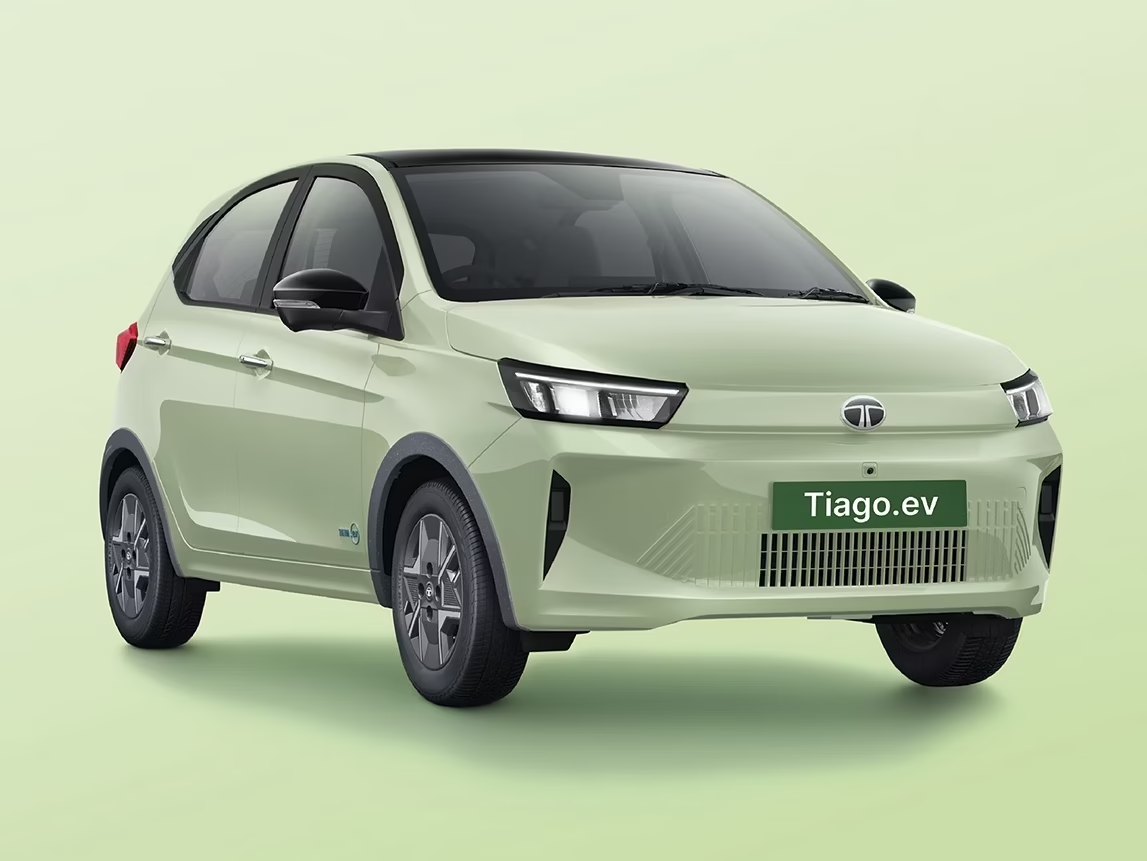
The Budget Entry Pick: Tata Tiago EV
Priced between ₹7.99 lakh and ₹9.29 lakh, the Tata Tiago EV remains the most accessible genuine EV for urban families in India. It won’t excite on range or performance, but for a household’s second car doing school runs and office commutes under 100km a day, it’s hard to beat on price-to-practicality.
The Comfort Pick: Citroen eC3 Live
If your daily drive involves broken roads and constant potholes, true for most Tier-2 Indian cities, the Citroen eC3 Live’s “Advanced Comfort” suspension genuinely stands out. It’s not the quickest or longest-range EV here, but it’s the most forgiving to actually live with on Indian roads day to day.
The Cheapest Option: MG Comet EV
At around ₹6.99 lakh, the MG Comet EV is the cheapest way into an electric car in India today, and it’s built specifically for tight urban parking and short commutes. It’s not a family car by any stretch, think of it as a dedicated city runabout for a solo commuter or a second household vehicle.
The Buyer Scenario
Picture a Bengaluru-based techie with a 20km daily commute and access to home charging. The Tiago EV or Comet EV covers that use case completely, at a fraction of the running cost of a petrol hatchback, while the Nexon EV or Punch EV would be overkill unless weekend road trips are part of the plan.
Charging Infrastructure Is No Longer the Excuse It Used to Be
A few years ago, the biggest objection to buying any EV under 15 lakh was legitimate range anxiety compounded by patchy public charging. That picture has changed considerably through 2026, with public charging networks expanding rapidly along major highways connecting metro clusters, Mumbai-Pune, Delhi-Jaipur, Bengaluru-Chennai, and most housing societies in larger cities now offering at least basic charging provisions for residents. Combined with home charging overnight, most buyers in this bracket will genuinely struggle to find a real-world scenario where charging access is the deciding factor against buying, provided their daily driving stays within the 100-150km range.
Running Costs Nobody Talks About Enough
Beyond the sticker price, the real financial case for an EV under 15 lakh shows up in running costs. Charging at home typically costs a fraction of what the equivalent petrol distance would cost at current fuel prices, and EVs carry far fewer moving parts that need regular servicing, no oil changes, no clutch wear, no exhaust system to maintain. Over a five-year ownership window, that difference in running and maintenance costs can meaningfully offset the higher upfront price compared to a similarly specced petrol hatchback or SUV.
What This Means for Indian Buyers
Our take: the best electric car under 15 lakh isn’t a single answer anymore, it genuinely depends on your use case, and that’s the real story here. The segment has moved from “which EV can I afford” to “which EV actually fits how I drive,” which is exactly the maturity this market needed.
Resale Value Is Catching Up Too
One lingering concern with early EV adoption in India was poor resale value, driven by uncertainty over battery health and a thin used-EV market. That’s improving steadily as more of these models complete their first ownership cycles and enter the used market with verifiable battery health reports. Tata, in particular, has pushed battery warranties of 8 years, which is doing real work to reassure both first owners and prospective second owners, narrowing the resale gap between EVs and comparable petrol models in this price bracket.
One Word of Caution
Not every EV under 15 lakh is a smart buy for every buyer. If your monthly driving regularly exceeds 150-200km, or you frequently drive to smaller towns with limited charging infrastructure, a well-specced strong-hybrid petrol car may still serve you better than stretching an EV’s range on longer trips. The best electric car under 15 lakh is genuinely excellent for the right use case, but it’s not yet a universal replacement for every petrol car in this segment, and pretending otherwise does buyers a disservice.
What’s Coming Next in This Price Bracket
The sub-15 lakh EV segment is about to get even more crowded. The Kia Syros EV and Maruti eVitara, both positioned in the ₹15-20 lakh range at launch, are expected to see more accessible variants introduced over the next year as battery costs continue to decline, potentially pulling a wider range of models into this bracket. If you’re not in urgent need of an EV right now, it’s reasonable to expect even stronger options at this price point within the next 12 months, though anyone with a genuine daily-use case today shouldn’t necessarily wait indefinitely for a marginally better future option.
How to Actually Decide
Rather than chasing the single “best” o₹6.99 lakh, is currently the most affordable EV in India, though it’s best suited for short city commutes rather than family use.ption on a spec sheet, map your actual weekly driving pattern first, daily commute distance, access to home or office charging, and how often you genuinely need highway range, before shortlisting from this list. Two buyers with the same ₹12 lakh budget can have completely different correct answers here, and that’s the real takeaway from how mature this segment has become in 2026.
Final Verdict
For most buyers wanting one EV that does everything reasonably well, the Tata Nexon EV remains our top recommendation in this bracket. But if your budget or use case leans differently, the Punch EV, Tiago EV, eC3, and Comet EV all earn their spot on this list for genuinely different reasons, not as filler options.
What is the best electric car under 15 lakh in India right now?
The Tata Nexon EV is our top overall pick for its 5-star GNCAP safety rating and premium cabin, though the right choice depends on your specific range and space needs.
Which EV under 15 lakh has the longest range?
The Tata Punch EV offers 350km+ range with faster DC charging, making it the strongest highway-capable option in this price bracket.
What is the cheapest electric car available in India?
The MG Comet EV, priced around ₹6.99 lakh, is currently the most affordable EV in India, though it’s best suited for short city commutes rather than family use.
Is Battery-as-a-Service worth considering for a budget EV purchase?
Yes, if you want a lower upfront price, BaaS options like the Tata Punch EV at ₹6.49 lakh separate battery cost from the vehicle, though you’ll pay a monthly or per-km battery fee separately.
Stay tuned and follow up for more.
