
Hyundai Creta Electric vs Petrol 2025
Introduction
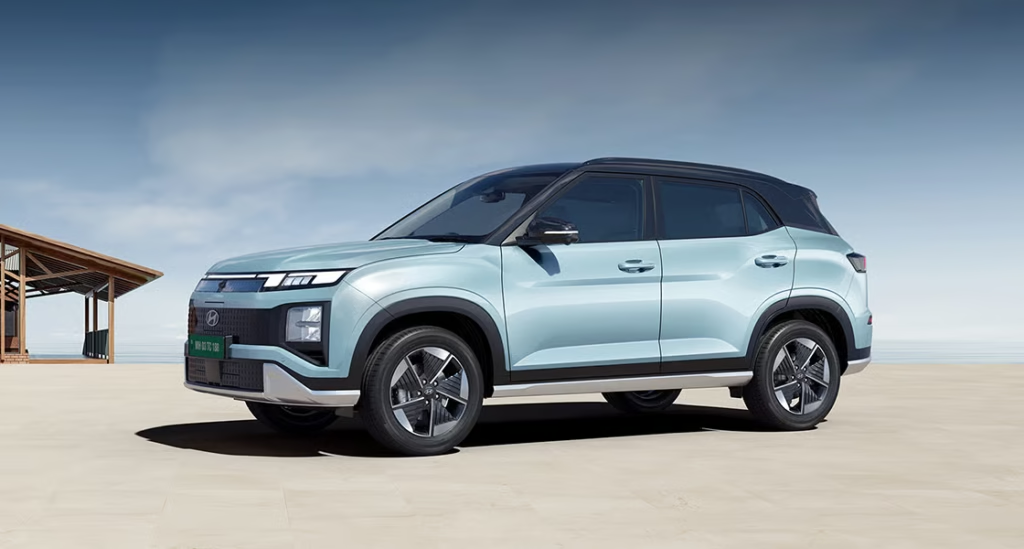
There’s a reason you see a Creta at almost every traffic signal in India.
It’s not just popular, it’s become the default answer for anyone buying a mid-size SUV. Safe choice, strong resale, premium feel without crossing into luxury pricing. For years, the formula has worked perfectly.
But 2025 changes that equation.
Because now, the same buyer walking into a Hyundai showroom isn’t just choosing between variants, they’re choosing between two completely different ways of owning a car. Petrol vs electric isn’t just about fuel anymore. It’s about lifestyle, running costs, infrastructure, and long-term thinking.
And this is where most people get confused.
The Hyundai Creta Electric vs Petrol 2025 debate isn’t as simple as “EV saves money” or “petrol is safer.” Both have strong cases, and both can either be a brilliant decision or a regret, depending entirely on how you use the car.
So instead of selling you a narrative, let’s break this down the way an actual Indian buyer should think.
Also read about the Manual vs Automatic Cars India 2026.
Upfront Price Reality: Where the Decision Begins
- The petrol Creta continues to start around ₹11 lakh (ex-showroom), making it far more accessible for a wide range of buyers.
- The Creta Electric is expected to start closer to ₹17–18 lakh, creating a significant entry barrier.
- On-road pricing amplifies this difference, especially in states with higher registration costs.
- EMI difference between the two variants can easily cross ₹8,000–₹12,000 per month depending on loan terms.
- For budget-conscious buyers, this price gap alone can end the conversation before it even begins.
- However, EV buyers often justify the higher cost by looking at long-term savings rather than upfront affordability.
Daily Running Costs: Where EV Starts Making Sense
- Petrol prices in India continue to hover around ₹100 per litre in most cities, making daily driving expensive.
- A petrol Creta typically delivers 12–15 km/l in real-world city conditions.
- That translates to roughly ₹7–₹8 per kilometre in fuel cost.
- The Creta Electric, when charged at home, can bring running costs down to ₹1.5–₹2 per kilometre.
- Over 40–50 km daily usage, the difference becomes significant within a year.
- However, reliance on public charging can increase EV running costs and reduce savings.
Driving Experience: Two Completely Different Personalities
- The petrol Creta offers a familiar driving experience with smooth acceleration and predictable power delivery.
- It works well across both city and highway conditions without requiring any adjustment from the driver.
- The electric Creta delivers instant torque, making city driving feel quicker and more effortless.
- Stop-go traffic becomes far less tiring in the EV due to the absence of gear shifts.
- Highway overtakes are quicker in the EV due to instant power delivery.
- However, some drivers may miss the mechanical feel and sound of a petrol engine.
Range vs Convenience: The Real Trade-Off
- Petrol cars offer unlimited range as long as fuel stations are available, which is still a massive advantage.
- Refuelling takes just 5 minutes, making long trips stress-free.
- The Creta Electric is expected to offer a real-world range of 350–450 km depending on driving conditions.
- Charging time varies significantly, home charging can take several hours, while fast charging reduces it to under an hour.
- Range anxiety is still a concern, especially for buyers who frequently travel long distances.
- Urban users with predictable daily driving patterns will find EV range more than sufficient.
Maintenance and Service: Lower Doesn’t Always Mean Easier
- Petrol engines require regular servicing, including oil changes, filters, and periodic maintenance.
- EVs have fewer moving parts, which reduces routine service requirements.
- Long-term maintenance costs are generally lower for electric vehicles.
- However, EV service infrastructure is still developing compared to petrol vehicles.
- Battery health and replacement costs remain a concern for long-term ownership.
- Hyundai’s service network gives both variants an advantage over newer EV brands.
Ownership Psychology: What Buyers Actually Feel
- Petrol buyers feel secure because they understand the technology and infrastructure.
- EV buyers often feel satisfied with lower running costs and future-ready ownership.
- Range anxiety can create stress for EV owners in certain situations.
- Petrol ownership comes with predictable expenses but higher monthly fuel bills.
- EV ownership requires planning, especially for charging routines.
- Emotional comfort plays a bigger role than most buyers admit.
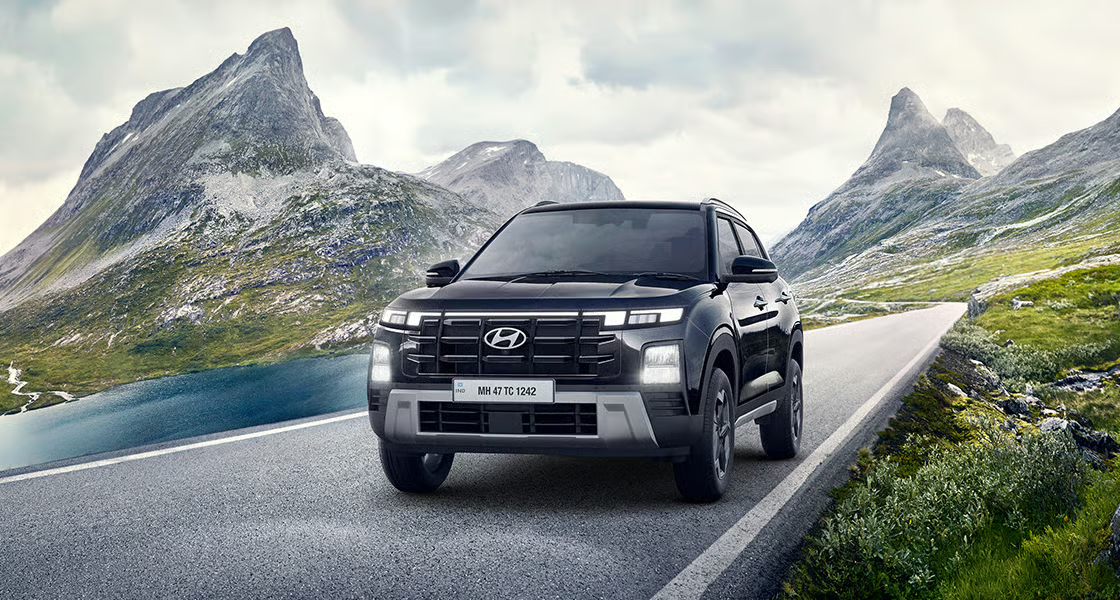
Who Should Buy the Petrol Creta
- Buyers who frequently travel long distances or drive on highways.
- People living in areas with limited EV charging infrastructure.
- Buyers who prefer lower upfront cost and easier financing.
- Those who want a hassle-free, no-adjustment ownership experience.
- Users who don’t want to plan charging schedules or depend on infrastructure.
Who Should Buy the Creta Electric
- Daily city commuters driving 30–60 km regularly.
- Buyers with access to home charging setups.
- People looking to reduce long-term running costs significantly.
- Early adopters who are comfortable with new technology.
- Buyers planning to keep the car for longer ownership cycles.
Hidden Factors Most Buyers Ignore
- Electricity tariffs vary by state, which affects EV running costs.
- Resale value of EVs is still evolving compared to petrol cars.
- Insurance costs can be slightly higher for EVs due to battery coverage.
- Charging infrastructure is improving but not yet consistent across India.
- Petrol cars are easier to sell in the used market currently.
- Government policies and incentives can influence EV affordability over time.
FAQs
Is the Hyundai Creta Electric cheaper to run than petrol?
Yes, significantly cheaper for daily use, especially if you charge at home. Over time, the savings can offset the higher initial cost.
Should I buy Creta Electric if I drive only in the city?
If your daily usage is predictable and you have charging access, the EV makes more sense financially and practically.
Is range anxiety still a problem in 2025?
It’s less of an issue than before, but still relevant for highway travel and areas with limited charging infrastructure.
Which one has better resale value?
Currently, petrol variants have stronger resale value, but EV resale trends are gradually improving.
Final Verdict
If your life revolves around city driving and you can charge at home, the Creta Electric is the smarter long-term choice. But if you want zero compromises, easy refueling, and predictable ownership, the petrol version still wins. This isn’t about which is better, it’s about which fits your daily reality.
Author: Manav Shah, TheWheelFeed
