
Volvo EX90 India launch
Also visit the official website of Volvo
The Volvo EX90 India launch is confirmed for 12 October 2026, and the ES90 electric sedan arrives on the same day. Two flagship EVs landing on one day is a big moment for the luxury EV segment.
Official prices were not public when I wrote this, so every rupee figure below is a press estimate, not a Volvo number. Even so, the specifications are well documented, and when you run the numbers, I think the sedan quietly beats the SUV on almost every measure that matters to an Indian EV buyer.
What Volvo has confirmed so far
Volvo has confirmed the date, and Autocar India lists the global specifications that are expected to carry over. Both cars offer three powertrains: a 92 kWh single-motor rear-drive version with 333 hp and 480 Nm, a 106 kWh twin-motor version with 456 hp and 670 Nm, and a Twin Motor Performance version with 680 hp and 870 Nm. Both support DC charging of up to 350 kW, with a 10 to 80 percent top-up quoted at 22 minutes.
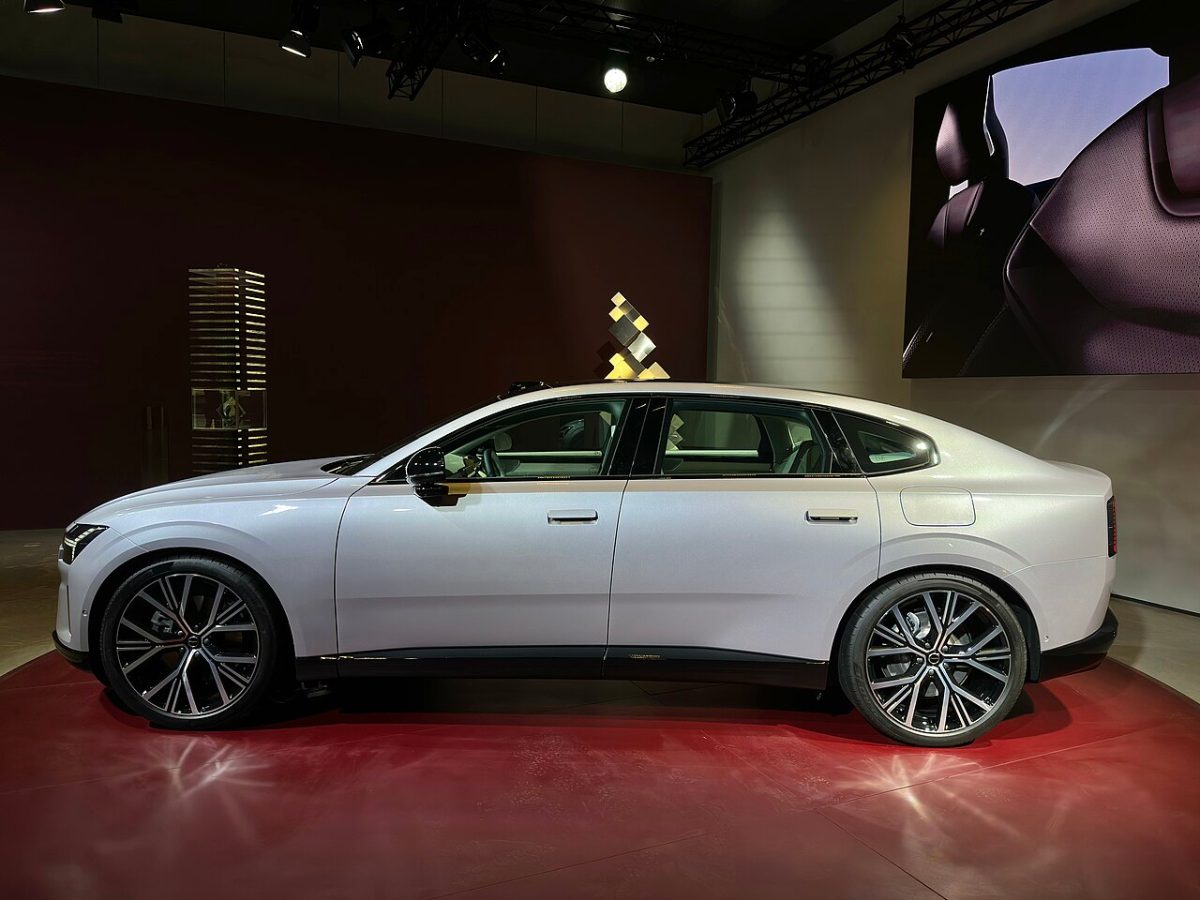
The EX90 is a 7-seater as standard, with a 6-seat captain’s chair layout available. It measures 5,037 mm in length, 1,964 mm in width and 1,744 mm in height, on a 2,985 mm wheelbase. The ES90 is a 5-seat sedan. Importantly, India-specific battery and motor choices are not confirmed, so the final line-up could be narrower than the global one.
Range and efficiency: the sedan wins
Claimed WLTP range is where the two cars separate. On the 106 kWh pack, the EX90 is quoted at around 608 km and the ES90 at 696 km. On the 92 kWh pack, it is 565 km against 664 km, as reported by EVFY.
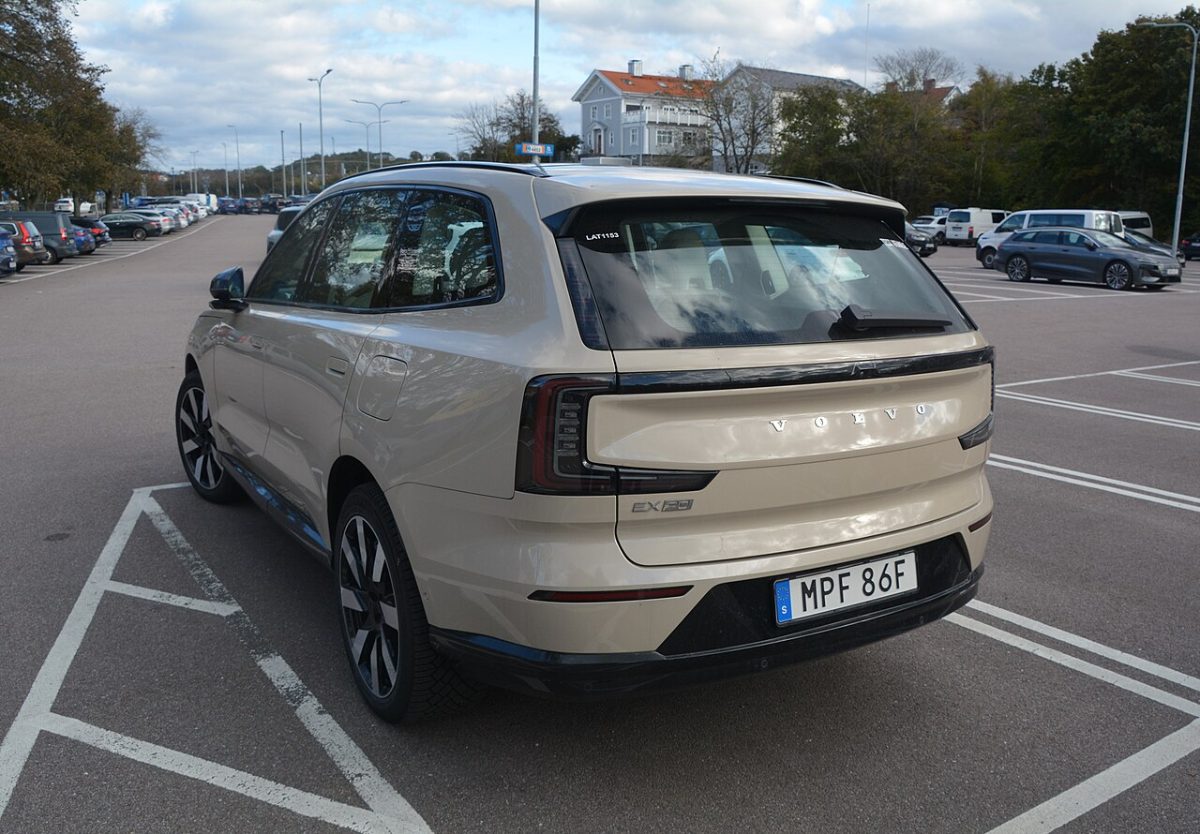
Now the calculation a headline will not give you. Divide claimed range by nominal battery size. The EX90 manages about 5.7 km per kWh on the big pack, the ES90 about 6.6 km per kWh. That makes the sedan roughly 14 to 15 percent more efficient. On the smaller 92 kWh pack the gap is wider: 6.1 versus 7.2 km per kWh, about 17 percent. The reason is physics. The ES90 has a drag coefficient of 0.25 against 0.29 for the EX90.
Remember that these are WLTP figures on nominal pack sizes. Real Indian highway range with the air-conditioning on will be lower for both cars, and the usable battery size may differ from the nominal figure. Treat the ratio, not the absolute number, as the useful takeaway.
Charging: what 22 minutes really means
Volvo quotes 22 minutes for 10 to 80 percent on every variant. That is 70 percent of the pack. On the 106 kWh battery, 70 percent is roughly 74 kWh, which means an average of about 200 kW across the session. On the 92 kWh battery, it is about 64 kWh in 22 minutes, an average near 175 kW.
Those are impressive averages, but they assume a charger that can actually deliver them. Most public DC chargers in India are far below 350 kW, so on a typical 60 or 120 kW unit the same top-up will take far longer. Before you buy either car, check which high-power chargers exist on the routes you drive. Our guide to EV charging in India explains why the charger, not the car, is usually the limiting factor.
Home charging remains the real answer for most owners. If you cannot install a wall charger, a car this expensive is the wrong tool for you.
The expected price gap
Price is the part to treat with the most caution. Autocar India expects roughly ₹1.40 Crore for the EX90 and ₹1 Crore for the ES90, while other outlets float a ₹1.2 to ₹1.4 Crore range for the SUV. None of this is official.
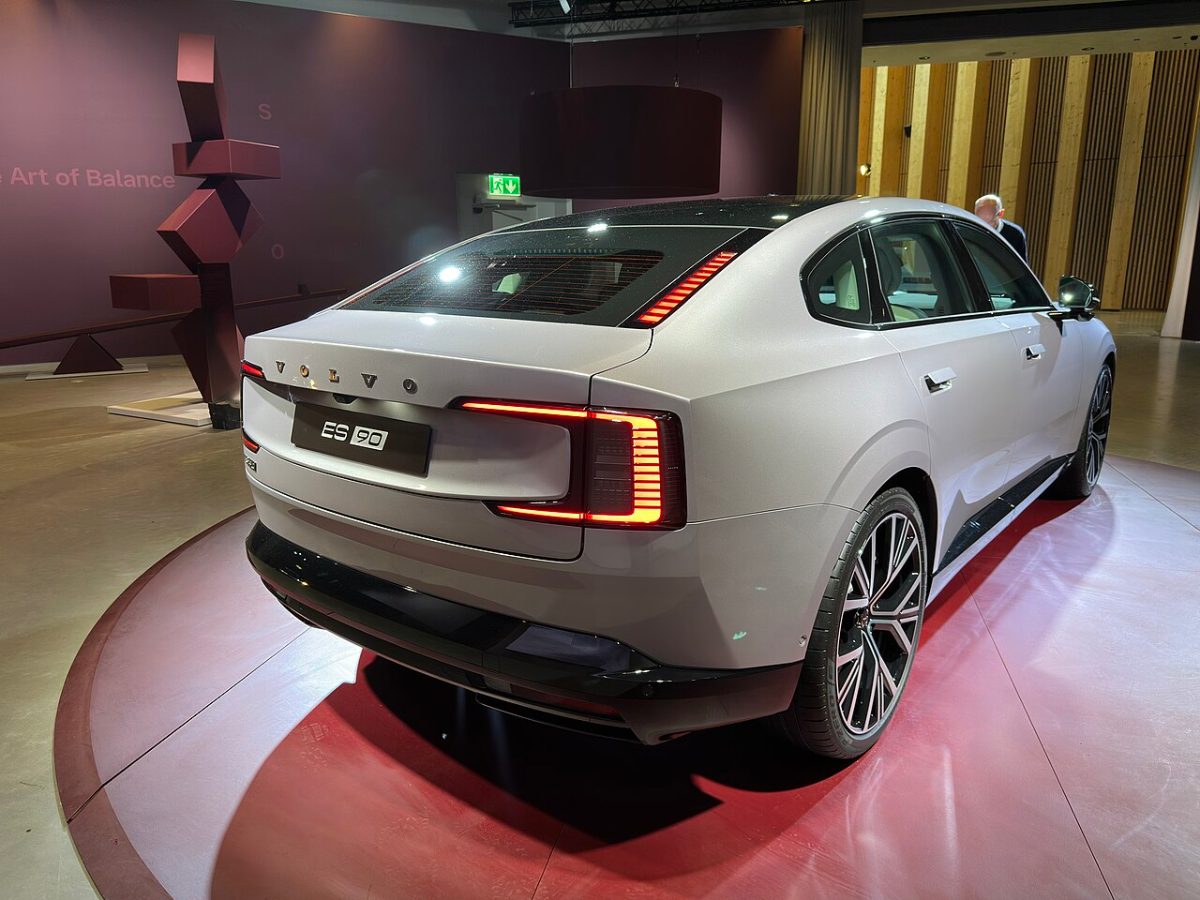
If those estimates hold, the EX90 costs about 40 percent more than the ES90. Dividing by the claimed range on the 106 kWh pack, that is around ₹23,000 per kilometre of claimed range for the SUV against about ₹14,400 for the sedan. The SUV is only worth that premium if you truly need the seven seats and the higher seating position.
One more unknown matters enormously: whether Volvo will import these cars fully built or assemble them locally. That decision will swing the final price by lakhs, and Volvo has not confirmed it yet.
Who should buy which
The EX90 makes sense for a large family that wants a calm, safe seven-seat EV and will pay for it. It is the only one of the pair that solves a space problem. If you regularly carry six or seven people, the sedan cannot help you.
The ES90 is for everyone else. It is cheaper by the estimates, more efficient by the numbers and quicker to recharge in proportion to the miles it adds. One report puts its direct rival as the BMW i5, whose claimed range it exceeds. If you want a luxury EV for city and highway use and a family of four, the sedan is the rational choice.
If a rival interests you more, read our Ioniq 5, EV6, XC40 Recharge and BMW iX1 comparison first, and the BMW 7 Series facelift price piece if your budget stretches higher.
Final Verdict
The Volvo EX90 India launch will be the bigger headline, but the ES90 is the better value on paper. It is more efficient by roughly 15 percent, cheaper by the estimates and just as quick to charge. The EX90 earns its premium only through its seven seats.
Do not book on estimates. Wait for the official price on 12 October, check the assembly status and verify that fast charging is realistic where you live.
Stay tuned and follow up for more.
When is the Volvo EX90 India launch?
Volvo has confirmed that the EX90 SUV and the ES90 sedan will launch in India on 12 October 2026.
What is the expected price of the Volvo EX90 in India?
Official prices have not been announced. Autocar India expects around ₹1.40 Crore for the EX90 and ₹1 Crore for the ES90, but these are press estimates.
What is the range of the Volvo EX90 and ES90?
Global WLTP figures are up to 608 km for the EX90 and up to 696 km for the ES90 on the 106 kWh pack. Real-world range in India will be lower.
How fast can the Volvo EX90 charge?
Volvo quotes DC charging of up to 350 kW and 22 minutes for 10 to 80 percent. This needs a very high-power charger, which is still rare in India.
Stay tuned and follow up for more.
