
Maruti e Vitara vs Ebella differences
Here’s a question nobody in the Indian auto industry quite expected to be answering in 2026: when two electric SUVs share the exact same engine, battery, platform, and production line, right down to rolling off the same assembly belt at Hansalpur, Gujarat, how do you choose between them? That’s the very real dilemma behind the Toyota Ebella vs Maruti e Vitara debate, and it’s one of the most fascinating buying decisions in India’s EV market this year.
Also read about the Strong Hybrid Cars in India.
They Are, Genuinely, the Same Car
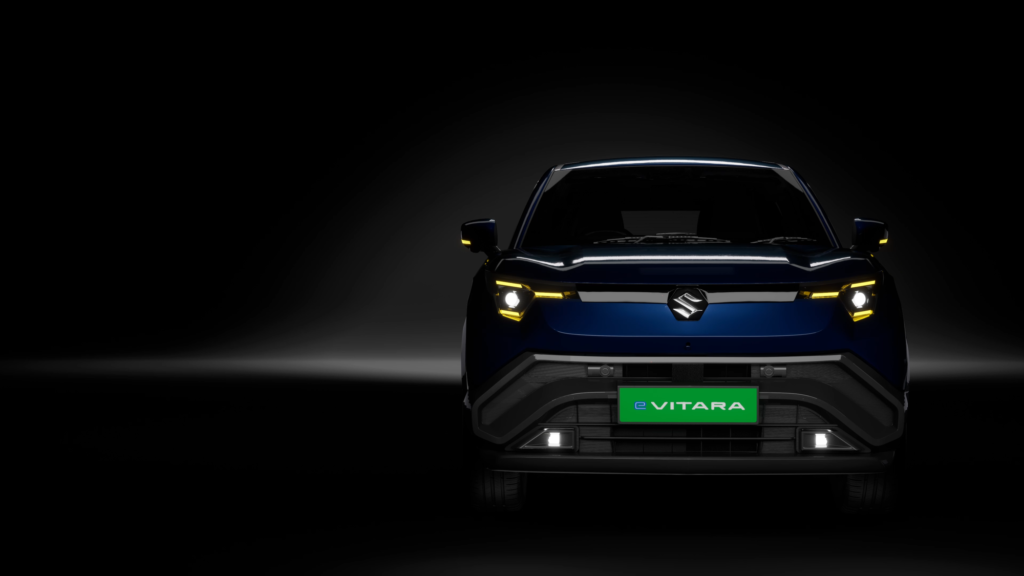
Before anything else, let’s say the quiet part loudly. The Toyota Urban Cruiser Ebella and the Maruti Suzuki e Vitara are badge-engineered siblings under the Toyota-Suzuki global partnership. Both run the same 49 kWh and 61 kWh LFP battery options, the same front-mounted permanent magnet synchronous motor producing up to 172 bhp and 189 Nm of torque, and both claim a maximum range of 543 km on the larger battery pack. They were developed together, built together, and their performance figures, range, acceleration, efficiency, are identical.
This isn’t unique in the Indian market. We’ve seen it with the Maruti Baleno and Toyota Glanza, the Fronx and Taisor, and the Ertiga and Rumion. But those were relatively affordable cars where the badge premium was easy to ignore. Here, you’re talking about EVs in the ₹16–21 lakh bracket, where every lakh counts.
Where They Actually Differ: Design
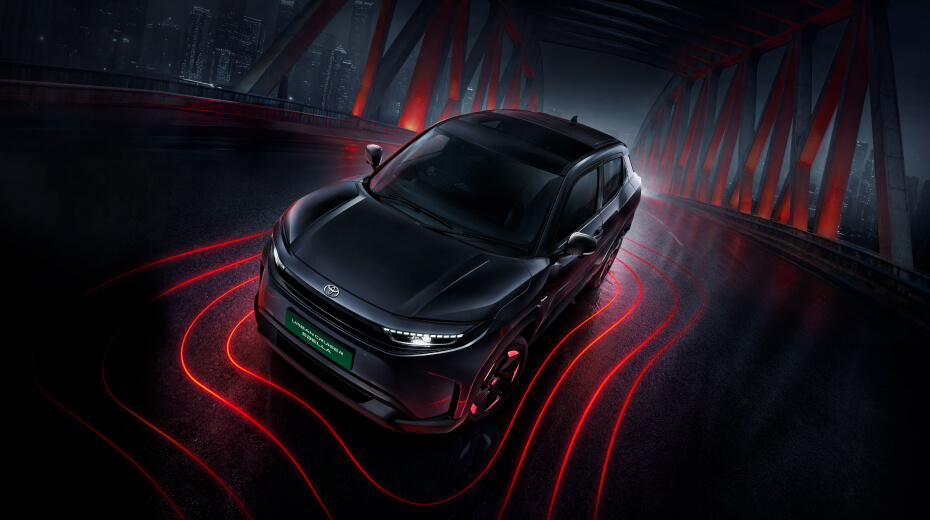
The most meaningful difference between the Toyota Ebella vs Maruti e Vitara is how they look, and here, both have done a reasonable job of differentiating.
The e Vitara takes a more rugged, muscular approach. Up front, it gets Y-shaped LED DRLs and a heavily cladded bumper that gives it an almost crossover-SUV stance. It has fog lamps integrated into the bumper. The overall impression is bold, practical, and approachable, classic Maruti design language updated for the EV era.
The Ebella, by contrast, is sleeker. Toyota has gone with segmented DRLs, a smoother bumper without fog lamps, and its signature hammerhead front treatment. The rear gets pixel-style LED taillights that look genuinely premium. First Drive reviews noted that the Ebella looks its best from the rear three-quarter angle, the sloping roofline and 18-inch alloys give it a more athletic, almost coupe-SUV silhouette.
Inside, save for the logo on the steering wheel and the audio brand (JBL on Ebella, Infinity on e Vitara), everything is identical.
The Price Reality: This Is Where It Gets Interesting
The Maruti e Vitara is currently on sale starting at ₹15.99 lakh (ex-showroom) under a Battery-as-a-Service model. That BaaS pricing is important, it lowers the upfront cost by separating the battery from the vehicle price, making the entry point more accessible for buyers cautious about battery longevity.
The Toyota Urban Cruiser Ebella is expected to launch at around ₹18 lakh at the base, going up to approximately ₹21 lakh for the top E3 variant. That’s a ₹2–3 lakh premium over the equivalent Maruti trim, for functionally the same car.
So what are you paying extra for? Primarily Toyota’s brand premium, a slightly different exterior, the JBL audio, and Toyota’s after-sales promise. Whether that’s worth ₹2–3 lakh to you is a genuinely personal question.
Service Network: Maruti Wins This Handily
This is one area where the comparison isn’t close. Maruti Suzuki has over 4,000 service touchpoints across India. Whether you’re in Bengaluru or Bareilly, in a metro or a Tier-3 town, a Maruti service centre is almost certainly nearby. For first-time EV owners or buyers in non-metro cities, this network coverage is a genuine, practical advantage.
Toyota has a significantly smaller network, quality is generally excellent, but coverage doesn’t match Maruti’s breadth. Toyota has partnered with Chargezone and Jio-bp Pulse for fast charging support, which partially addresses the ecosystem concern, but daily service for minor issues is still a Maruti advantage.
Who Should Buy Which?
Picture this: You’re a software professional in Hyderabad, mid-30s, buying your first EV. You live in an apartment with access to slow charging and occasionally drive to your parents’ place in Vijayawada, roughly 270 km each way. You want to spend around ₹17–18 lakh. The Maruti e Vitara, with its BaaS entry pricing and Maruti’s nationwide service blanket, is the practical choice.
Now consider a different buyer: You’re in Gurugram, buying a second car for the family, and you want something that looks a bit more premium in the office parking lot. You’re comparing the top-spec Ebella E3 against the e Vitara Alpha. At comparable pricing, the Ebella’s cleaner styling and Toyota’s prestige factor might tip the scales.
The Ebella is worth its premium if brand perception and aesthetics matter to you. The e Vitara is the smarter buy for almost everyone else.
What This Means for Indian Buyers
India’s EV market is maturing fast, April 2026 saw 23,506 electric passenger vehicles sold, a 75% YoY jump per FADA data. As volumes grow, badge-engineered cars will become more common, not less. The Toyota Ebella vs Maruti e Vitara debate is actually good for buyers: it increases competition, forces both brands to sharpen their value proposition, and gives the same proven technology to more price points.
The real story here isn’t which badge to pick. It’s that India now has two credible, well-priced, long-range electric SUVs from trusted domestic-market manufacturers, and that’s a very good thing.
Final Verdict / Our Take
Buy the Maruti e Vitara if: You want better value, you’re in a non-metro city, you’re a first-time EV buyer, or you plan to keep the car for 5+ years and want the most robust service ecosystem.
Buy the Toyota Urban Cruiser Ebella if: You’re stretching your budget for aesthetics and brand prestige, you want the JBL audio and cleaner styling, and you’re in a major metro city where Toyota’s service quality is consistent.
Both are excellent cars. But one is significantly more practical for the average Indian buyer.
Frequently Asked Questions (FAQs)
Q1. Is the Toyota Ebella vs Maruti e Vitara really the same car?
Technically, yes. Both share the same platform, battery options (49 kWh and 61 kWh), motor, powertrain, and interior layout. They roll off the same production line at Maruti’s Hansalpur plant in Gujarat under the Toyota-Suzuki global partnership. Differences are limited to exterior styling, audio brand, and badging.
Q2. What is the price difference between the Toyota Ebella and Maruti e Vitara?
The Maruti e Vitara starts at ₹15.99 lakh (ex-showroom) under BaaS pricing. The Toyota Urban Cruiser Ebella is expected to start at around ₹18 lakh, making the Toyota approximately ₹2–3 lakh more expensive across comparable variants.
Q3. Which has a better service network in India — Toyota or Maruti?
Maruti Suzuki has a significantly larger service network, with over 4,000 touchpoints across India, including strong presence in Tier-2 and Tier-3 cities. Toyota’s network is smaller but maintains high quality standards. For buyers outside major metros, Maruti’s network is a clear practical advantage.
Q4. Which electric SUV under 22 lakh is best for daily use in India?
For pure daily-use practicality, city commuting, occasional highway trips, and ease of servicing, the Maruti e Vitara’s combination of competitive pricing, BaaS flexibility, and Maruti’s service network makes it the stronger choice. The Toyota Ebella is the better pick if you want a slightly more premium look and ownership experience.
— Manav Akbari, TheWheelFeed
