
India EV vs hybrid 2026
India’s electric vehicle market had an exceptional April. According to FADA data, 23,506 electric passenger vehicles were sold last month, a staggering 75% jump year-on-year. Headlines celebrated. Auto journos cheered. Social media filled with posts about India’s inevitable EV future. But if you take a breath and look at the full India EV vs hybrid 2026 picture, you’ll find a more complicated, and honestly more interesting, story quietly playing out.
Hybrids are not losing the race. In many ways, for India’s specific conditions, they’re winning it.
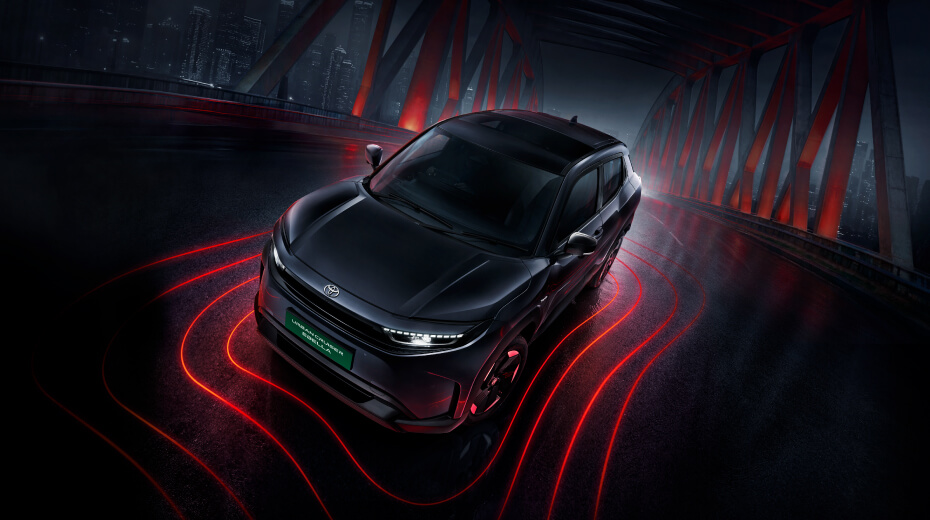
Also read about the Toyota Urban Cruiser Ebella vs Maruti Suzuki e Vitara.
The EV Numbers Are Real and They’re Impressive
Let’s not undersell the milestone. India sold 25.25 lakh EVs of all types in the twelve months from May 2025 to April 2026, per Vahan Dashboard data. In the passenger car segment specifically, EV penetration rose from 3.7% in April 2025 to 5.77% in April 2026, nearly doubling in a single year. Tata Motors led the charge with 8,543 units in April alone, up 77% YoY. Mahindra sold 5,413 units, up 64%. Even relative newcomers like Maruti Suzuki and Vinfast crossed the 1,200-unit mark each.
For FY2026 overall, EV car sales grew 84% to roughly 1.99 lakh units. In absolute terms, that’s meaningful volume, not niche numbers anymore.
The case for India’s EV future is real. But it’s also worth noting what 5.77% penetration actually means: 94% of Indian car buyers still chose something other than an EV last month.
Now Read the Hybrid Data
Here’s where it gets interesting. Hybrid vehicle sales in India have risen nearly fourfold over six years, from 98,010 units in FY2020 to 3,62,866 units in FY2026, per Care Ratings data. That’s roughly 2.8 times the volume of EV sales in the same period. And a projection from Care Ratings suggests hybrids will account for 10% of total car sales by FY2027, double the expected EV share of 5%.
Toyota and Maruti Suzuki dominate India’s hybrid segment, led by the Innova Hycross, Grand Vitara, and Maruti’s strong hybrid lineup. These cars are selling to cost-conscious buyers who previously drove diesel vehicles, a segment that is, arguably, the most price-sensitive and pragmatic in the entire Indian market.
The India EV vs hybrid 2026 debate is not about ideology. It’s about which technology actually solves Indian buyer problems right now.
Why Hybrids Are Working Better for Most Indian Buyers
Here’s an uncomfortable truth: the electric car is still largely a product for urban, upper-middle-class buyers with home charging access. If you live in a flat in Noida with a dedicated parking spot and a charger installed, an EV is magnificent, quiet, cheap to run, and genuinely better than petrol in daily use.
But if you’re a family of four in Nagpur, driving 80–100 km a day on city roads and taking one long trip per month to your hometown 300 km away, a hybrid is far more practical. You don’t need to think about charging. You don’t need to research charging corridors on highways. You pull into any petrol station and you’re back on the road in five minutes. The fuel efficiency is excellent, the Grand Vitara strong hybrid returns over 25 km/l under ideal conditions, and you don’t give up any capability.
CNG is also telling its own story in April’s data: CNG penetration grew from 19.84% to 22.62% of total PV sales YoY, driven by buyers in smaller cities who want low running costs without range anxiety. That 22.62% figure puts CNG ahead of both hybrids and EVs combined in volume share, which is a data point almost nobody talks about.
The Charging Infrastructure Gap Is Still Very Real
India had roughly 25,000 public EV charging stations as of early 2026, significant growth over three years, but still nowhere near adequate for a country of this scale and geography. Tier-2 cities like Indore, Lucknow, Patna, and Bhubaneswar have sparse fast-charging infrastructure. For buyers in these markets, an EV is a leap of faith that hybrids simply don’t require.
Tata, MG, and now Toyota are all investing in expanding charging networks. Tata has the most comprehensive ecosystem with Tata Power charging stations. But network density won’t match petrol pumps for at least another five years in non-metro India, and most Indians don’t live in Mumbai or Bengaluru.
What This Means for Indian Buyers
The honest answer to “EV or hybrid in 2026?” depends entirely on where you live and how you use your car. For metro buyers with home charging: EVs win on total cost of ownership, especially with falling battery prices. For buyers in Tier-2 cities or anyone who regularly drives 300+ km intercity: hybrids are the smarter, lower-risk choice today.
India’s auto market is large enough, and diverse enough, to support both simultaneously. The framing of this as an either/or battle misses the point. What we’re actually watching is a bifurcated market where two clean-energy technologies are each finding their natural buyer base, and that’s genuinely healthy.
Final Verdict / Our Take
The 75% EV growth headline is real, and it should be celebrated. But reading it as proof that India is definitively on a pure-EV path is premature. The hybrid market is growing faster in absolute volume, serving a far larger cross-section of Indian buyers, and solving for range anxiety, infrastructure gaps, and price sensitivity in ways that EVs still can’t fully address in 2026.
Our take: If you’re a policy maker or an investor, bet on EVs. If you’re a buyer in a Tier-2 city buying a car this year, look hard at a strong hybrid before you commit.
Frequently Asked Questions (FAQs)
Q1. Is India’s EV vs hybrid 2026 debate settled in favour of EVs?
Not yet. While EV sales grew 75% YoY in April 2026, hybrid sales are projected to reach 10% of total car sales by FY2027 compared to EVs’ expected 5%. For everyday Indian buyers outside major metros, hybrids remain the more practical choice due to better fuel efficiency and zero range anxiety.
Q2. Which is cheaper to run in India — an EV or a hybrid in 2026?
EVs have a lower per-km running cost if you charge at home (typically ₹1–1.5/km vs ₹5–7/km for petrol). However, if you rely on public fast chargers, the cost advantage narrows significantly. Strong hybrids like the Toyota Innova Hycross return 20–25 km/l, cutting running costs dramatically compared to regular petrol cars.
Q3. Why are hybrid car sales in India growing faster than EV sales?
Hybrids solve India’s two biggest car-buying concerns: fuel costs and range anxiety. You get significantly better fuel efficiency than a petrol or diesel car, with no need to think about charging infrastructure. For buyers in Tier-2 and Tier-3 cities where public EV chargers are sparse, hybrids deliver the benefits of electrification without the compromises.
Q4. Which car brands are leading hybrid sales in India in 2026?
Toyota and Maruti Suzuki dominate India’s hybrid segment. Toyota’s Innova Hycross and Urban Cruiser hybrids, along with Maruti’s Grand Vitara strong hybrid and Invicto, account for the majority of hybrid volumes. Maruti sold over 20,000 strong hybrid units in FY2026, while Toyota’s total hybrid volume is significantly higher when MPV sales are included.
— Manav Akbari, TheWheelFeed
