
Maruti Fronx vs Nissan Magnite 2026
The Maruti Fronx sold 18,829 units in April 2026. The Nissan Magnite didn’t come close. If you need a one-line summary of this comparison, that’s it. But the reasons behind that gap are worth understanding before you spend ₹8–12 lakh on either of these cars.
Also read about the Maruti Price Hike June 2026.
Same Price Bracket, Very Different Propositions
The Maruti Fronx vs Nissan Magnite 2026 comparison sits squarely in the compact crossover space, with cars priced roughly between ₹6.85 lakh and ₹12 lakh, targeting first-time SUV buyers who want the stance and ground clearance without the bulk of a Brezza or Venue. The buyer profile is similar too: young professionals, nuclear families in Tier 1 and Tier 2 cities, someone upgrading from a hatchback and wanting something that feels a bit more substantial without blowing past ₹12 lakh on-road. On paper, they’re going after the same wallet. In practice, they’re very different propositions.
What the Fronx Gets Right
The Fronx’s numbers speak for themselves. 31% year-on-year growth in April 2026, with 18,829 units sold in a single month. That’s not luck. The Fronx wins consistently because it gets the fundamentals right for the Indian buyer. The 1.0-litre turbo petrol and the 1.2-litre naturally aspirated options give buyers genuine choice, and the addition of a CNG variant is something the Magnite simply can’t offer. In a market where running costs matter as much as purchase price, CNG availability is a real differentiator. The Fronx also brings Maruti’s service network of 4,000+ service centres across India, which matters enormously to buyers in smaller cities who don’t want to drive 80 km for a scheduled service. Resale value is another area where the Fronx holds a structural edge. Maruti cars retain value better than almost any other brand in India, and that feeds directly into total cost of ownership calculations that smart buyers are running before they sign.
What the Magnite Gets Right
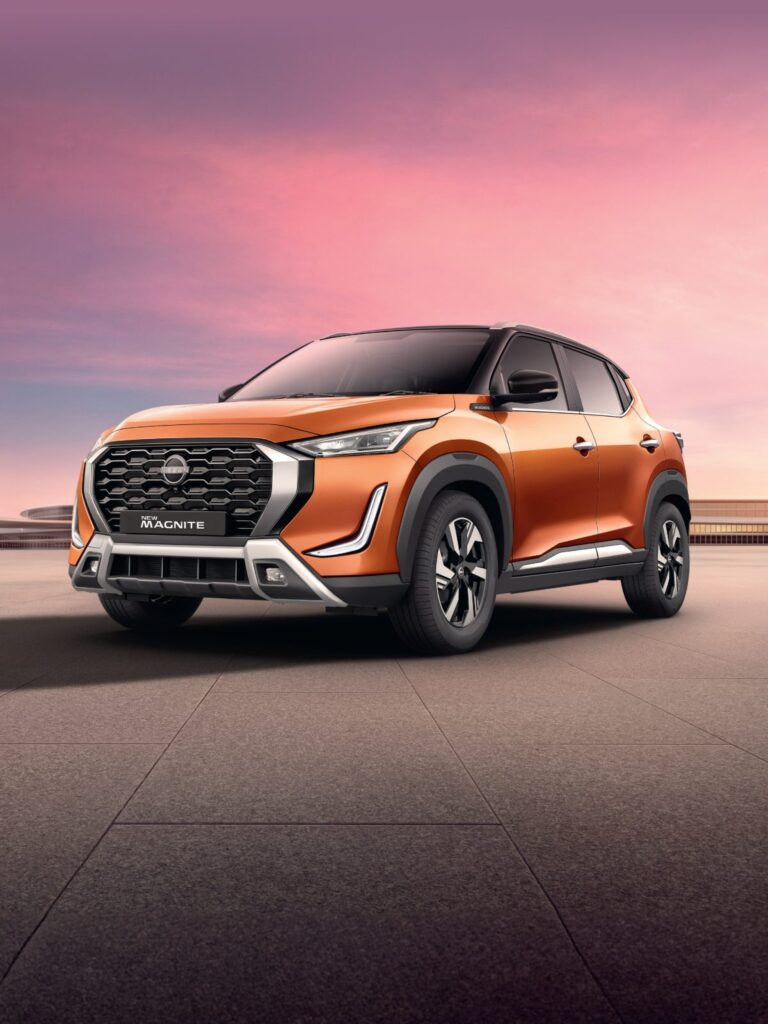
The Nissan Magnite isn’t a bad car. It’s just a harder sell. Its strongest suit is the 1.0-litre turbocharged petrol engine, which delivers 99 bhp and gives the Magnite a driving feel that the naturally aspirated Fronx simply can’t match. If you enjoy driving and you’re picking between these two on a weekend mountain road, the Magnite is the more entertaining car. It also has a slightly more upright, SUV-like design that some buyers genuinely prefer over the Fronx’s coupe-crossover silhouette. At its lower variants, the Magnite also undercuts the Fronx on price, which makes it a genuine option for buyers working within a very tight budget. The problem is that the upper variants of the Magnite, where you get the full feature set, start closing the price gap with the Fronx. At that point, the Fronx’s advantages in service, resale, and brand trust start to feel much more significant.
The Service Network Problem Nissan Can’t Fix Overnight
This is the Magnite’s single biggest structural disadvantage in 2026, and it’s one Nissan cannot solve quickly. Nissan has fewer than 400 dealerships and service centres in India. Maruti has over 4,000. For a buyer in Mumbai, Bengaluru, or Delhi, this gap is manageable. For a buyer in Raipur, Coimbatore, or Udaipur, it’s a deal-breaker. A car you can’t easily service is a car you’ll regret buying. Resale buyers know this too, which is why Magnite residual values trail Fronx across most markets. When you factor in the full 5-year ownership picture, the Magnite’s lower sticker price often evens out or flips negative compared to the Fronx’s total cost.
Features and Value, Variant by Variant
At entry-level trims, the Magnite is genuinely competitive on features for its price. The mid-spec variants are where the comparison gets interesting. The Fronx at ₹9–10 lakh offers a feature list that’s hard to beat in this segment, including a large touchscreen, connected car tech, and multiple airbags as standard across more variants. The Fronx’s higher trims push past ₹11 lakh, at which point you’re close to Hyundai Venue territory, which is a conversation for another article. The sweet spot for the Fronx is the ₹8–10 lakh range, where it delivers more perceived quality, a better cabin finish, and Maruti’s intangible but very real ownership confidence. The Magnite’s sweet spot is the ₹7–9 lakh range with the turbo engine, where the driving experience justifies the brand compromise for the right buyer.
What This Means for Indian Buyers
Most Indian buyers in this segment are not choosing between these two cars on the basis of which one is more fun to drive on a weekend. They’re choosing on EMI affordability, running costs, service convenience, and resale value at the 4-year mark. On every one of those metrics, the Fronx wins. The Magnite is a better car to drive enthusiastically, but the best compact crossover under ₹12 lakh for the Indian market in 2026 is still the one 18,829 families chose in April alone.
Final Verdict. Our Take
In the Maruti Fronx vs Nissan Magnite 2026 comparison, the Fronx is the right buy for most people. Better resale, better service network, CNG option, and a proven track record in India’s most competitive segment. If you commute daily in a city and plan to sell the car in 4–5 years, the Fronx is a straightforward decision. The Magnite earns a recommendation only for one specific buyer: someone who wants a turbo petrol crossover under ₹9 lakh, lives in a city with reasonable Nissan service access, and genuinely values driving feel over ownership practicality. That’s a narrow profile. For everyone else, the Maruti Fronx vs Nissan Magnite 2026 decision is already made. Buy the Fronx.
Frequently Asked Questions (FAQs)
Is the Maruti Fronx better than the Nissan Magnite in 2026?
For most buyers, yes. The Fronx wins on resale value, service network, CNG availability, and total cost of ownership. The Magnite edges ahead only on driving feel, thanks to its turbo petrol engine, and on sticker price at entry-level trims.
What is the price difference between the Maruti Fronx and Nissan Magnite in 2026?
The Fronx is priced between ₹6.85 lakh and ₹11.84 lakh, while the Magnite starts slightly lower and tops out in the ₹11–12 lakh range at fully loaded trims. At equivalent feature levels, the gap narrows considerably, and the Fronx’s ownership advantages make the price difference worth paying.
Which is better for daily city driving, Fronx or Magnite?
The Fronx is the stronger daily driver for most city buyers. The CNG option keeps running costs low, the service network means you’re never far from a workshop, and the cabin is comfortable for stop-and-go traffic. The Magnite’s turbo engine is more fun but doesn’t offer meaningful real-world advantages in city conditions.
Why is the Maruti Fronx vs Nissan Magnite comparison so one-sided in sales?
The April 2026 sales numbers tell the story clearly. The Fronx sold 18,829 units in a single month, backed by Maruti’s 4,000+ service centre network and strong resale values that buyers in this segment consistently prioritise. Resale value, service convenience, and brand trust consistently outweigh driving dynamics, and those are structural advantages the Magnite cannot close quickly.
Stay tuned and follow up for more.
