
Kia Syros EV India 2026
The affordable EV segment in India is about to get a serious new contender. The Kia Syros EV India 2026 is confirmed for launch in August, and if Kia gets the pricing right, it could become the most compelling electric compact SUV under ₹20 lakh on sale today.
But every buyer in this segment is currently sitting on the same question: do you buy a Tata Nexon EV or Mahindra XUV 3XO EV right now, or do you wait three more months for the Syros EV to arrive? Let me break this down properly.
More from us: Kia Had Its Best-Ever May. So Why Did the Syros Sell Only 961 Units?
What We Know About the Kia Syros EV
The Syros EV is built on Kia’s K1 platform, which also underpins the global Hyundai Inster EV. That matters because the Inster EV internationally comes with 42 kWh and 49 kWh battery options, delivering WLTP-rated ranges of 300 km and 355 km respectively. India’s Syros EV is widely expected to use similar battery configurations, though Kia has not confirmed specifications officially.
The Kia Syros EV price India estimates sit between ₹15 lakh and ₹20 lakh (ex-showroom), placing it directly against the Tata Nexon EV (starting at ₹12.49 lakh) and the Mahindra XUV 3XO EV (starting at ₹13.89 lakh). A front-wheel-drive setup is confirmed for at least the initial launch.
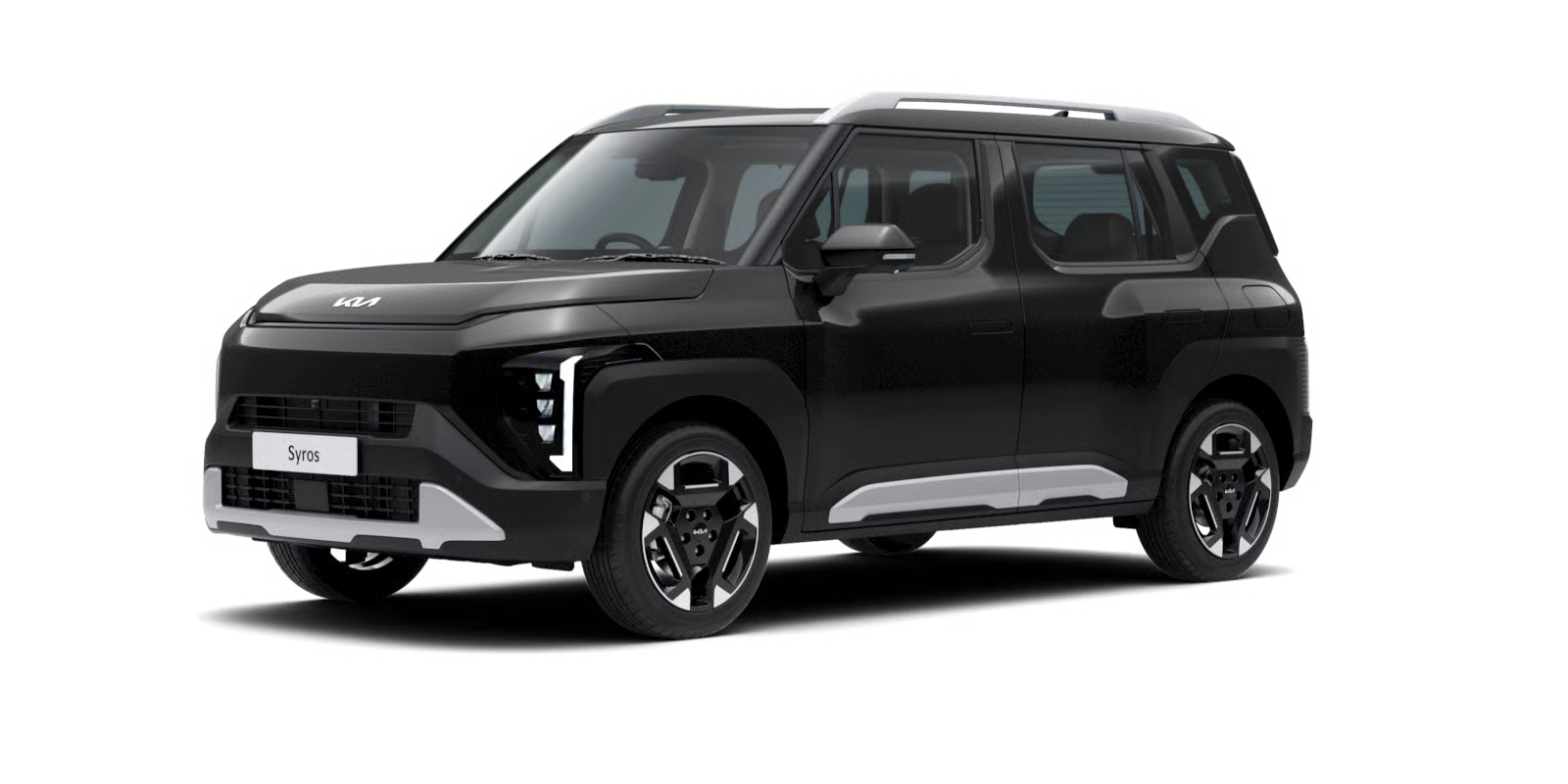
Design-wise, do not expect something dramatically different from the ICE Syros. The boxy proportions, tall stance, and muscular wheel arches carry over, with EV-specific updates including a closed grille, a charging port on the front fender, and fresh alloy wheel designs. The spacious cabin, which is one of the ICE Syros’s strongest selling points, should carry over in full.
The ADAS Story Nobody Is Talking About
Here is where things get genuinely interesting. When Kia launched the MY26 update for the ICE Syros, they quietly removed ADAS from the variant lineup. That single decision caused the Syros’s May 2026 sales to collapse 73% year-on-year, from 3,611 units to just 961 units.
Buyers noticed. In a segment where the Hyundai Creta and Kia Seltos both offer Level 2 ADAS at similar price points, stripping it from the Syros felt like a step backward. The car that launched on the strength of its technology suddenly had less technology than its own siblings.
The EV version has a real chance to fix this. Whether Kia brings ADAS back on the Syros EV is unconfirmed, but given the competitive pressure from Nexon EV’s feature set and the XUV 3XO EV’s equipment list, it would be a commercial mistake not to. If the Syros EV launches with ADAS intact, that alone changes the buying conversation in a big way.
Kia Syros EV vs Nexon EV: How They Stack Up
The Tata Nexon EV is the default answer in this segment right now, and for good reason. It starts at ₹12.49 lakh, has years of real-world ownership data behind it, and Tata’s EV charging ecosystem is the most developed in India. If you commute 50 km daily in a city like Ahmedabad or Bengaluru, the Nexon EV handles the job without any drama.
The Syros EV will likely cost ₹2 to ₹4 lakh more than the entry Nexon EV, which means it needs to justify that gap clearly. The edges it brings are Kia’s build quality, the inherently more spacious and refined interior of the Syros platform, and potentially a larger battery with better real-world range. The 49 kWh Inster EV pack delivers around 355 km on the WLTP cycle, which in Indian conditions would likely translate to 270 to 300 km of real-world range. That is a meaningful advantage over the Nexon EV’s current real-world numbers.
The affordable Kia electric SUV 2026 story is compelling precisely because Kia has never offered a genuinely mass-market EV in India until now. The demand is there.
Should You Wait or Buy Now?
This is the decision most buyers in this segment are wrestling with, so here is the straight answer.
If you need a car before August 2026, buy the Nexon EV or XUV 3XO EV. Both are proven, well-supported options and there is no reason to wait if your commute cannot be pushed any further.
If you can hold out until October or November, factoring in launch delays and initial delivery timelines, the Syros EV is worth the wait. Kia’s build quality sits a notch above the competition in terms of NVH refinement and interior fit. For a family of four in a Tier-2 city doing weekend highway runs alongside daily city use, the larger battery Syros EV variant is the better long-term call.
What This Means for Indian Buyers
The Kia Syros EV India 2026 matters beyond just being another EV option. It signals that Korean manufacturers are now genuinely committed to the sub-₹20 lakh electric segment, not just the ₹25 lakh-plus range. That is long-term good news because real competition at this price point forces better specs, better range, and sharper pricing from every brand in the space.
Final Verdict
The Kia Syros EV India 2026 is shaping up to be the strongest electric compact SUV in the ₹15 to ₹20 lakh bracket when it arrives in August. The platform is proven globally, the interior is class-leading, and the pricing is set to be competitive. The two things that can make or break it are whether ADAS returns on the EV variant and how aggressively Kia prices the base version. If both go right, the Nexon EV faces its toughest challenger yet. Wait for it if you can. Buy what is available now if you cannot.
Frequently Asked Questions
Q1. When will the Kia Syros EV India 2026 launch?
The Kia Syros EV India 2026 is expected to launch in August 2026, confirmed through Kia’s 2026 investor presentation. Customer deliveries are likely to begin in September or October, depending on production ramp-up timelines.
Q2. What is the expected Kia Syros EV price in India?
The Kia Syros EV price India estimates range between ₹15 lakh and ₹20 lakh (ex-showroom). Final pricing will depend on the battery variants Kia chooses to offer for the Indian market at launch.
Q3. How does the Kia Syros EV vs Nexon EV comparison stack up?
The Nexon EV starts lower at ₹12.49 lakh and has a more established service and charging network. The Syros EV will likely offer better interior space, improved build quality, and potentially longer real-world range, at a higher price point.
Q4. Will the Kia Syros EV have ADAS?
Kia has not confirmed this yet. The MY26 ICE Syros had ADAS removed, which damaged its sales numbers severely. Whether the EV variant restores ADAS will be a major factor in how buyers respond at launch.
Stay tuned and follow up for more.
