
Honda City facelift 2026 India
Honda City facelift 2026 India launches in exactly 14 days, and before the hype cycle kicks into full gear, here’s a cold, clear look at what this update actually delivers, what it quietly skips, and whether it changes the sedan buying math in any meaningful way.
Also read about the best electric SUVs under 20 Lakhs.
Why Honda Is Doing This Now
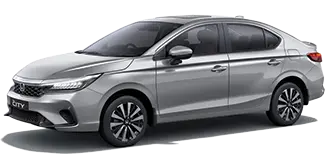
The fifth-generation Honda City has been on sale in India since 2020. It received its first facelift in 2023, new grille, updated lights, more features. Now, in 2026, it’s getting another refresh, and Honda has confirmed May 22 as the launch date alongside the new ZR-V hybrid SUV. The timing isn’t accidental. The midsize sedan segment is due for a wave of updates: the Hyundai Verna just got freshened up, the Skoda Slavia and Volkswagen Virtus are getting their own facelifts later in 2026, and Honda needs to stay relevant until the sixth-generation City arrives, which isn’t expected globally until around 2028. This facelift is essentially a holding move, but that doesn’t mean it’s a pointless one.
What’s Actually Changing on the Outside
Spy shots and pre-launch intelligence point to a mild exterior rework. Expect a revised front grille with a slatted design, updated bumpers front and rear, sharper LED headlamp internals, tweaked tail lamps, and newly designed alloy wheels. It’s a subtle refresh, not a transformation. Honda’s design language for the City has always been restrained, and 2026 continues that tradition. If you’re hoping for a dramatic new face, this isn’t it. If you value subtle elegance over flash, the City still wears it better than most.
The most noticeable visual change, according to pre-launch reports, will be at the rear, revised taillamp graphics that bring the City closer in line with Honda’s more recent global design vocabulary. It’s a small thing, but it matters when your competitors are going bold.
The Cabin Upgrades That Actually Matter
This is where the 2026 Honda City facelift earns its money. Two additions stand out for Indian buyers: ventilated front seats and a 360-degree camera. The ventilated seats are a long-overdue addition, rivals like the Verna have had them for a while now, and for any buyer in Chennai, Hyderabad, or Ahmedabad who sits in peak-hour traffic in a non-white car, this is a genuine quality-of-life upgrade.
The 360-degree camera, similarly, is a practical feature that will matter far more on the narrow streets of Pune or Surat than any spec-sheet number. Honda is also expected to offer a larger touchscreen and an updated digital driver’s display, though no official screen size confirmation has come from Honda India yet.
The existing 8-speaker audio, Honda Sensing ADAS suite (adaptive cruise, lane keep assist, collision mitigation braking), wireless Apple CarPlay and Android Auto, wireless charger, and automatic climate control are all carried over. The ADAS suite is already better than most in the segment, Honda was ahead of the curve here when they introduced it, and they wisely haven’t diluted it.
What Stays the Sam: Engines
Mechanically, nothing changes. The 1.5-litre naturally aspirated petrol producing 121 hp paired with a 6-speed manual or CVT carries over. The 1.5-litre strong hybrid powertrain with its dual-motor e-HEV setup also continues, delivering a combined output that puts it firmly ahead of rivals in fuel efficiency, the City Hybrid consistently returns 20–23 km/l in real city conditions, which no competitor in the segment can match.
This is worth emphasising because it’s actually a feature, not a limitation. Honda’s City hybrid powertrain is one of the most refined in its price bracket. There’s no reason to change it. The CVT on the petrol, however, continues to be the divisive point, it’s smooth and fuel-efficient, but buyers who’ve driven the Verna’s 7-speed DCT will find the City’s CVT feels less engaged. Honda is clearly targeting refinement buyers, not performance-seekers.
Prices: What to Expect
The current Honda City starts at ₹12 lakh and tops out at ₹16.07 lakh (petrol, ex-showroom). The City Hybrid currently retails at ₹20 lakh. Given the feature additions, expect the facelift to carry a premium of ₹15,000–60,000 over current prices depending on variant, placing the entry point at approximately ₹12.50 lakh and the hybrid at approximately ₹20.50 lakh. Honda also raised existing City prices by ₹4,600 just days before the launch, a pre-facelift price adjustment that typically signals the new variant is weeks away.
What This Means for Indian Buyers
Here’s the honest take: if you already own a 2023 City, there is no compelling reason to upgrade. The additions are evolutionary, not transformational. But if you’re in the market for a new midsize sedan right now, coming from a hatchback or a first-time buyer choosing between the City, Verna, and Slavia, the 2026 Honda City facelift India changes the equation slightly in Honda’s favour. The ventilated seats and 360-degree camera close the feature gap with the Verna at a price point that still makes the City feel like the more mature, refined choice. The Honda City hybrid, in particular, remains unchallenged as the most efficient midsize sedan you can buy in India, full stop.
Final Verdict / Our Take
The Honda City facelift 2026 India is exactly what it needs to be, a focused, relevant update that plugs the most visible feature gaps without disturbing the formula that makes the City trusted by hundreds of thousands of Indian families. It won’t win over Verna turbo enthusiasts. It won’t convert buyers who want the drama of European styling. But for the buyer who wants 26+ years of proven reliability, one of the best hybrid drivetrains in the segment, and a cabin that feels genuinely premium without being ostentatious, the 2026 City continues to be the intelligent choice.
Wait for the test drives and post-launch real-world reviews before booking, but do not sleep on this one if sedans are on your radar.
Frequently Asked Questions (FAQs)
Q1. What is the expected price of the Honda City facelift 2026 in India?
The Honda City facelift 2026 India is expected to start at approximately ₹12.50 lakh (ex-showroom) for the base petrol variant, a modest premium over the current starting price of ₹12 lakh. The Honda City Hybrid facelift is expected to be priced around ₹20.50 lakh. Official prices will be revealed on May 22, 2026.
Q2. What new features does the Honda City 2026 facelift get?
The major additions expected are ventilated front seats, a 360-degree surround-view camera, an updated touchscreen infotainment system, and revised alloy wheel designs. The Honda Sensing ADAS suite, wireless charging, and other existing features carry over unchanged.
Q3. Does the Honda City 2026 facelift get a new engine?
No, both the 1.5-litre naturally aspirated petrol and the 1.5-litre strong hybrid e-HEV powertrain continue unchanged. This is not necessarily a drawback; Honda’s hybrid system in particular remains the segment benchmark for fuel efficiency, consistently delivering 20–23 km/l in real-world city driving.
Q4. Should I wait for the Honda City facelift or buy the current model now?
If you are in no rush, wait, the facelift launches on May 22, 2026, and prices are expected to be only marginally higher than the current model. The ventilated seats and 360-degree camera are genuinely useful additions that make waiting worthwhile. If you’re getting a very attractive deal on the existing model right now, that calculus changes, run the numbers on the discount vs the feature premium.
— Manav Akbari, TheWheelFeed
