
EV Charging in India 2026
When people talk about electric cars, most conversations revolve around range, features, or pricing. But in real-world ownership, none of these matter as much as one simple factor, charging.
Charging is not just a feature of an EV. It defines the entire ownership experience.
In India in 2026, charging infrastructure has improved compared to earlier years, but it is still far from seamless. The issue is not just about the number of charging stations, it is about reliability, accessibility, compatibility, and convenience.
Most buyers assume that charging will work like refueling a petrol car. That assumption is the root of most problems.
Charging an EV requires planning, patience, and in many cases, compromise. And unless buyers understand this clearly, the ownership experience can become frustrating.
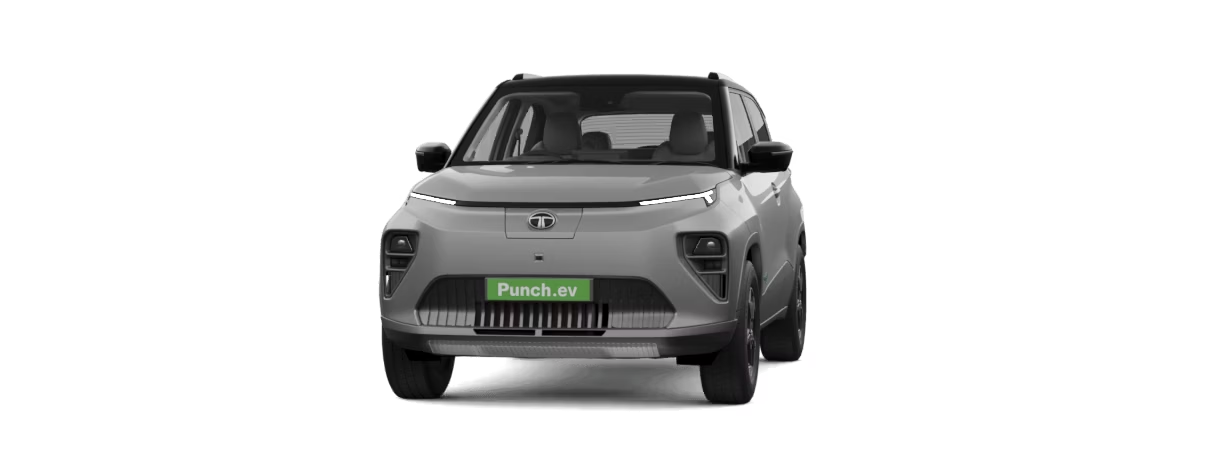
Also read about the Electric Cars in India.
Public Charging — Availability vs Reliability
At first glance, charging stations seem to be increasing rapidly.
- More chargers in metro cities
- Presence in malls, highways, and offices
- Multiple private players entering the market
But the real issue is not availability, it is reliability.
- Chargers may be occupied
- Some chargers may not be functional
- Payment systems may fail
- Charging speeds may vary
This creates uncertainty.
You may find a charger on a map, but that doesn’t guarantee a smooth experience.
Charging Speed — The Most Misunderstood Factor
Many buyers assume that fast charging solves all problems.
But in reality:
- Fast charging is not always available
- Charging speed depends on battery condition
- Not all chargers deliver advertised speeds
For example:
- A “fast charger” may take 40–60 minutes
- Slow chargers can take several hours
This is a fundamental difference from petrol refueling, which takes minutes.
Home Charging — The Ideal but Not Universal Solution
Home charging is what makes EV ownership practical.
- Convenient overnight charging
- No dependency on public infrastructure
- Lower cost compared to public chargers
However, not everyone has access to it.
- Apartment residents may face installation challenges
- Shared parking creates complications
- Power supply limitations can exist
Without home charging, EV ownership becomes significantly less convenient.
Cost of Charging — Cheaper, But Not Always Simple
Charging is cheaper than fuel, but:
- Public charging costs more than home charging
- Pricing varies by provider
- Peak hour pricing may apply
This creates inconsistency in cost calculation.
Long-Distance Travel — The Real Test
Highway charging is improving, but:
- Charger spacing is still inconsistent
- Backup options are limited
- Waiting times can increase travel duration
This makes long-distance EV travel possible, but not effortless.
The Psychological Impact of Charging
This is rarely discussed, but extremely important.
- Drivers constantly monitor battery levels
- Charging planning becomes part of routine
- Flexibility reduces compared to petrol cars
This shift affects how people use their vehicles.
FAQs
Q1. Is EV charging reliable in India?
Improving, but still inconsistent.
Q2. Can I rely only on public charging?
Possible, but not convenient.
Q3. How long does charging take?
30 minutes to several hours depending on charger.
Q4. Is home charging necessary?
Highly recommended.
Final Verdict
EV charging in India in 2026 is functional but not frictionless. It works well for users who have access to home charging and predictable driving patterns.
However, for buyers expecting the same convenience as petrol vehicles, the current infrastructure still requires adjustment and patience.
The technology is ready. The ecosystem is still catching up.
Author: Manav Akbari
