
Honda City facelift 2026 vs Hyundai Verna
The Honda City has been saying “no” to irrelevance for over two decades. Every time someone declared the sedan dead in India, the City showed up with a refresh, a facelift, or a hybrid, and kept selling. The 2026 facelift, launched at ₹11.99 lakh, is the latest proof that Honda isn’t done with this fight. And in the Honda City facelift 2026 vs Hyundai Verna battle, the answer is less obvious than the price tags suggest.
Also read about the GST Cut on Small cars in India 2026.
Why the Honda City Still Commands Respect in 2026
The Honda City has been in the Indian market since 1998, and through five generations, it has never tried to be everything to everyone. It picked a lane, comfortable, reliable, practical family sedan and stayed there. That consistency has built a buyer trust that no amount of marketing can manufacture overnight.
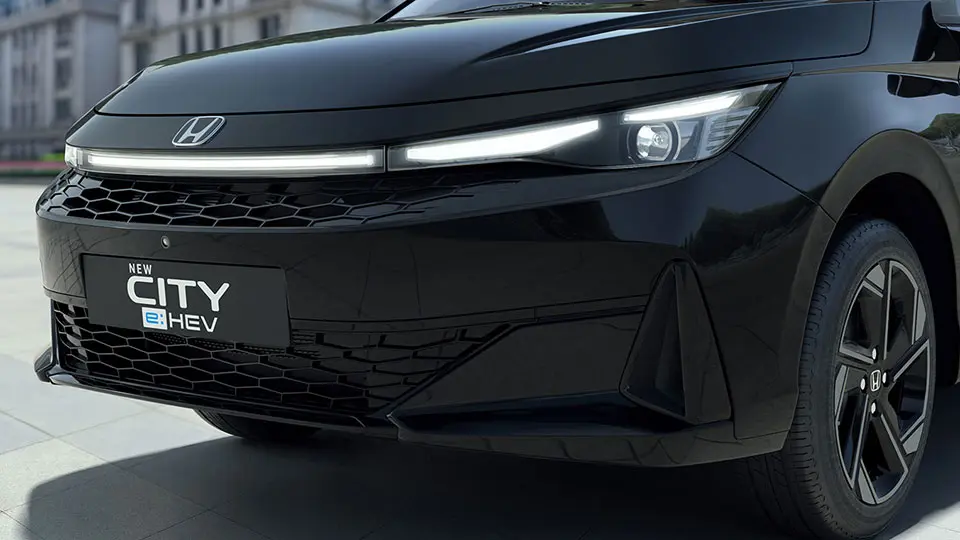
The 2026 facelift brings sharper LED headlamps with connected DRLs, a redesigned front bumper, new 16-inch aero-blade alloy wheels, and updated tail-lights with vertical LED strips. It doesn’t look revolutionary. It looks like a Honda, clean, mature, and put-together. Inside, the big upgrade is a 10.25-inch touchscreen with wireless Android Auto and Apple CarPlay, ventilated front seats, a 360-degree camera, and Level 2 ADAS. These aren’t features you’d expect on a sedan starting at ₹12 lakh. That’s the point.
Simple Packaging, Zero Confusion
One thing the Honda City has always done better than its rivals is variant packaging. You don’t need a spreadsheet to figure out which trim to buy. The lineup is clean, fewer variants, each well-loaded for its price. Compare that to the Hyundai Verna, which has 17 variants across multiple engine and gearbox combinations. The Verna is a great car, but choosing the right variant requires homework.
The Volkswagen Virtus and Skoda Slavia have the same problem. Both start around ₹10–10.5 lakh but stretch to ₹19 lakh at the top, and the gap between trims can leave buyers confused about what they’re actually getting. The City sidesteps all of that. Honda’s straightforward packaging means a buyer walking into a showroom with a ₹14–15 lakh budget knows exactly what they’re getting without second-guessing themselves.
What the Competition Gets Wrong
Honda City facelift 2026 vs Hyundai Verna. The Hyundai Verna is genuinely impressive. The 160 hp turbo-petrol engine is the most exciting powertrain in this segment, and Hyundai’s feature list is hard to argue with. But the Verna has a known weakness, ride quality. On broken city roads, particularly the kind you’ll find in Pune, Hyderabad, or most of North India outside ring roads, the Verna’s sporty suspension setup can feel unsettled. It’s tuned for enthusiasm, not pothole absorption.
The Volkswagen Virtus looks the part and drives well, but Volkswagen’s service network and parts costs remain a genuine concern for buyers outside metro cities. The Skoda Slavia has similar issues, fantastic to drive, but ownership confidence in Tier 2 cities isn’t quite there. The Maruti Ciaz exists in this space too, but it hasn’t received a meaningful update in years, making it a non-starter for anyone comparing fresh options in 2026.
The Honda City’s 1.5-litre naturally aspirated petrol engine isn’t the flashiest unit in this segment, but it’s refined, smooth, and has a proven track record over hundreds of thousands of kilometres of Indian road use. Combined with Honda’s widely accessible service network, it gives buyers a confidence that the German alternatives simply can’t match at this price.
What This Means for Indian Buyers
If you’re a family in Chennai or Nagpur buying your first or second sedan in the ₹13–16 lakh range, the Honda City facelift 2026 is the most complete answer. You get the features, the practicality, a comfortable ride, and the peace of mind of Honda’s reliability and service coverage. The Verna makes sense if you specifically want a sportier drive and are comfortable with a firmer ride, but for the average Indian family sedan buyer, the City’s balance is hard to beat.
The City e:HEV hybrid at ₹20.99 lakh is in its own bracket entirely. With over 26 kmpl efficiency and no range anxiety, it’s a serious option for buyers clocking 60–80 km daily in urban traffic who want to cut fuel costs without going full electric.
Final Verdict / Our Take
The Honda City facelift 2026 doesn’t need to shout. It just keeps showing up, better equipped, better packaged, and more complete than before. At ₹11.99 lakh starting, it costs about ₹1 lakh more than the base Verna, but that premium buys you a more refined experience, better ride quality, simpler variant selection, and Honda’s long-term reliability reputation.
The Verna wins on raw excitement and turbo punch. The Virtus and Slavia win on driving dynamics. But if you want a sedan that does everything well, commuting, highway trips, carrying the family, fitting in any city, the Honda City facelift 2026 proved that in 2005, and it’s proving it again right now.
Frequently Asked Questions (FAQs)
Q1. Is the Honda City facelift 2026 worth buying over the Hyundai Verna?
Yes, for most buyers the Honda City facelift 2026 vs Hyundai Verna comparison ends in favour of the City. It offers better ride comfort, simpler variant selection, and Honda’s proven reliability, all at a ₹1 lakh premium over the base Verna. If outright performance is your priority, the Verna’s turbo engine has the edge.
Q2. What is the starting price of the Honda City facelift 2026?
The Honda City facelift 2026 starts at ₹11.99 lakh (ex-showroom). The hybrid e:HEV variant is priced at ₹20.99 lakh. The Hyundai Verna, by comparison, starts at ₹10.98 lakh, making the City’s entry point about ₹1 lakh higher.
Q3. How fuel efficient is the Honda City facelift 2026 in real-world conditions?
The standard 1.5-litre petrol City returns around 17–18 kmpl under normal conditions. For someone driving 50 km daily in Mumbai traffic, expect closer to 14–15 kmpl in the real world, still competitive for this segment. The City e:HEV hybrid takes it further, delivering over 26 kmpl, making it one of the most fuel-efficient sedans in India.
Q4. Should I book the Honda City facelift now or wait for a better offer?
With Maruti announcing price hikes of up to ₹30,000 from June and multiple carmakers citing rising input costs, there is no strong reason to wait. The City just launched with introductory pricing, book now if you’ve shortlisted it, as prices are unlikely to get friendlier in the coming months.
Stay tuned and follow up for more.
