
Best Electric SUV Under 20 Lakh India 2026
Buying an electric SUV in India no longer means choosing between range anxiety and an empty bank account. In 2026, the best electric SUV under 20 lakh India 2026 market is genuinely stacked with credible options, real cars with real range, real features, and real resale narratives. The hard part now isn’t finding a good EV SUV; it’s figuring out which one fits your specific life. This guide cuts through the spec-sheet noise.
Also read about the April 2026 Car Sales.
Why the Under ₹20 Lakh EV SUV Segment Is Booming
The sub-₹20 lakh electric SUV space has expanded dramatically in the past 12 months. With the Tata Curvv EV’s new variants launching at ₹16.99 lakh in May 2026, and the Toyota Urban Cruiser Ebella expected to enter from approximately ₹16 lakh, you now have genuine choice at a price that was once the domain of compromise-heavy models. The FADA April 2026 data showed that BEV volumes are on track for 22,000+ units monthly, and the sub-₹20 lakh segment is driving the majority of that number.
Here’s our curated list of five electric SUVs that make a genuine case for your money, covering range, charging infrastructure, real-world ownership costs, and what Indian roads actually demand from a car.
1. Tata Nexon EV Long Range — The Benchmark
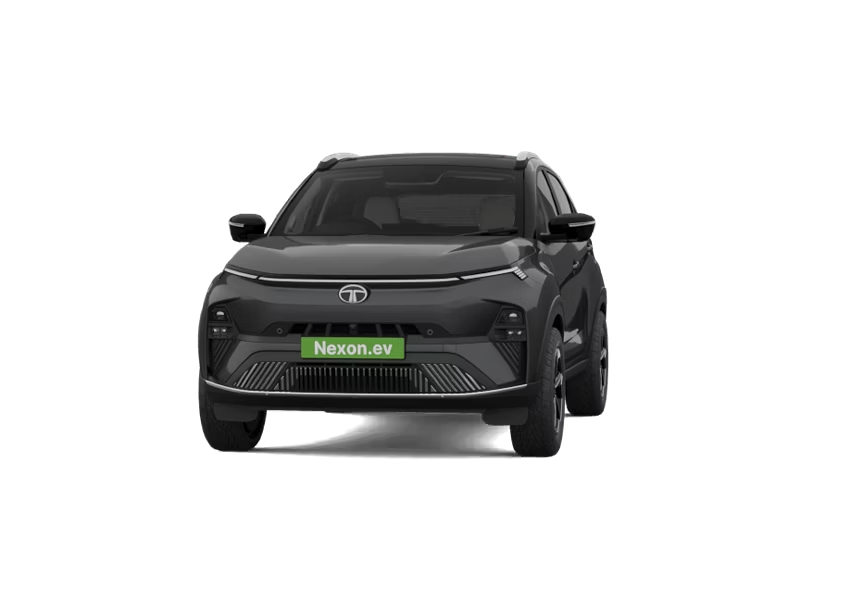
Price: ₹14.49 – ₹19.49 lakh (ex-showroom) Claimed Range: 465 km (ARAI)
The Nexon EV Long Range is the car that proved electric SUVs could work for Indian buyers. It has the most extensive real-world ownership data of any EV in this segment, which matters enormously when you’re spending ₹15–19 lakh. Tata’s charging network (Tata Power EZ Charge) spans 5,000+ touchpoints across India, which gives it a meaningful advantage on road trips.
The cabin is functional and practical, it’s not going to win any luxury awards, but it’s spacious enough for a family of four in Bangalore traffic and comfortable enough for a Pune-Mumbai highway run. Battery warranty of 8 years or 1.6 lakh km is class-leading.
If you’re a first-time EV buyer and want the least amount of “will this work?” anxiety, the Nexon EV Long Range is still the safest bet in this segment.
2. Tata Curvv EV — The Upgrade Option
Price: ₹16.99 – ₹19.49 lakh (ex-showroom) Claimed Range: 502 km (ARAI)
The Curvv EV is what happens when Tata takes everything they learned from the Nexon EV and builds something more aspirational. The coupe-SUV profile is polarising, you’ll either love the fastback roofline or think it wastes boot space, but there’s no denying the Nexon EV vs Curvv EV upgrade argument is compelling at roughly ₹2–3 lakh difference.
The 502km claimed range is legitimately impressive. In real-world city driving, expect 380–430km per charge. The 12.3-inch floating touchscreen, connected car features, and ventilated front seats on higher trims make this feel like a genuinely premium product, not a dressed-up budget car.
For someone upgrading from a Nexon EV, or buying their second car as an EV for daily use, the Curvv EV is the pick. Launched with three new variants on May 4, 2026, it comes with updated software and improved charging compatibility.
3. MG Windsor EV — The Features King
Price: ₹13.50 – ₹17.50 lakh (ex-showroom, battery-as-a-service pricing available)** Claimed Range: 331 km (ARAI)
The MG Windsor EV wins on cabin experience, pure and simple. If you’ve sat in one, you know: the lounge seating layout, large panoramic sunroof, and 15.6-inch Amazon Alexa-enabled touchscreen make it feel like a car that costs significantly more than it does. The rear reclining seats are genuinely useful for families where backseat comfort matters.
The range is the caveat, 331 km claimed, which translates to roughly 250–280 km in mixed real-world conditions. For purely city use in Delhi or Mumbai where your daily run is under 50 km, this is not a problem at all. But if you’re making regular intercity trips, you’ll feel the range limitation.
MG’s Battery-as-a-Service option brings the sticker price down further, though the long-term economics need careful evaluation. For the urban buyer who values interior experience over everything else, the Windsor EV is a legitimate contender in the affordable EV SUV India market.
4. Hyundai Creta Electric — The Safest Premium Bet
Price: ₹17.99 – ₹23.50 lakh (ex-showroom)** Claimed Range: 473 km (ARAI)
The Creta Electric sits slightly at the upper boundary of our ₹20 lakh threshold, but the base and mid variants qualify, and they’re worth including because the Creta brand carries enormous weight in India. Hyundai sold over 51,902 units across its lineup in April 2026, with the Creta family remaining its highest-volume model.
The electric version brings 473km range, Hyundai’s BlueLink connected car system, and a cabin quality level that most buyers will find noticeably superior to the Nexon EV. ADAS features including lane keeping assist and forward collision warning come standard on most trims.
Where the Creta Electric has an edge is resale value confidence. Hyundai’s EV after-sales support, growing charging infrastructure tie-ups, and brand familiarity among resale buyers mean you’re unlikely to take a harsh hit when you sell after 4–5 years. For the risk-averse buyer upgrading from a petrol Creta, this is the most natural upgrade path.
5. Toyota Urban Cruiser Ebella — The Wild Card (Launching Now)
Price: ₹16 – ₹20 lakh (expected ex-showroom, launch imminent) Claimed Range: 440 km (49kWh) / 543 km (61kWh)
The Toyota Urban Cruiser Ebella is technically still awaiting official pricing confirmation as of May 7, 2026, but it’s earned a spot on this list because it could be the most compelling all-round package in the segment once prices are announced. Built on the same platform as the Maruti e Vitara, it brings Toyota’s legendary reliability reputation to the electric SUV space.
The 61kWh variant’s 543km claimed range would make it the longest-range sub-₹20 lakh EV SUV in India if pricing holds around ₹18–20 lakh for that pack. The features list, 10.1-inch driver display, 10.25-inch touchscreen, ventilated front seats, and 40:20:40 split-folding rear seats, is strong. Toyota’s pan-India service network (1,000+ touchpoints) is arguably better than any EV-specific brand for rural and semi-urban buyers.
Watch this space carefully. If Toyota prices the Ebella aggressively, it could significantly disrupt the sub-₹20 lakh EV SUV rankings before the year is out.
What This Means for Indian Buyers
If you’re a young professional in Chennai or Hyderabad, driving 40–60 km daily, and want an EV that won’t embarrass you at the office parking lot, the Curvv EV or Windsor EV are your calls. If you’re a family in a Tier 2 city like Vadodara or Nagpur and range anxiety is real because charging infrastructure is still developing, go with the Nexon EV Long Range or wait for the Toyota Ebella pricing. If budget is no constraint within ₹20 lakh and brand trust is paramount, the Creta Electric is the rational choice.
The one universal advice: don’t buy without test-driving at least two options. EV driving dynamics differ significantly from petrol SUVs, and the one-pedal driving experience is something you either love immediately or need time to adjust to.
Our Take
The best electric SUV under 20 lakh India 2026 decision ultimately comes down to one question: do you primarily drive within the city, or do you need a car that handles interstate weekend trips confidently? City-first buyers should look at the Windsor EV or Curvv EV base. Long-range buyers should look at the Curvv EV top or the Nexon EV Long Range. Wait-for-it buyers should track the Toyota Ebella pricing. And anyone buying for pure brand security and resale value should seriously consider the Creta Electric even at a slight premium. India’s EV market has matured enough that there is no bad answer in this segment, only the wrong answer for your specific situation.
Frequently Asked Questions (FAQs)
Q1. Which is the best electric SUV under 20 lakh in India in 2026?
The best electric SUV under 20 lakh in India in 2026 depends on your priorities. For range and proven ownership experience, the Tata Nexon EV Long Range and Curvv EV are top picks. For cabin experience, the MG Windsor EV leads. For brand trust and resale, the Hyundai Creta Electric base variants qualify at the ₹17.99 lakh entry point. The Toyota Urban Cruiser Ebella is also worth watching once pricing is confirmed.
Q2. What is the real-world range of Tata Curvv EV vs Nexon EV?
The Tata Curvv EV is ARAI-rated at 502km while the Nexon EV Long Range is rated at 465km. In real-world mixed driving (city + highway, AC on), expect approximately 380–430km from the Curvv EV and 350–400km from the Nexon EV. Highway-only range will be lower than city range due to higher sustained speeds draining the battery faster.
Q3. Is the MG Windsor EV a good buy in 2026 considering its lower range?
The MG Windsor EV is an excellent buy if your daily usage is under 60–70 km and you prioritise cabin experience and features over outright range. Its 331km ARAI-claimed range translates to around 250–270km in real use — more than sufficient for urban commuting. If you make regular highway trips of 200km+ in a single stretch, the Windsor EV’s range will require charging stops that other options avoid.
Q4. Should I wait for the Toyota Urban Cruiser Ebella or buy a Tata EV now?
If you can wait 4–6 weeks for the Ebella pricing to be confirmed, it’s worth it — Toyota’s reliability track record is genuinely differentiated, and the 543km range on the 61kWh variant could be a segment-first. However, if you need a car within the month, the Tata Curvv EV is a fully proven product with strong after-sales support and no waiting risk.
— Manav Akbari, TheWheelFeed
